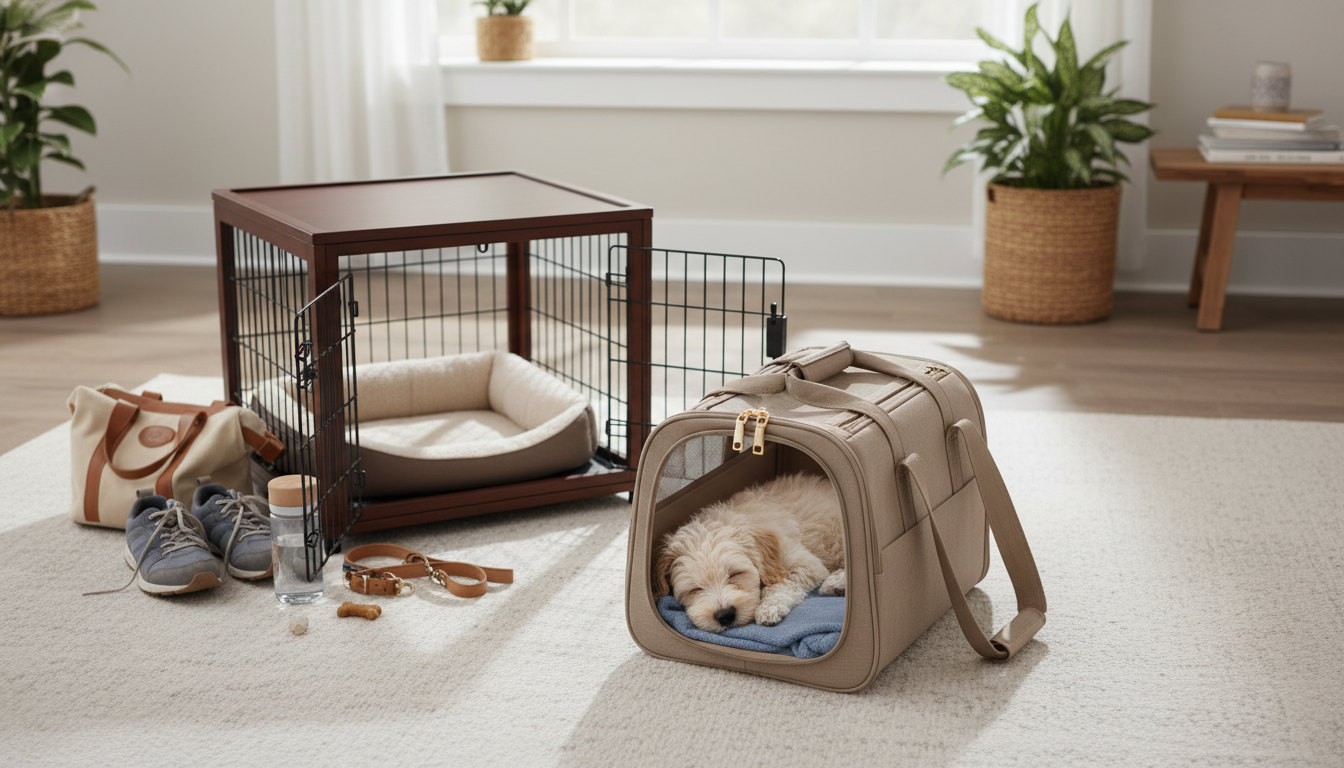
Most Maltipoos take about 2–6 weeks to feel comfortable in a crate, but the exact timeline depends on age, past experiences, and how consistent the routine is. Many puppies start relaxing in the crate within the first week, yet “fully crate trained” usually means they can settle calmly, sleep through the night (age-appropriate), and handle short daytime crate sessions without stress.
Age: Young puppies learn quickly but have small bladders, so nighttime success improves gradually. Adult Maltipoos may progress faster if they’re already house-trained, or slower if they’ve had negative confinement experiences.
Consistency: Multiple short sessions daily typically work better than occasional long ones. A predictable schedule (potty, play, crate, repeat) speeds things up.
Crate setup: A cozy, safe-feeling space encourages faster settling. Add soft bedding (if they don’t chew it), a safe chew, and keep the crate in a calm area where they still feel part of the family.
Days 1–3: Introduce the crate with the door open, treats inside, and quick “in-and-out” games. Feed meals near or inside the crate.
Week 1: Short closed-door sessions (minutes, not hours), gradually increasing as your Maltipoo stays relaxed.
Weeks 2–3: Longer naps in the crate, brief departures, and more reliable nighttime settling.
Weeks 4–6: Many Maltipoos can rest calmly for reasonable periods and view the crate as their go-to chill spot.
Keep departures low-key, reward quiet behavior, and avoid using the crate as punishment. Always pair crating with a potty break before and after, and add a comforting routine like a short walk, a sniffy play session, and a final cuddle before bedtime. For travel days, a secure carrier can help your dog feel protected and close while staying safe on the go—see the Totengo Brown Canvas Dog Carrier Bag guide for a lifestyle-friendly option built with comfort and durability in mind.
Most dogs do best with a bed that matches their size and sleep style, offers easy-to-clean materials, and provides enough support for their joints—especially as they get older.