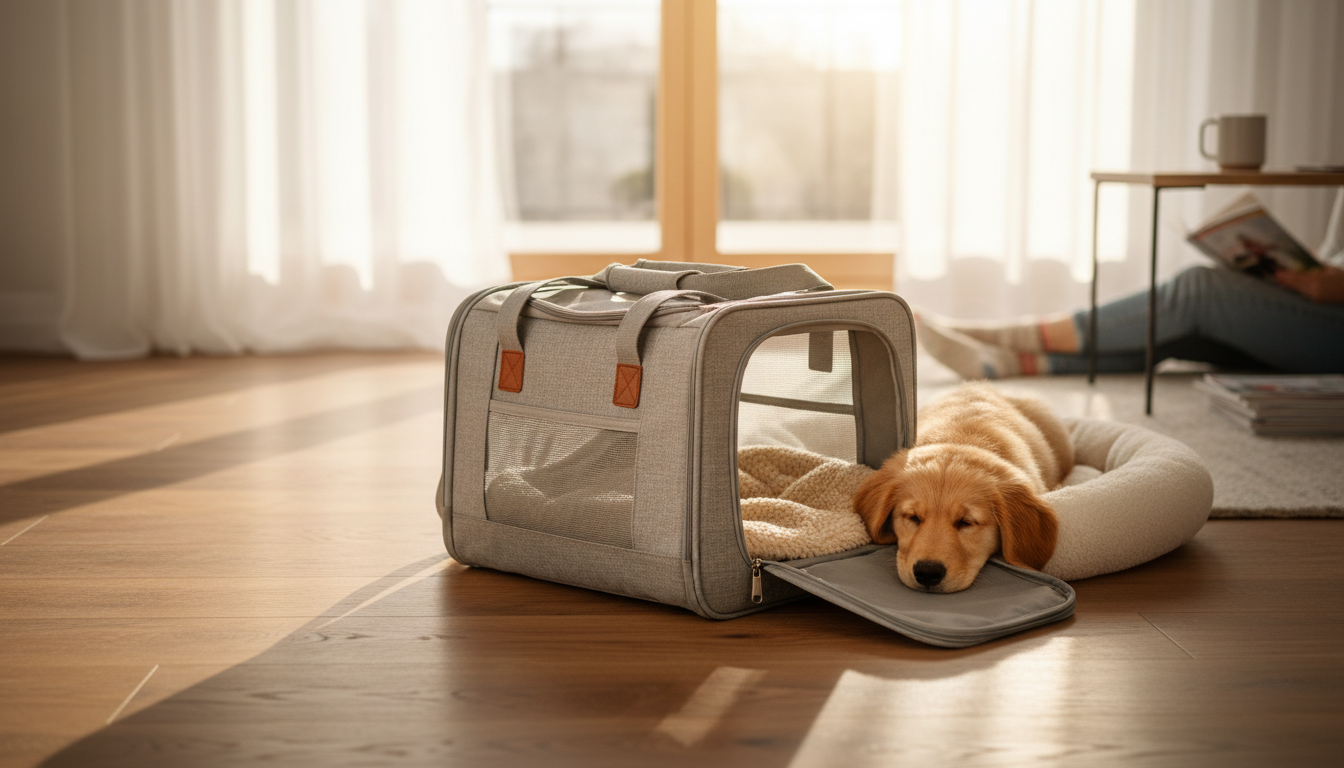
Short answer: only as long as your dog can stay comfortable, ventilated, and stress-free—typically 2–4 hours at a time before a proper break. While some airline journeys keep dogs in carriers longer, that should be the exception, not the norm. Your dog’s age, health, temperament, and the carrier’s design all matter.
Plan for breaks every 2–4 hours. Use these breaks for water, a quick potty stop, a stretch, and a calm check-in. If your dog is crated or in-cabin for air travel, aim to keep total carrier time as short as possible and prioritize comfort and airflow.
Puppies have smaller bladders and lower tolerance—think 1 hour per month of age (up to about 6 hours) as a rough maximum, with frequent breaks. Seniors and dogs with medical conditions may need even shorter stints and more frequent check-ins.
At home or on short outings, treat a carrier like a cozy, safe den—great for quick trips, vet visits, or downtime. For road trips, schedule planned stopovers. For flights, ensure the carrier meets airline rules, provides ample ventilation, and is properly sized so your dog can stand, turn, and lie down comfortably.
If you notice panting, drooling, pawing at the carrier, restlessness, whining, or signs of overheating, stop and let your dog relax and rehydrate.
Want a carrier that balances comfort, durability, and style? Explore our guide to the Tote’n’Go Canvas Pet Travel Bag here: Read the full article.
Most dogs do best with a bed that matches their size and sleep style, offers easy-to-clean materials, and provides enough support for their joints—especially as they get older.