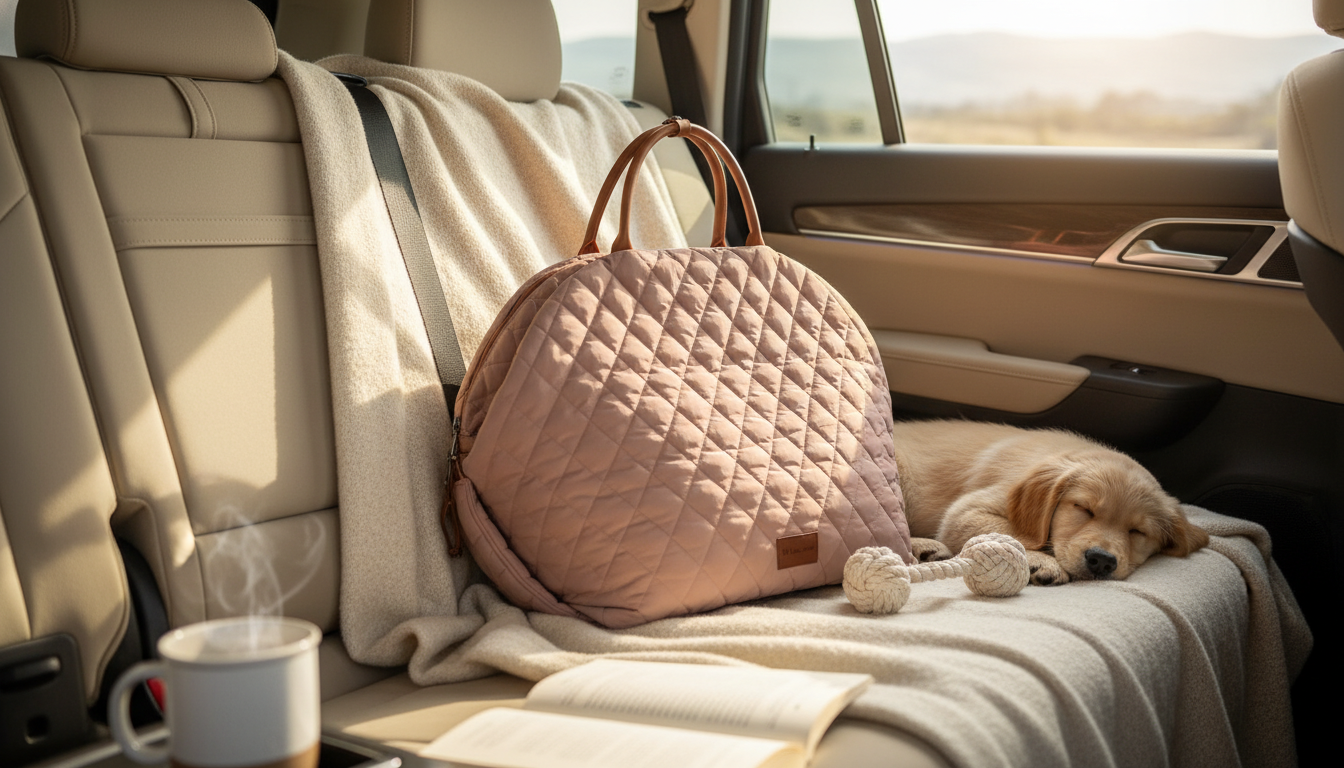
Most dogs can ride comfortably for a full travel day as long as you plan frequent breaks. A good rule of thumb is to stop every 2–3 hours for a 10–15 minute stretch, sniff, bathroom break, and water. Your total daily driving window depends on your dog’s age, health, and temperament:
Never leave your dog alone in a parked car, even for a few minutes. Temperatures can rise or drop quickly, and stress or dehydration can set in fast.
Plan for comfort and safety. Offer water at each stop, keep the cabin well-ventilated, and use a crash-tested harness, seat belt, or secure car seat/booster that supports your dog’s body and limits sudden movement. Motion-sick pups benefit from a steady view out the window, gentle airflow, and a cozy, elevated spot to settle.
For anxious riders, start with shorter practice drives and build up. Bring familiar bedding, a favorite chew, and use calming routines: a quick walk before takeoff, soft music, and consistent seating. If your dog pants heavily, drools, whines, or refuses treats, take an extra break, offer water, and reassess your setup.
A supportive travel bed or carrier that doubles as a car seat can make a big difference. The Puff Puppy Dog Car Seat Carrier Bag provides cushioned support, secure attachment points, and a cozy den-like space that helps dogs relax on longer stretches—all while keeping your interior tidy.
Want more road trip tips and fit guidance? Read the full guide here: How to travel safely with the Puff Puppy Dog Car Seat Carrier Bag.
Yes, with proper planning. Most dogs handle long rides well if you schedule breaks every 2–3 hours, provide water, ensure good ventilation, and secure them with a harness or car seat. Monitor stress signals and adjust your pace as needed.
Some healthy adult dogs can, but it’s best to split 12 hours into multiple segments with generous rest stops. Puppies, seniors, or anxious dogs may do better with a shorter travel day or an overnight stop.
For most dogs, 20 miles is a manageable drive if they’re comfortable, secured, and not prone to motion sickness. If your dog is new to car travel, start with short rides and gradually increase distance.