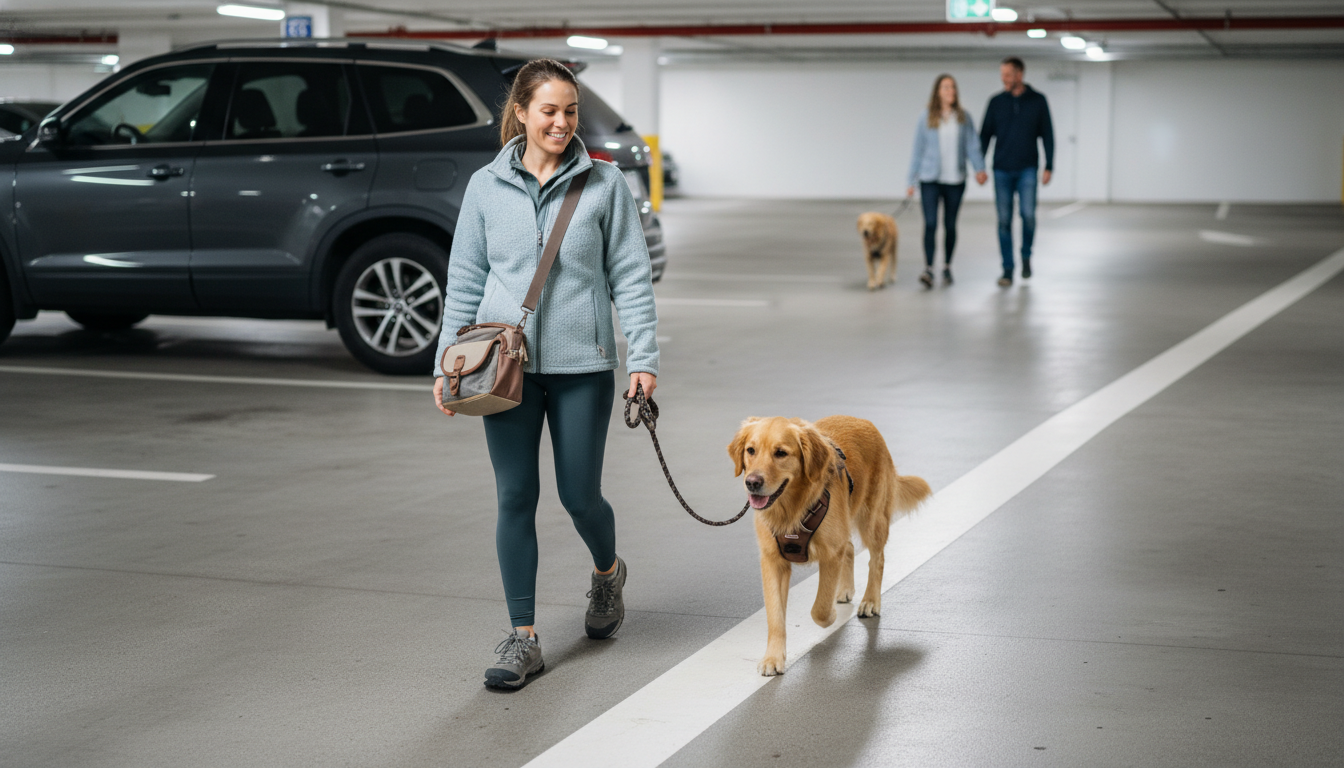
Aim for 30–60 minutes of purposeful walking most days of the week, adjusting for your dog’s age, breed, and current fitness level. For many dogs, that lands around 1–3 miles per day, split into two walks if that’s easier on joints and energy levels. The best distance is the one your dog can do consistently while staying comfortable and eager to go again tomorrow.
Weight loss is about steady calorie burn, so pace and consistency matter more than chasing a specific number. A brisk walk where your dog is moving with a light trot (not dragging behind and not overheating) typically burns more calories than a slow stroll twice as long. If your dog can still sniff and enjoy the walk but keeps moving forward, you’re in a good zone.
If your dog is currently sedentary or overweight, start with 10–20 minutes per walk and add 5 minutes every few days. Watch for heavy panting, limping, lagging, or sore stiffness afterward—those are cues to scale back and build more gradually. Flat, cooler routes are usually easier, and adding short “power” segments (60–90 seconds of faster walking) can boost calorie burn without turning the whole walk into a sprint.
A helpful target is a gentle weekly increase in total walking time (not distance) until you reach 150–300 minutes per week. Pair that with measured meals and fewer high-calorie treats for better results. If your dog has arthritis, a short nose-led warmup followed by a steady pace can feel much better than jumping straight into a fast walk.
Being comfortable and organized helps you stay consistent. Keeping essentials close—poop bags, treats, water, and a phone—makes it easier to maintain a brisk pace and avoid cutting walks short. For a cozy, hands-free setup, see the guide here: https://kingwuff.com/blog/guide-beige-rover-dog-walking-bag-hands-free-organized-carry/.
Many 20-pound dogs do well with 30–60 minutes of walking daily, often around 1–3 miles depending on pace and fitness. Start lower if your dog is overweight or out of shape and build gradually.
Safer, steadier loss comes from smaller, measured meals plus daily activity rather than extreme cuts. Ask your vet for a target weight and feeding plan, then combine consistent walks with fewer calorie-dense treats.
Higher-intensity movement like brisk walking, hill walking, and short jog intervals can burn more calories than slow strolling. The best choice is the hardest activity your dog can do comfortably and safely.