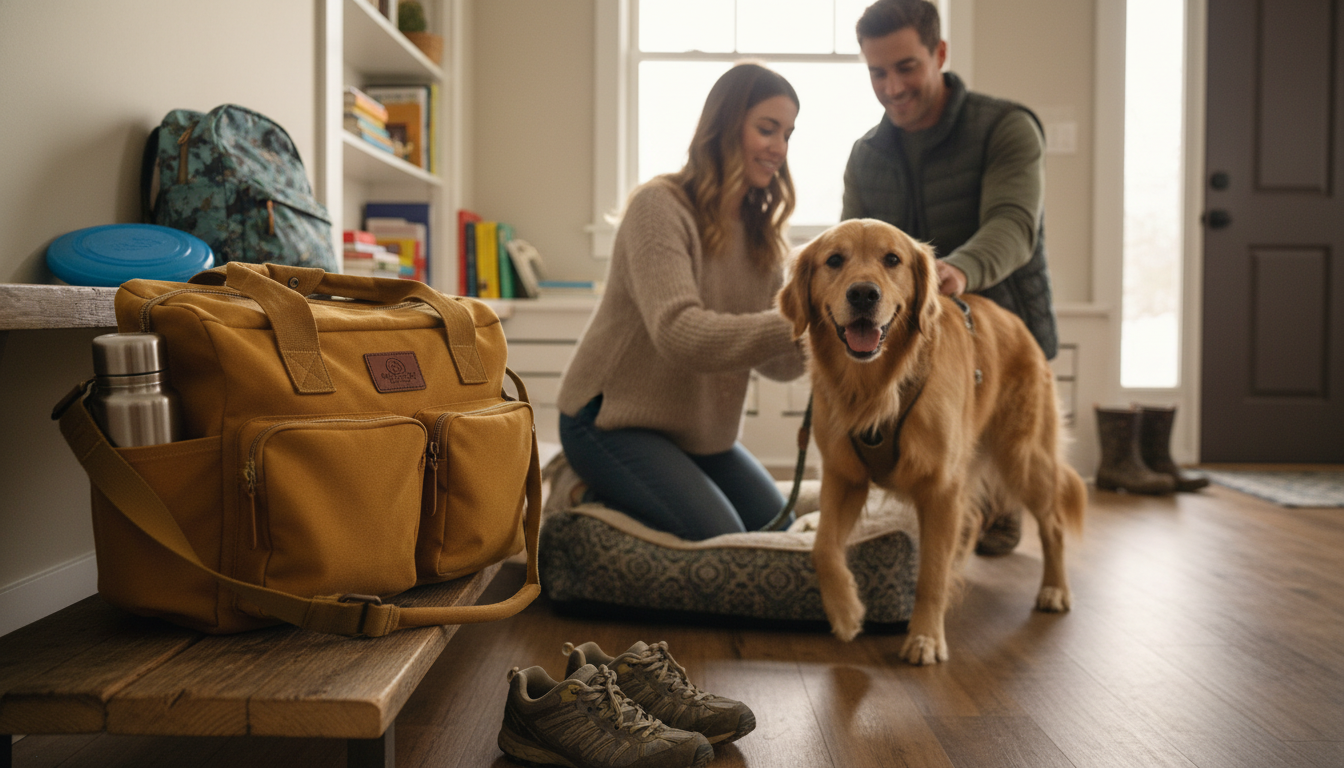
The right daily walking distance depends on your dog’s age, breed, health, and energy level. Some dogs are content with a couple of short strolls, while others thrive on longer, brisk walks that let them explore and stretch out. A good starting point for many adult dogs is about 30–60 minutes of walking per day, split into two outings if that fits your routine.
Think in time and effort first, then translate that into distance:
Puppies do best with shorter, more frequent walks—gentle and upbeat rather than long and tiring. Senior dogs may still enjoy daily walks, but with a slower pace, softer surfaces when possible, and shorter distances to protect joints and stamina.
Adjust based on what you see afterward. Signs your dog may need less include lagging behind, heavy panting that doesn’t settle quickly, soreness, or limping. Signs your dog may need more include restlessness, excess energy at home, and boredom behaviors (like pacing or getting into mischief) even after a walk.
Bring water on warm days, keep nails trimmed for better traction, and choose a route that matches your dog’s comfort level. If you like staying hands-free and organized—especially for treats, waste bags, and essentials—take a look at this walking setup guide: hands-free and organized dog walking bag guide.
It’s a common guideline for newly adopted dogs: around 3 days to decompress, 3 weeks to start settling into routines, and 3 months to feel more fully at home. Some dogs move faster or slower depending on their background and temperament.
Daily walks can support weight loss by increasing activity, but results come best when walks are paired with appropriate portions and consistent routines. Your vet can help set safe goals based on your dog’s body condition and health.