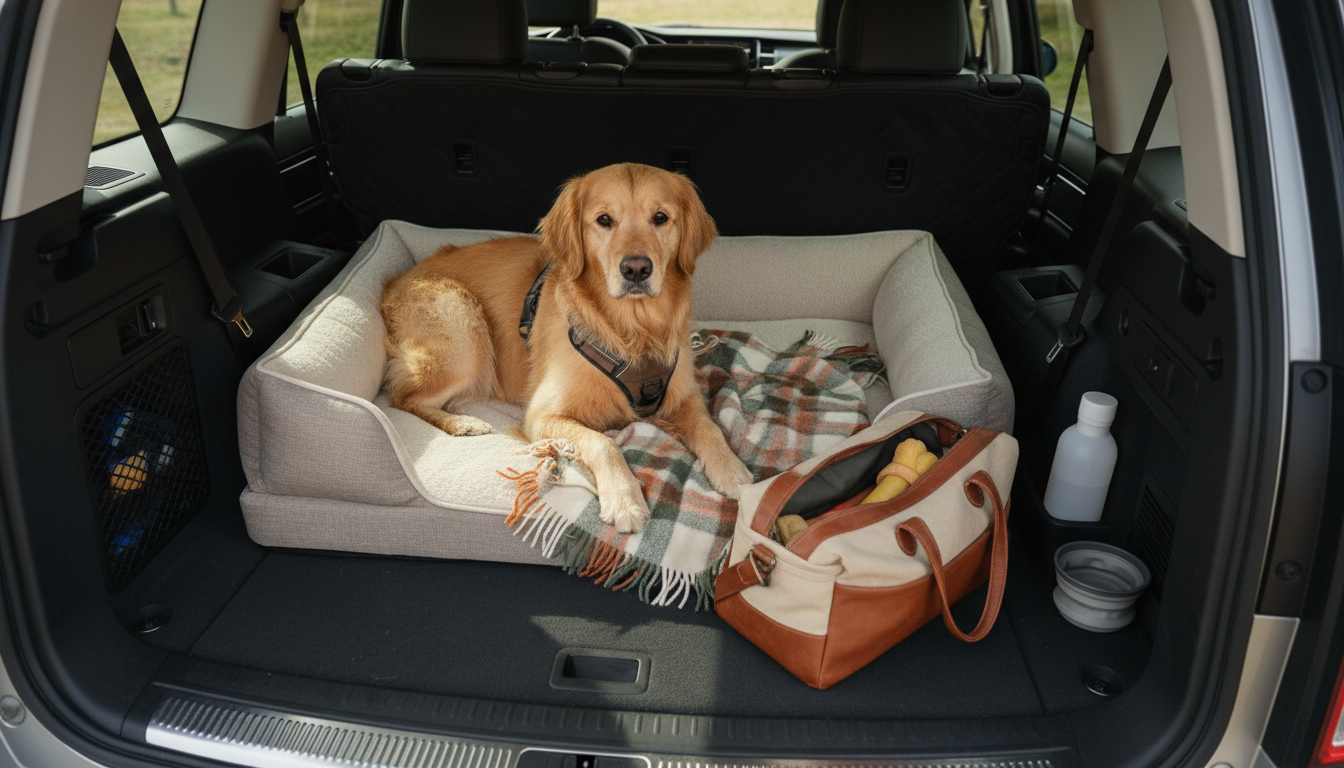
Long drives with a big dog go best when comfort and safety are planned before the wheels start turning. Start by choosing a secure spot in the car: the back seat or the cargo area of an SUV with a barrier are typically best. Avoid letting a large dog roam freely—sudden stops can turn an unrestrained pet into a serious hazard.
Next, use proper restraint. A crash-tested harness connected to a seat belt system is a solid choice for larger dogs, helping limit movement while still allowing them to sit or lie down. If your dog rides in the cargo area, pair a sturdy barrier with a well-fitting harness or an appropriately sized crate that won’t slide.
Make the ride cozy, too. Add a supportive bed or travel mat to reduce pressure on joints, especially for seniors and larger breeds prone to stiffness. Bring familiar items—like a favorite blanket—to help your dog settle faster. Keep the cabin temperature comfortable and never leave your dog unattended in a parked car.
Plan “reset breaks” every 2–3 hours. Offer water, take a leashed potty walk, and give your dog a moment to stretch. Feeding a full meal right before departure can cause nausea; a lighter meal a few hours ahead and small treats during stops often work better. If your dog gets carsick or anxious, talk with a veterinarian before the trip about safe options.
Pack a simple dog travel kit: leash, waste bags, water and bowl, wipes, a towel, food, any medications, and a copy of vaccination records. For more tips on choosing travel gear designed for comfort and safer rides, visit this King Wuff guide.
Look for harnesses that have been independently crash-tested and designed to work with a vehicle seat belt. The safest option is one that fits snugly, limits forward motion, and is used exactly as the manufacturer instructs.
A crash-tested harness is a dog car restraint that has been evaluated in simulated collision testing to measure how it performs during impact. It’s designed to help reduce injury risk and keep a dog from becoming a projectile in a sudden stop or crash.
Yes, a harness can help keep dogs secure and reduce distractions for the driver. It’s generally safer than a collar because it spreads force across the chest and shoulders instead of the neck.