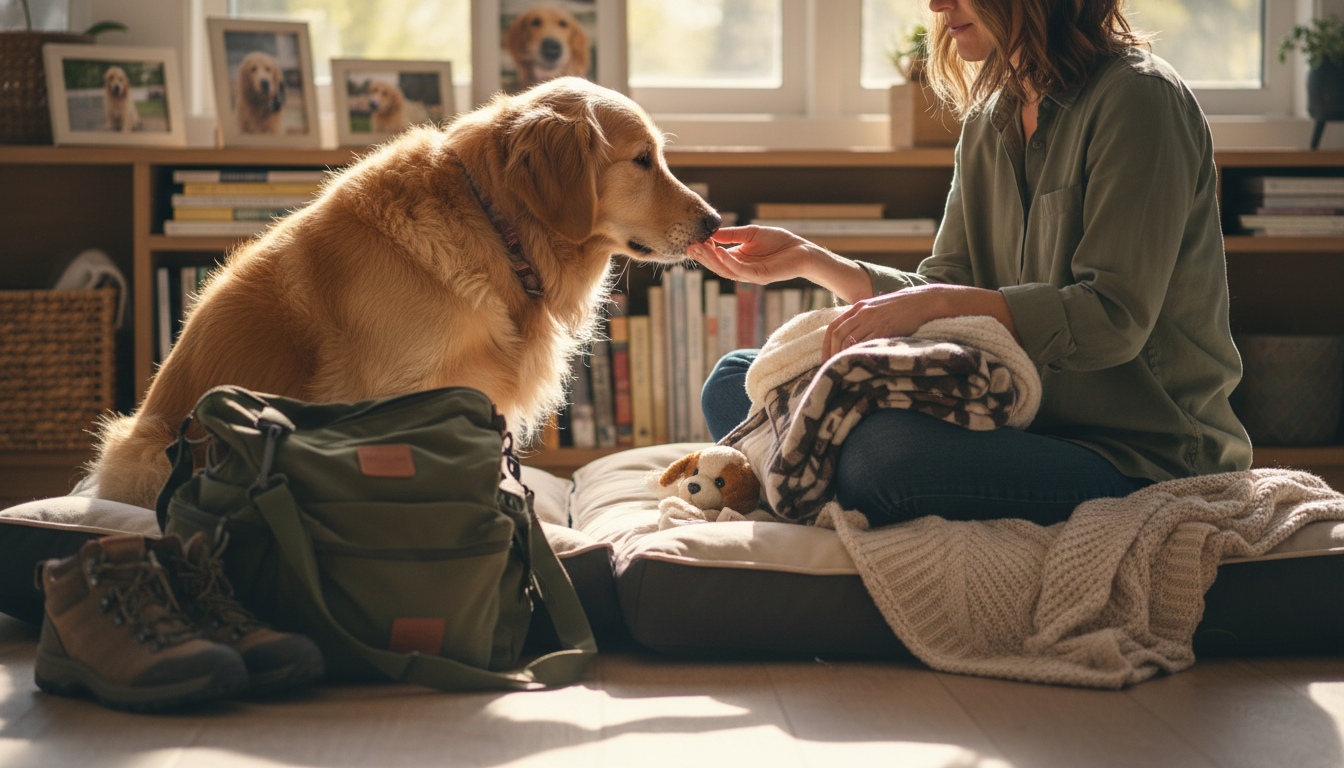
Dogs don’t label relationships the way people do, but some dogs do treat a trusted human a lot like a dependent “puppy.” That usually shows up as extra nurturing behavior mixed with close-in bonding and a strong preference for your comfort and attention.
They “check” on you frequently. If your dog follows you room to room, pops up to see what you’re doing, or repositions so they can keep you in sight, that’s a common caretaking-style attachment.
Gentle mouthing, nudging, or herding. Some dogs softly mouth your sleeve, nudge your leg, or try to steer you away from things—behavior that can resemble how they’d guide a youngster. It should look controlled and non-threatening; if it escalates into nipping, it’s time for calmer boundaries and training support.
They bring you “resources.” Presenting toys, a chew, or even a favorite blanket can be a dog’s version of offering comfort or sharing something valuable. It can also be an invitation to bond through play.
They settle closest when you’re tired or stressed. A dog that curls up near your feet, leans into you, or insists on snuggling when you’re not feeling your best may be responding with nurturing, soothing behavior.
They get protective in a calm, controlled way. Standing between you and a stranger, alert barking once, then relaxing when you’re comfortable can indicate a dog is “looking out” for you. Constant guarding, growling, or blocking can be anxiety or resource guarding and should be addressed carefully.
Keep affection predictable, reward relaxed independence, and give your dog a cozy place that’s clearly theirs for downtime. A comfortable bed in a quiet corner can make “settle” feel safe and routine—especially after walks, travel days, or busy visitors.
For a comfort-focused setup at home, see the details and care tips in this guide to the Midnight Nest dog bed.
Some dogs do worry when a person leaves, especially if they’re prone to separation anxiety. Training calm departures and building confidence with short practice absences can help.
Clinginess varies by individual, but breeds often known for strong “velcro” tendencies include Labrador Retrievers, Cavalier King Charles Spaniels, and German Shepherds. Early socialization and independence training matter as much as breed.
Dogs can remember people and show signs of missing them, like waiting by the door or reacting to familiar scents. Many dogs settle better when they have a consistent routine and a comfortable rest spot.