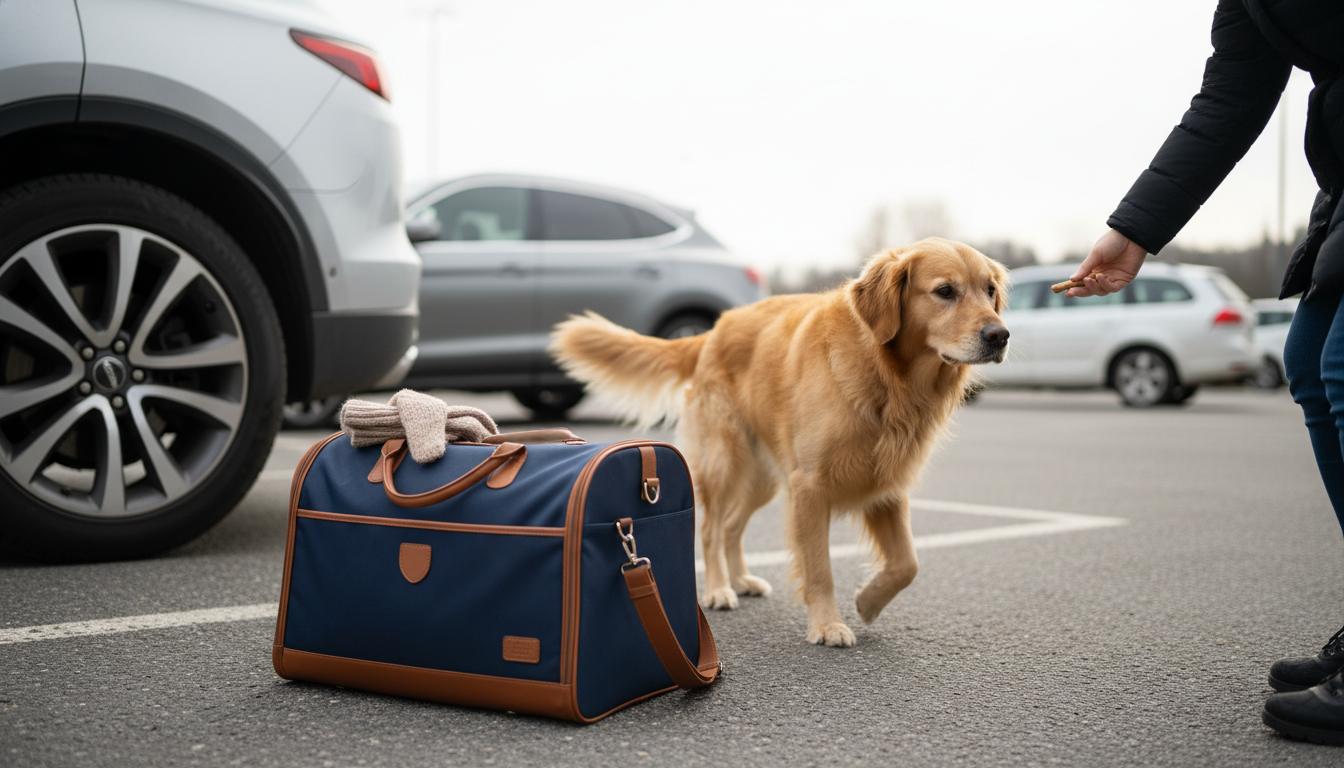
Trust changes in dogs usually show up in small, everyday moments. A one-off “off day” can happen for many reasons (stress, pain, a new routine), but consistent shifts in body language and behavior are worth paying attention to.
Avoidance or hiding: Your dog leaves the room when you enter, chooses corners or tight spaces, or hesitates to approach even for treats or play.
Flinching or freezing: If your dog startles when you reach down, pulls their head away from your hand, or stiffens during touch, they may be feeling unsure.
Guarded body language: Look for tucked tail, pinned-back ears, whale eye (showing the whites), low posture, lip licking, yawning when not tired, or turning the head away.
Reluctance around handling: Backing away from the leash, resisting being picked up, or refusing to come close when you need to clip nails or wipe paws can signal discomfort or lost confidence.
Changes in affection and sleep: A dog who used to relax near you may start choosing a different spot, staying alert, or leaving when you settle in.
Sudden changes often have a root cause: soreness, dental pain, ear infections, or a recent scare. If the behavior is new or intense, a vet check can rule out pain. Big life changes—travel, visitors, loud construction, schedule shifts—can also make dogs act distant.
Keep interactions predictable: calm voice, slower movements, and offering choice (letting your dog come to you). Pair your presence with good things—meals, sniffy walks, short training sessions, and rewards for voluntary check-ins. Create a “safe zone” your dog can count on, like a quiet corner with a comfortable bed. For tips on building a cozy, clean resting space, visit this guide to a cozy dog bed setup.
Often, yes—belly-up sleep can mean a dog feels safe enough to relax. Some dogs simply sleep that way for comfort, so it’s best judged alongside other relaxed behaviors.
A quiz can be a helpful starting point, but body language and daily patterns matter more than a score. If you’re unsure, track changes over a week and consider a trainer for personalized feedback.
It can be a strong sign of comfort and security, especially if his muscles look loose and he’s not startled easily. If he’s tense or frequently disturbed, it may be more about temperature or habit than trust.