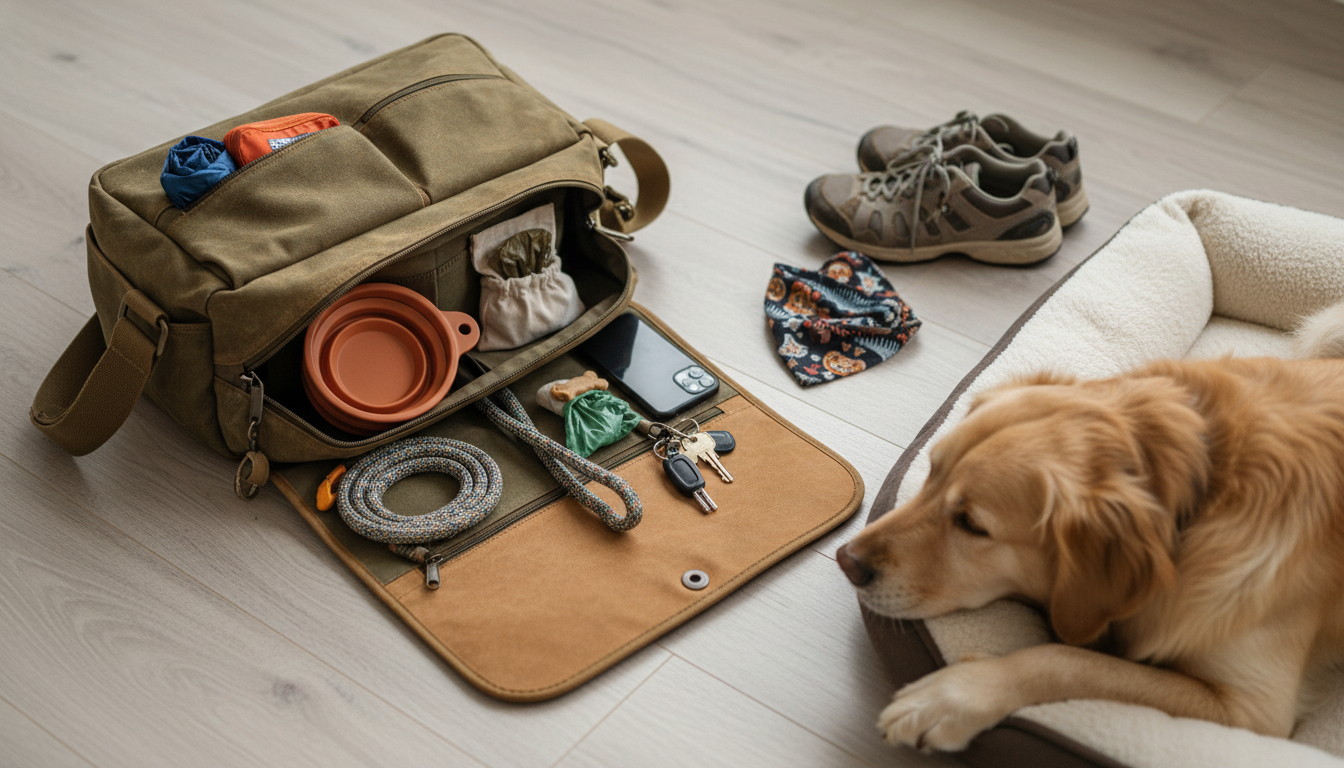
A well-organized dog walking bag should feel effortless: everything has a “home,” the essentials are reachable with one hand, and clean items stay separate from messy ones. Start by laying out what you actually use on a typical walk, then group items by how often you grab them.
Put quick-access items closest to your hand: poop bags, treats, and your phone/keys. Less-used items (like a small first-aid kit or spare leash) can live in a back pocket or interior compartment so they don’t crowd your daily essentials.
Keep “clean” items together (treats, wipes, spare poop bags). Reserve one pocket for “wet or dirty” items like used wipes or a damp bandana—ideally in a small zip pouch—so odors and moisture don’t spread. A separate “just in case” zone works well for a mini first-aid kit, tick remover, or extra clip.
Small zip pouches make a big difference. One pouch for treats, one for hygiene (wipes, sanitizer), and one for emergency extras keeps everything from shifting and makes refills faster. If your bag has built-in compartments, assign each one a single purpose and keep it consistent.
Place heavier items (water, collapsible bowl) close to your body to reduce swinging. Keep the bag light by packing only what matches your usual route and weather. For long outings, bring water but skip duplicates of items you rarely use.
Take 60 seconds to restock poop bags, toss trash, and wipe down any sticky spots. A quick reset keeps your next walk calm and prevents that last-minute scramble at the door.
For a more detailed, compartment-by-compartment approach, visit this complete guide to keeping a hands-free dog walking bag organized.
Carry poop bags, treats, a small pack of wipes, and your keys/phone. For longer walks, add water, a collapsible bowl, and a compact first-aid item or two.
Assign each compartment a single job (treats, poop bags, clean wipes, wet/dirty pouch, valuables, water/bowl, emergency extras). Keep the most-used pockets easiest to reach and do a quick restock after each walk.