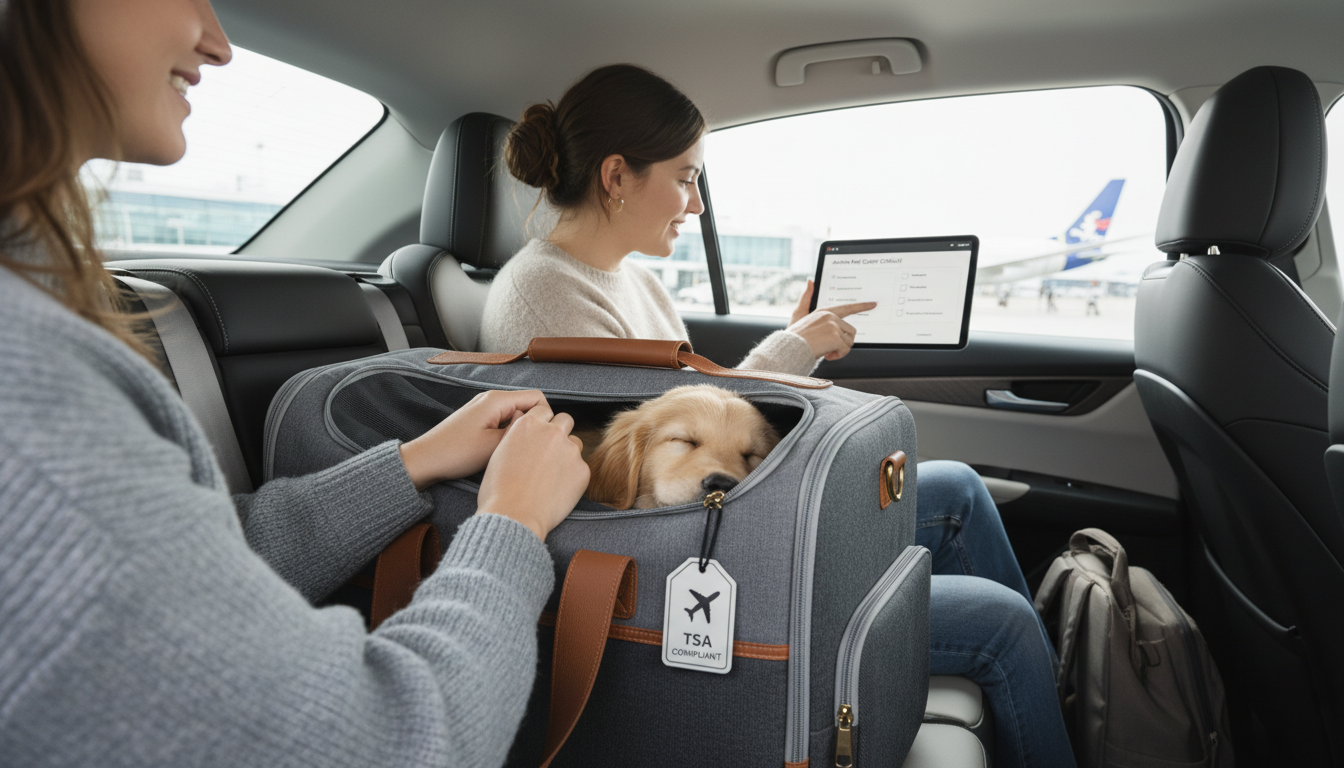
“TSA approved” is often used loosely, so the safest way to confirm your carrier is travel-ready is to check airline cabin rules first and TSA screening rules second. TSA focuses on how the carrier moves through security, while each airline decides what can go in the cabin under the seat.
Start with the airline you’re flying (and any partner airlines on your itinerary). Look up their in-cabin pet carrier requirements, especially the maximum dimensions for an under-seat carrier. Measure your carrier (length, width, and height) and compare it to the airline’s limits. Soft-sided carriers are usually preferred because they can compress slightly to fit, but they still need to stay within the airline’s stated guidelines.
At TSA screening, pets must come out of the carrier, and the carrier typically goes through the X-ray machine. A “TSA-friendly” carrier is one that makes that process easier: secure zippers, strong stitching, sturdy handles, and a structure that holds up to repeated opening/closing without collapsing. A reliable leash attachment point and easy-access openings can also help keep your dog calm and secure during transitions.
A carrier can meet size rules and still be a poor travel choice. Prioritize breathable panels, a stable base, and durable materials that won’t sag. Make sure your dog can stand, turn around, and lie down comfortably, and check that closures feel secure. A cozy, well-built carrier reduces stress and supports safer, smoother travel.
For a closer look at a stylish, functional option and what to check before a trip, visit this guide: https://kingwuff.com/blog/guide-totengo-brown-canvas-dog-carrier-bag/.
Most dogs do best with a bed that matches their size and sleep style, offers easy-to-clean materials, and provides enough support for their joints—especially as they get older.