Below are practical points for how do i know if my dog crate is airline approved?.
Many crates are marketed as “airline compliant,” but airlines can have different standards for dimensions, door hardware, ventilation, and fasteners. Look up your carrier’s pet policy for your route (domestic vs. international, cargo vs. cabin) and match your crate to those specs line by line.
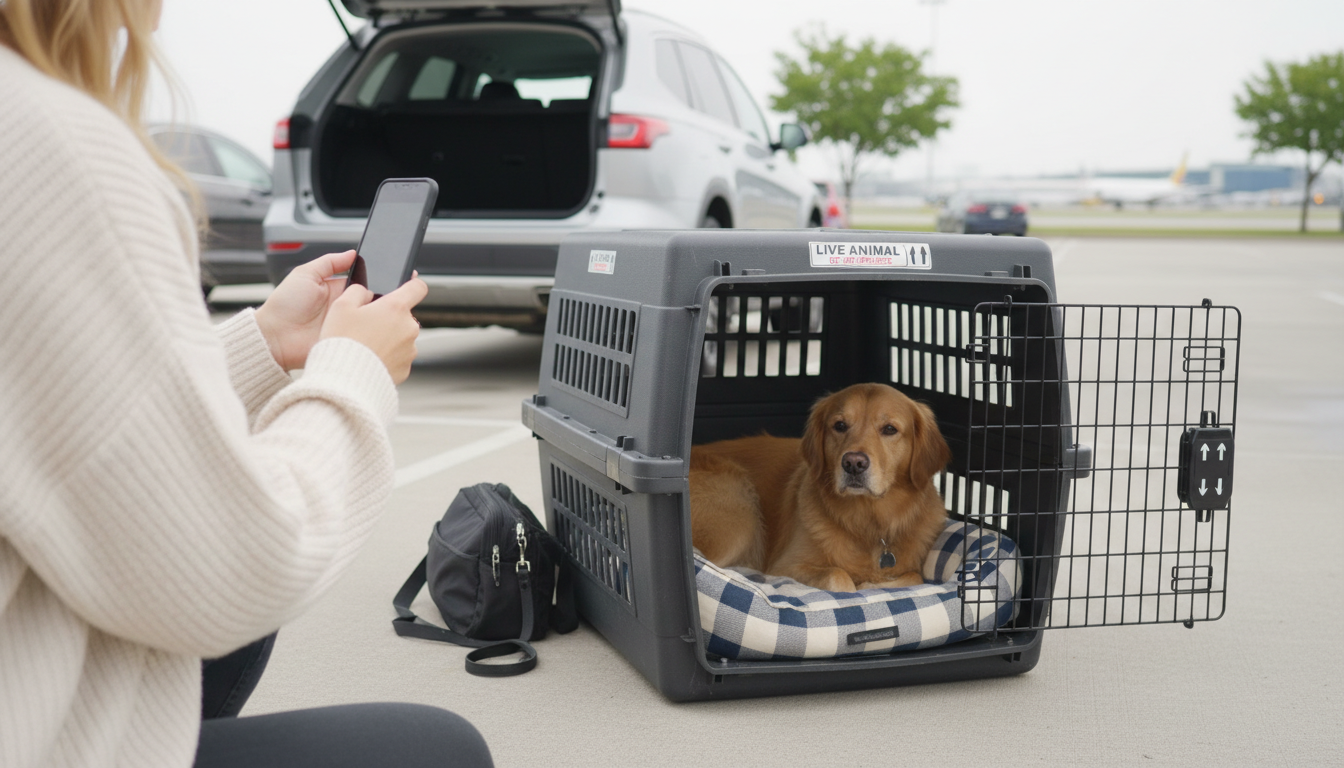
For cargo travel, most airlines expect a hard-sided kennel that’s rigid, escape-resistant, and well-ventilated on multiple sides. Common requirements include a secure metal door (not flimsy plastic), a latch your dog can’t nose open, and bolts or metal hardware holding the top and bottom together (not just plastic clips). Many airlines also require a leak-proof base with absorbent bedding, plus “Live Animal” labels and upright arrows on the exterior.
The crate should be large enough for your dog to stand without touching the top, turn around naturally, and lie down in a relaxed position. If your crate is too small, airlines may refuse it at check-in—even if the materials are otherwise acceptable.
For a practical look at picking a comfortable, travel-ready carrier and what details matter for real-life trips, visit this guide to the Totengo Brown Canvas Dog Carrier Bag.
Look for a manufacturer statement that the crate meets IATA Live Animals Regulations, then still confirm your airline accepts that exact model. Airlines can add extra rules beyond IATA.
TSA doesn’t “approve” carriers the way airlines do, but they do require that pets be removed during screening. Choose a carrier that lets you safely lift your pet out and that won’t collapse or snag easily.
Measure your dog’s length (nose to base of tail) and height (floor to top of head or ears, whichever is higher), then compare to the airline’s sizing formula. The goal is enough room to stand, turn around, and lie down comfortably.