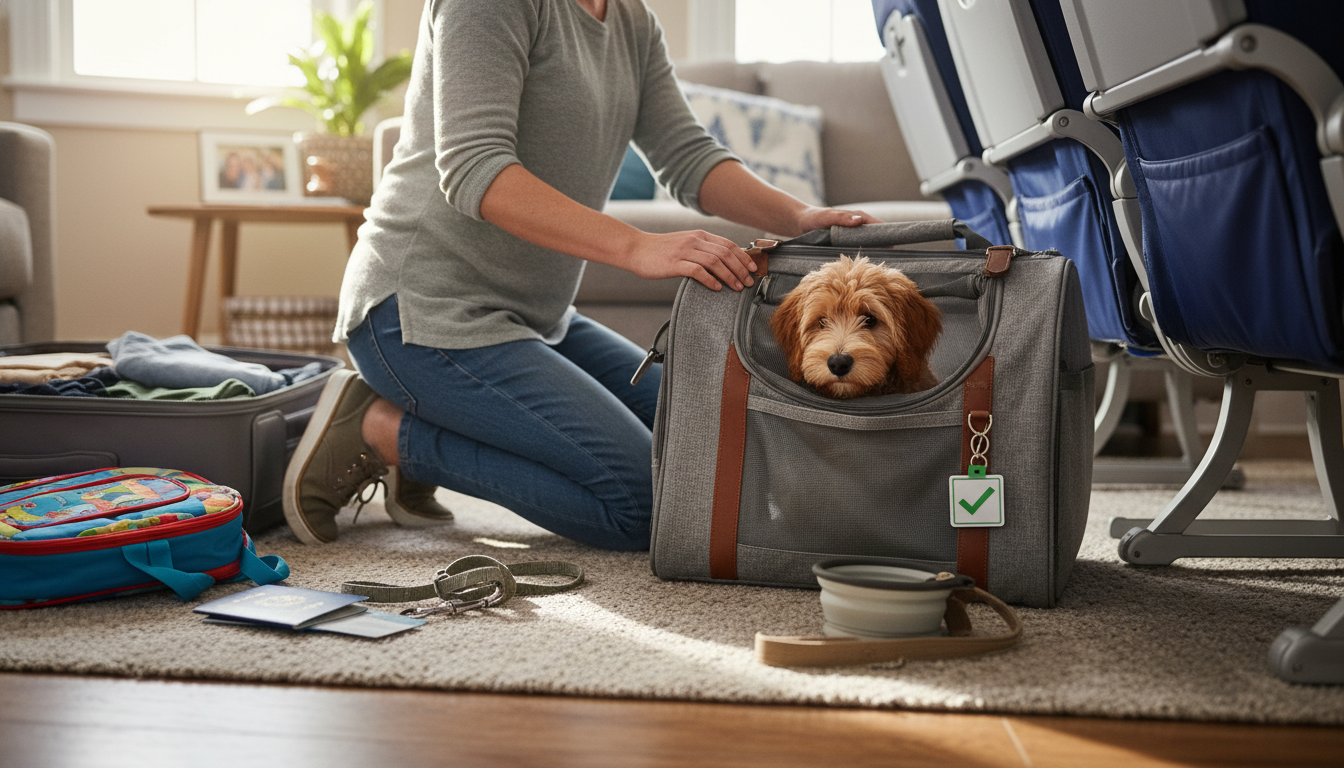
An “airline approved” dog carrier is one that matches the specific airline’s pet-in-cabin rules for size, structure, ventilation, and safety. Since requirements can vary by carrier (and even by aircraft), the most reliable way to confirm approval is to compare your carrier’s specs to your airline’s published pet policy before you book.
Start with the maximum dimensions your airline allows for an under-seat pet carrier. Measure your carrier’s length, width, and height (including wheels, handles, and any rigid frame edges). If your carrier is even slightly over, the gate agent can deny it—no matter what the tag says.
Most airlines prefer a soft-sided carrier that can gently compress to fit under the seat while still maintaining shape. Look for a stable base, secure zippers, and a design that keeps your dog from being pressed against the sides.
Airline-ready carriers typically have ventilation on multiple sides, a leak-resistant bottom, and closures that won’t pop open during handling. For comfort (and calmer travel), a supportive base insert and a cozy, washable pad can make a big difference—especially on longer travel days.
Many airlines set a combined weight limit for dog + carrier. Weigh your pup and the fully packed carrier (including any built-in padding or accessories). If you’re close to the limit, choose a lighter carrier and pack minimally.
For more travel-friendly tips on choosing comfortable, durable carriers and gear, visit this guide: https://kingwuff.com/blog/guide-pet-travel-comfort-gear-dog-carriers-walk-bags-tips/
Usually, no. Most airlines’ in-cabin limits are much lower and require the pet to fit comfortably in an under-seat carrier; a 30-pound dog more commonly travels in cargo or via a pet transport option, depending on breed and dimensions.
Policies change often, but some airlines offer cargo or checked-pet options under specific programs and temperature rules. Always confirm directly with the airline before booking because routes, seasons, and aircraft type can affect availability.
TSA doesn’t set one universal carrier size; airlines do. TSA’s focus is screening—typically you’ll carry your pet through the metal detector while the carrier goes through the X-ray, so choose a carrier that’s easy to handle and meets your airline’s under-seat dimensions.