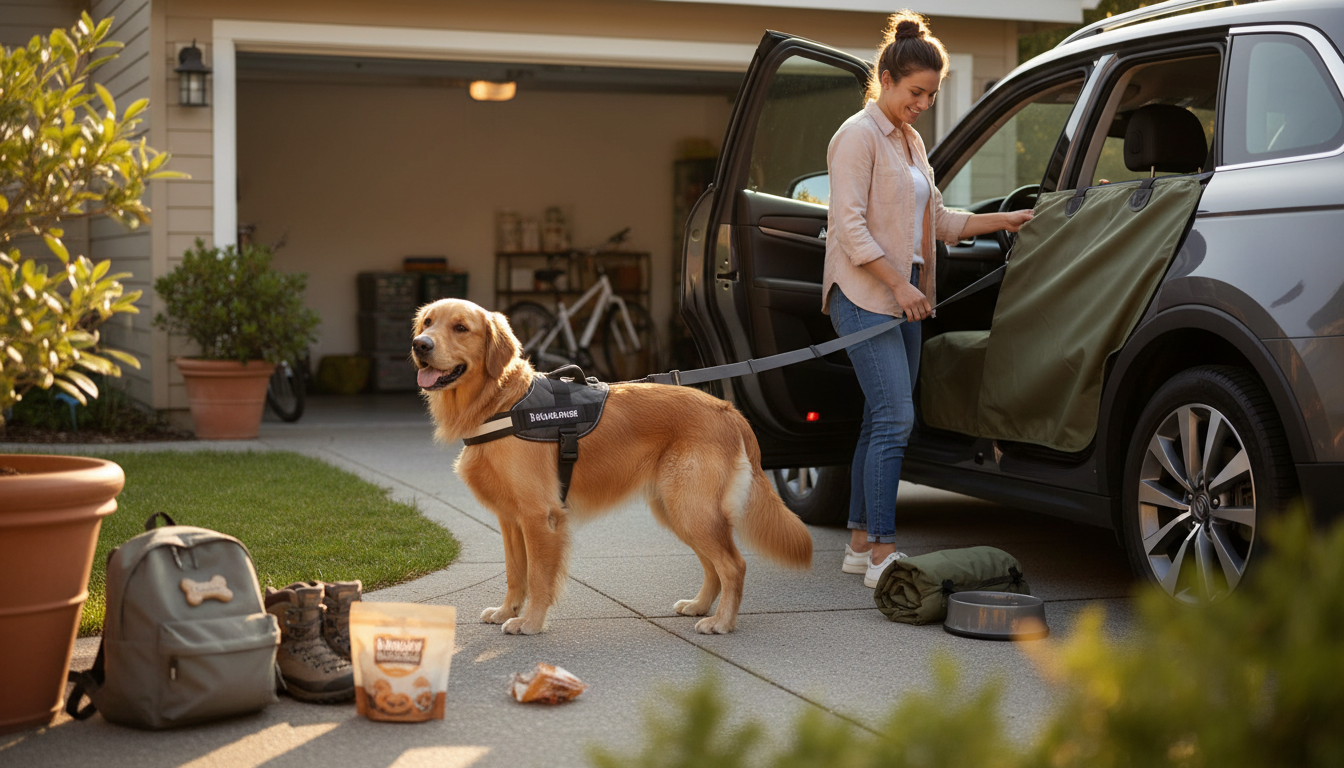
If you’re skipping a crate, the safest approach is still a “secured dog” setup—something that keeps your pup from becoming a distraction up front and helps protect them during sudden stops. Comfort matters too, because a calm dog is a safer passenger.
For medium and large dogs riding on the back seat, a well-fitted harness designed for car travel is often the most practical crate-free option. Attach it to the vehicle’s seat belt system (or an approved tether), keep the tether short enough to prevent climbing into the front, and position your dog so they can sit or lie down comfortably without being able to roam.
Small dogs are often safest when they can ride in a structured, supportive car seat or carrier that stays anchored in place. Look for a travel-ready design with sturdy walls, a stable base, and an internal safety tether that clips to a harness (not a collar). This helps prevent falls, reduces sliding on turns, and creates a cozy “nest” that many dogs relax into quickly.
Airbags can seriously injure dogs, especially smaller breeds. The back seat is the better choice, and the center position can reduce impact risk if your setup allows a stable, secure installation.
A non-slip surface and a soft, supportive bed or liner can help your dog stay settled, especially on longer drives. Less slipping means fewer sudden body shifts, which can also reduce nausea and anxiety.
Stow loose gear, keep windows only slightly cracked (if at all), and always leash your dog before opening doors at stops. A quick clip-on leash routine prevents bolt-outs in unfamiliar places.
For a cozy, travel-friendly option geared toward comfort and secure riding, see the full guide here: https://kingwuff.com/blog/guide-puff-puppy-dog-car-seat-carrier-bag-king-wuff/.
Most dogs do best with a bed that matches their size and sleep style, offers easy-to-clean materials, and provides enough support for their joints—especially as they get older.