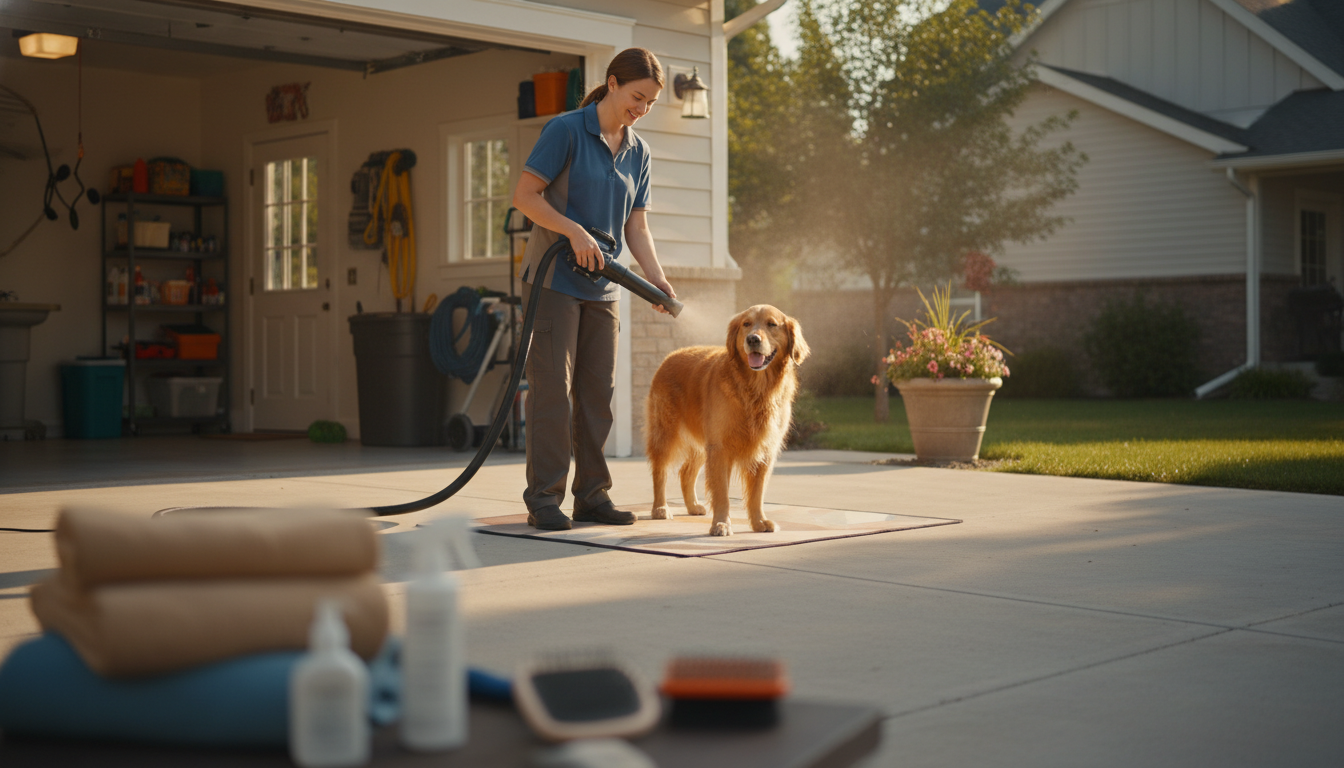
Professional groomers dry dogs quickly by combining the right prep, high-powered equipment, and a “work in sections” technique that removes water efficiently without overheating the skin. It’s less about rushing and more about using a repeatable system that keeps pets comfortable and safe.
First, groomers start drying before the dog ever leaves the tub. They use an absorbent towel (often more than one) to blot and squeeze water from the coat—especially legs, paws, tail, and underbelly—rather than rubbing, which can create tangles. Many also use quick-rinse techniques and products that help water sheet off the coat so less moisture stays trapped.
Next comes the real time-saver: a high-velocity (HV) dryer. This tool pushes concentrated air that “blasts” water out of the coat, even in thick double coats. Groomers keep the nozzle moving, hold it at a safe distance, and angle airflow to chase water away from the skin. For curly or long coats, they often brush while drying to separate hair, prevent matting, and speed up evaporation.
For dogs that tolerate it, some salons use kennel/cage dryers on a low, controlled setting to finish drying evenly while the groomer works on another step. This is typically paired with towel-drying and HV drying first—cage drying alone is slower and not ideal for every dog. Throughout the process, groomers monitor temperature, airflow, stress signals, and sensitive areas like ears and face (these are usually hand-dried more gently).
If you’re building a smoother post-bath routine for walks and outings, a simple system helps: towel well, dry in short sessions, and keep your gear organized. For more dog-walking and travel-friendly tips, visit this guide to hands-free dog walking organization.
They towel-blot first, then use a high-velocity dryer to push water out of the coat, often brushing as they go. Some finish with a low, monitored kennel dryer when appropriate.
It’s possible, but it can leave the coat damp for a long time, especially in thick or fluffy breeds. Damp fur can also pick up odors and irritate skin in humid conditions.
Leaving a dog partially wet can contribute to hot spots, itching, or a “wet dog” smell, especially in skin folds or dense coats. Drying thoroughly is usually the safer, more comfortable option.