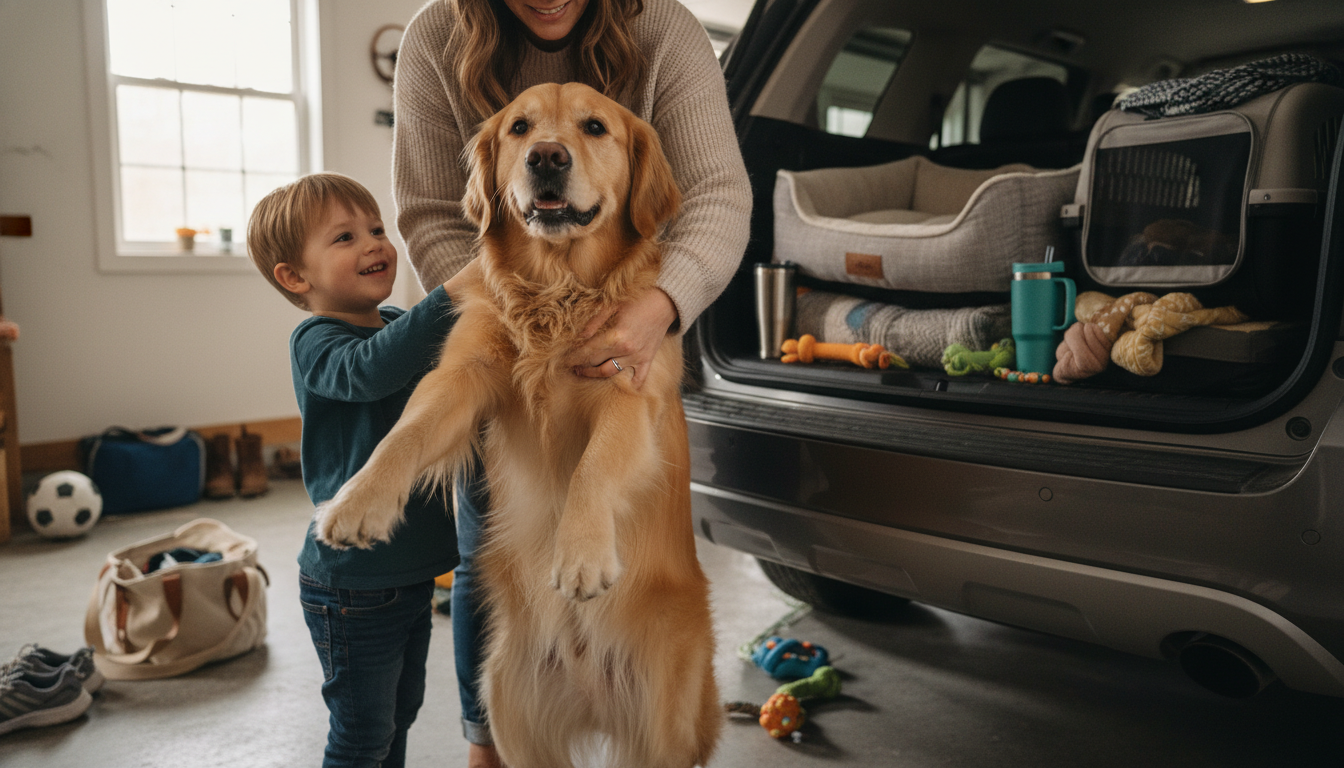
When you hold a dog, their feelings can range from totally content to quietly stressed—it depends on their personality, past experiences, and how they’re being picked up. Many dogs enjoy being held when it feels secure, gentle, and predictable. They may relax their body, soften their eyes, lean in, or let out a sigh. For dogs who like close contact, being held can feel like warmth, safety, and bonding.
Other dogs tolerate being held but don’t truly enjoy it. A stiff body, tucked tail, pinned-back ears, whale eye (seeing the whites of the eyes), or trying to wiggle down are common signs they’d rather be on the ground. Being lifted can feel like losing control—especially for larger dogs, older dogs with sore joints, or pups who weren’t handled much early on.
Comfort comes down to support and choice. Dogs tend to feel best when their chest and hips are supported, their spine stays neutral, and they aren’t squeezed. They also do better when they can predict what’s happening—being scooped up suddenly can be startling. If a dog is already anxious (new place, loud sounds, car rides), holding them tightly may increase stress rather than soothe it.
Lift slowly and confidently. Support the front with one arm under the chest, and the back end with the other arm under the hips. Keep them close to your body for stability, and avoid dangling legs. If your dog resists, don’t force it—build positive associations with brief holds, praise, and a calm release back to the floor.
For walks, errands, and travel, many dogs feel more secure in a structured space than in arms—especially in busy environments. A supportive dog carrier can provide the same closeness while offering better stability and less strain on your dog’s body (and your arms). For more comfort-focused travel ideas, visit this guide to pet travel comfort gear, dog carriers, and walking bags.
Some dogs interpret it as affection and safety, while others see it as being restrained. Their body language will usually tell you which one it is.
Dogs often gravitate toward the person who feels calmest, has the most consistent routine with them, or offers the comfiest resting spot. It can also reflect bonding from feeding, walking, or bedtime habits.
They choose based on comfort, trust, temperature, and who responds best to their signals. Many dogs also pick the person who’s least likely to move around and interrupt their rest.