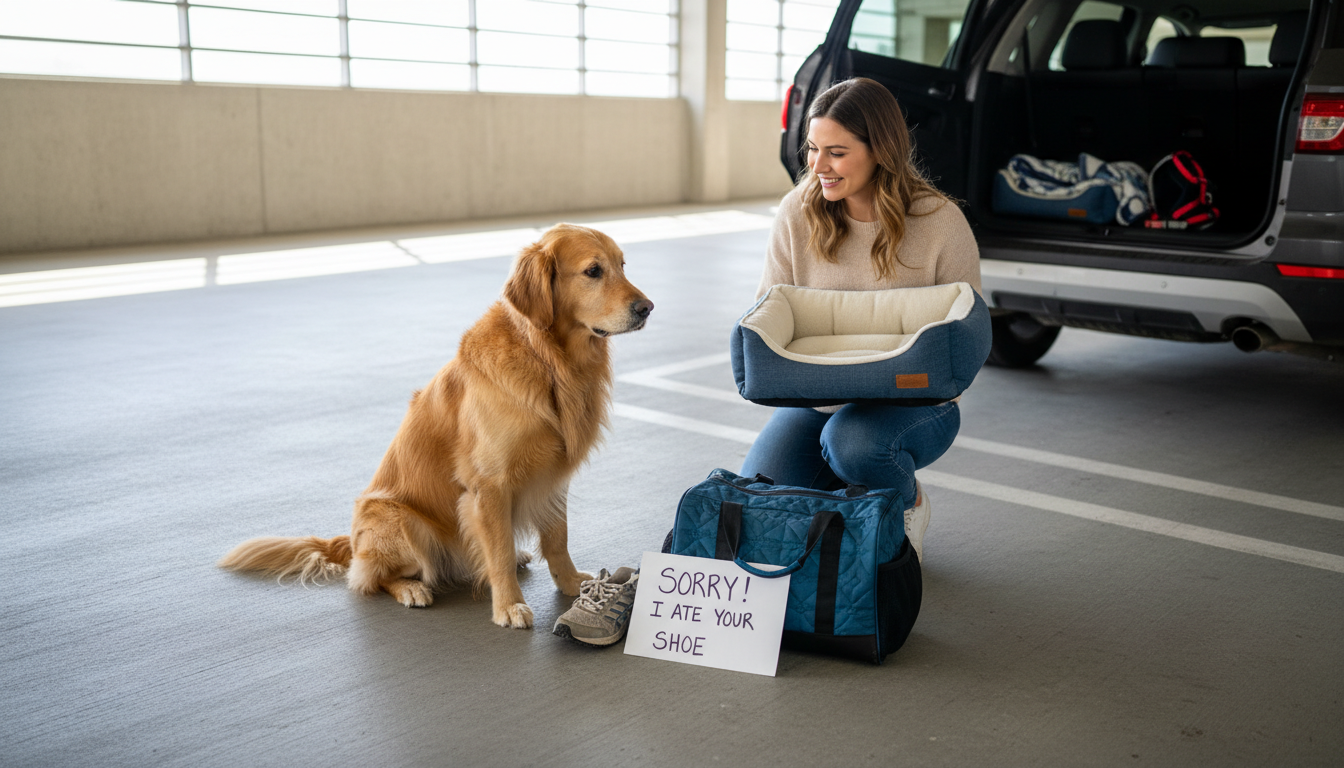
Dogs don’t apologize with words, but they’re great at repairing the moment. When a dog senses you’re upset—through your tone, posture, and facial expression—they may offer “peace-making” behaviors meant to calm you and reconnect. It’s less about guilt in the human sense and more about restoring comfort and safety in the relationship.
Many dogs apologize by softening their body language. You might notice a lowered head, slightly crouched posture, ears back, or a curved body that looks smaller and gentler. Some dogs offer a slow wag (often low and loose), avoid direct eye contact, or lick your hands and face as a friendly, soothing gesture.
Others will bring you a toy, nudge your leg, or hover nearby in a quiet, patient way—close enough to reconnect, but not pushy. You may also see a “play bow” (front end down, back end up) as an invitation to reset the mood. If they were overexcited, they might self-interrupt, sit, or lie down to show they’re calming themselves.
Reward the calm behavior you want to see again. Use a relaxed voice, give space if your dog is nervous, and offer a simple cue like “sit” or “place” to help them succeed. If there was a real problem—jumping, nipping, stealing food—focus on gentle training and management rather than scolding after the fact.
After things settle, a cozy reset can help: a drink of water, a short decompression walk, or a comfortable resting spot. A supportive bed can become your dog’s “all-good” zone where they can relax and regulate. For ideas on building a calm, clean comfort routine at home, visit this guide to the Midnight Nest dog bed.
Look for softened body language like lowered head, ears back, gentle wags, and calm approach behaviors (nudging, licking, sitting nearby). The key is that your dog is trying to reduce tension and reconnect.
Dogs often show “sorry” through appeasement and calming signals rather than guilt. If your dog becomes quieter, seeks closeness carefully, and responds well to calm cues, they’re likely trying to make peace.
After a bite, many dogs show stress or appeasement signals, but it’s usually fear, overwhelm, or conflict—not human-like remorse. Any bite should be taken seriously and followed up with safety steps and professional guidance if needed.