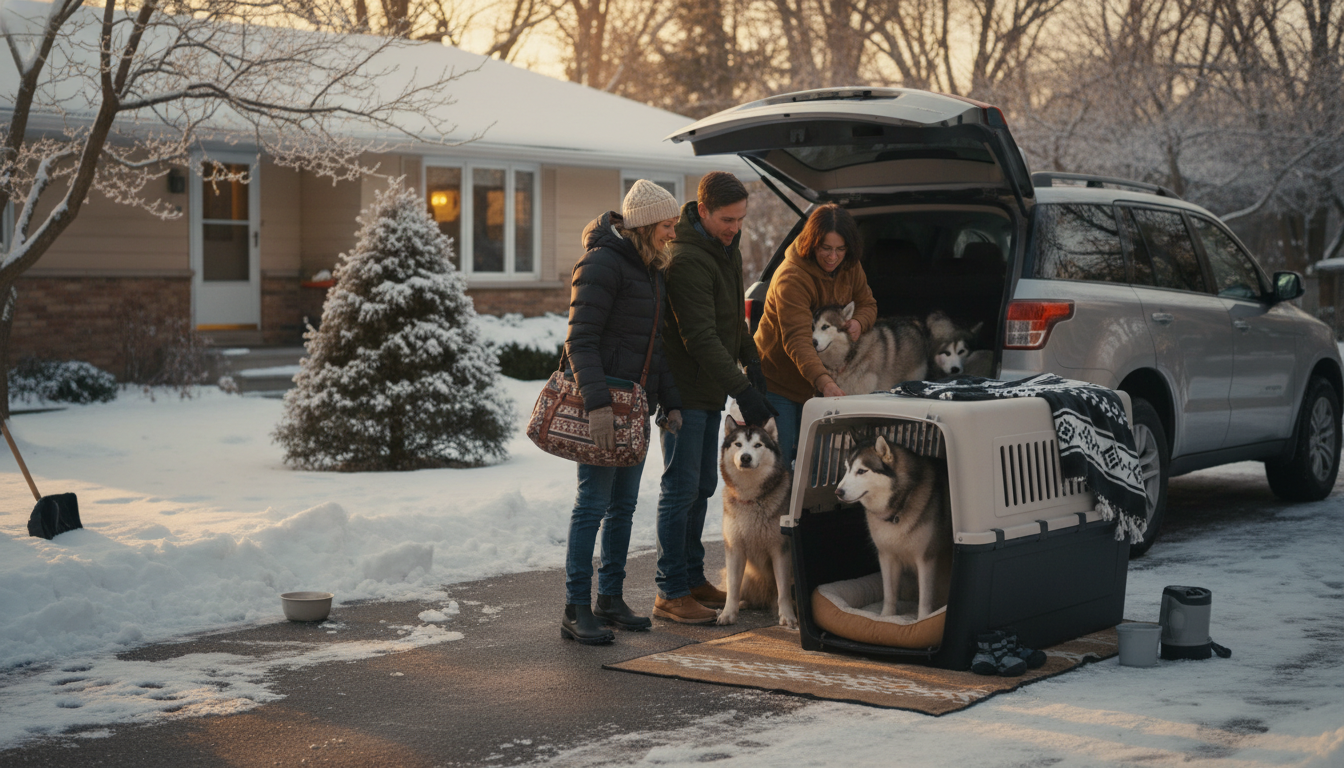
Sled dogs are built for winter, but “too cold” depends on the individual dog, the wind, how wet the coat gets, and how long they’ll be out. Healthy, well-conditioned sled dogs (like Huskies and Malamutes) can often work comfortably around 0°F to -20°F, especially with steady movement and dry conditions. Once temperatures drop toward -20°F to -40°F (or warmer temps with strong windchill), the risk of frostbite and hypothermia rises quickly—even for tough northern breeds.
A practical rule: it’s too cold when your dog can’t stay warm and safe while moving at a normal pace. If a dog is standing around, resting, or waiting on a line, their tolerance drops fast. Puppies, seniors, underweight dogs, and dogs with illness or injury should be treated as “cold-sensitive” regardless of breed.
Watch for shivering, a tucked tail, hunched posture, slowing down, refusing to run, repeatedly lifting paws, licking paws, whining, or seeming “checked out.” Also look for ice balls between toes, stiff gait from cold muscles, pale/gray skin on ear tips or tail, or skin that feels very cold and hard. Any confusion, weakness, or collapse is an emergency.
Use paw protection (booties and paw wax), keep runs and rest stops dry, and break up long outings with warm-up checks. Reduce exposed time when wind picks up, and avoid wet snow that soaks the coat. Offer calories and warm water when possible, and plan for quick shelter if conditions change. Afterward, dry the coat and paws thoroughly and give them a warm, draft-free place to recover—comfort matters as much as toughness.
For cozy post-adventure downtime and easy cleanup, see the comfort-focused tips here: Midnight Nest dog bed guide.
Many conditioned sled dogs can work around 0°F to -20°F, but wind, moisture, and rest time can make it unsafe sooner. Always adjust to the individual dog and watch for early cold-stress signs.
Paw frostbite risk increases as temps dip below about 20°F, and becomes much higher near 0°F and below—especially with windchill and wet conditions. Booties and frequent paw checks help prevent injury.
It depends on wind and the dogs’ conditioning, but many teams start limiting runs when windchill approaches -20°F or colder. If dogs show shivering, paw lifting, or slowing, it’s time to stop and warm up.