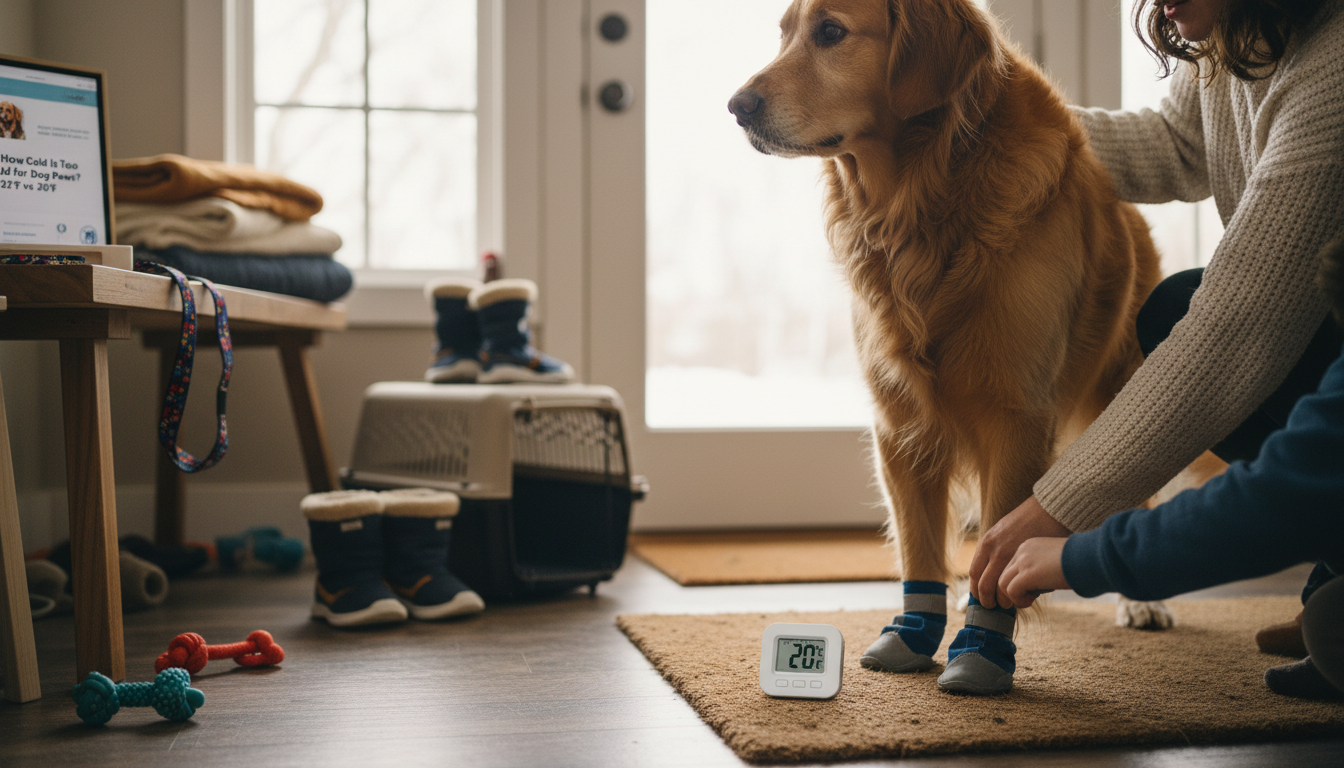
Cold pavement, ice, and packed snow can chill paws faster than many pet parents expect. As a practical rule, extra caution starts around 32°F, and many dogs begin to struggle without protection around 20°F or lower—especially small breeds, short-coated dogs, seniors, and pups with sensitive paws. Wind, wet conditions, and exposure time matter just as much as the number on the thermometer.
It’s often “too cold” when the ground is freezing (32°F) and becomes risky for many dogs at 20°F and below, particularly on ice, salted sidewalks, or wet snow. If your dog is lifting paws, slowing down, or refusing to walk, treat that as the temperature limit for that day and head home.
To keep walks comfy and safe, choose shorter routes, stick to cleared paths, and avoid long pauses where paws sit on frozen ground. Booties can help insulate and prevent salt and ice from sticking between toes; paw wax can add a light barrier when booties aren’t an option. After the walk, wipe paws with a damp cloth and dry thoroughly—road salt and de-icers can irritate skin and cause cracking.
Keeping your gear organized makes winter walks smoother, too. A hands-free dog walking bag is handy for stashing booties, wipes, balm, and treats so you can make quick adjustments when temps drop. For more winter-walk planning and walk essentials, visit this hands-free dog walking bag guide.
Many dogs can handle brief walks around 32°F, but paws may become uncomfortable quickly on ice or wet surfaces. Around 20°F and below, protection and shorter outings are recommended for many dogs.
Watch for paw lifting, limping, stopping, whining, or trying to turn back. Cold, stiff paws, redness, or cracking after the walk are also signs it’s time to warm up and protect paws more next time.
Some dogs can for short periods in mild cold, but ice, salt, and wet snow increase risk. Booties or paw wax are safer choices when temperatures drop or sidewalks are treated.