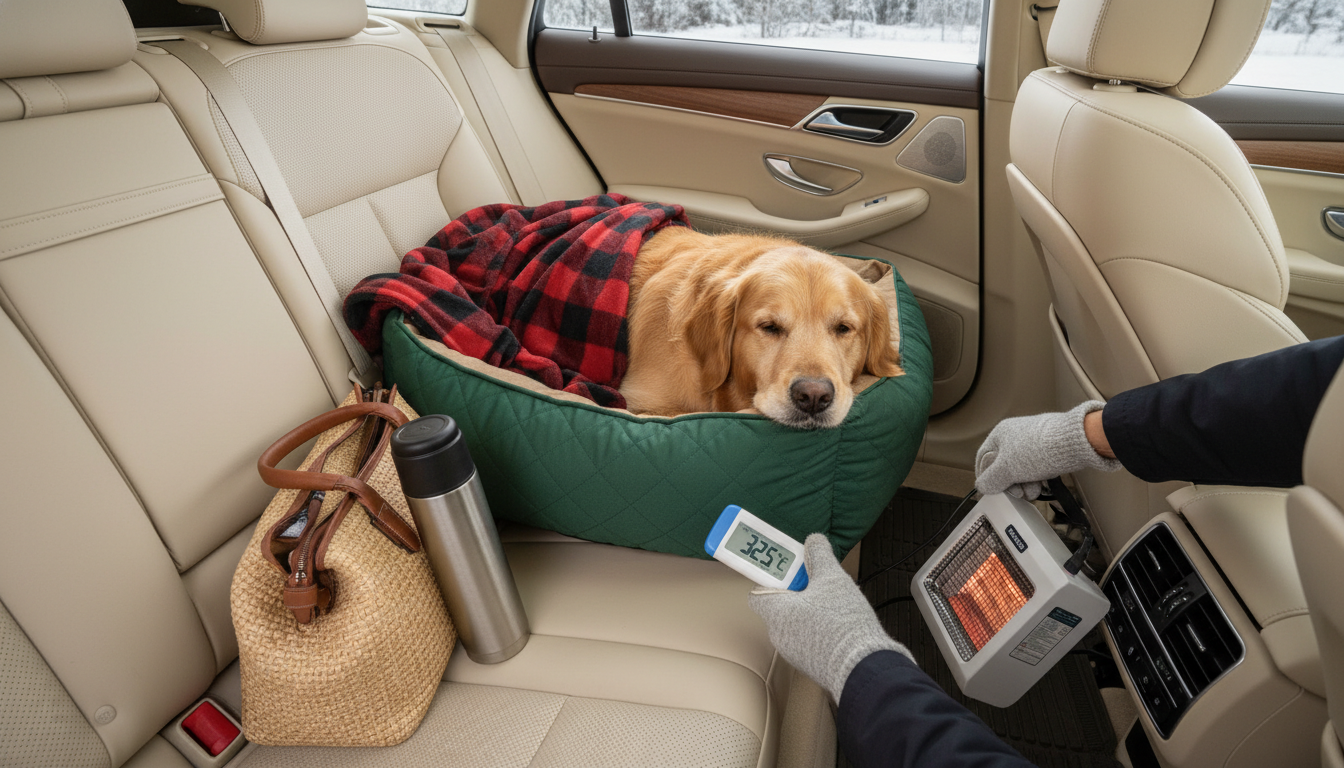
“Too cold” depends on your dog’s size, coat, age, and health, but a safe general rule is this: if the temperature drops below about 45°F, many dogs start to get uncomfortable in a doghouse unless it’s well-insulated and draft-free. Below 32°F, risk rises quickly for small dogs, short-coated breeds, seniors, puppies, and dogs with medical conditions. Once temperatures approach 20°F or lower, a doghouse alone is rarely enough for most pets—especially overnight.
A doghouse isn’t automatically “warm.” Wind sneaks through cracks, the floor pulls heat from your dog’s body, and humidity makes cold feel sharper. A dog can also curl up on a cold surface and still lose body heat quickly, even if they look settled.
Watch for shivering, a tucked tail, lifting paws off the ground, whining, seeking shelter urgently, or seeming stiff and slow. Pale gums, confusion, or extreme lethargy are red flags—bring your dog indoors and contact a veterinarian if symptoms look severe.
When it’s truly cold, the safest “doghouse” is usually indoors—warm, quiet, and cushioned. For a snug sleep setup, take a look at this comfort-focused guide to a round, supportive bed: https://kingwuff.com/blog/guide-paw-pillow-round-dog-bed-small-dogs-puppies/.
Many healthy, larger, double-coated dogs can tolerate colder temps than small or short-haired breeds, but below 32°F can be risky without proper insulation and bedding. For most family dogs, sleeping indoors is the safest choice once temperatures approach freezing.
Below about 45°F, some dogs may need extra protection depending on coat and size. At or below freezing, many dogs should not be left outside for long periods, especially unattended.
Many dogs start feeling chilly around 45°F, though small, thin-coated, senior, and very young dogs may feel cold sooner. Wind and dampness can make it feel colder even at higher temperatures.