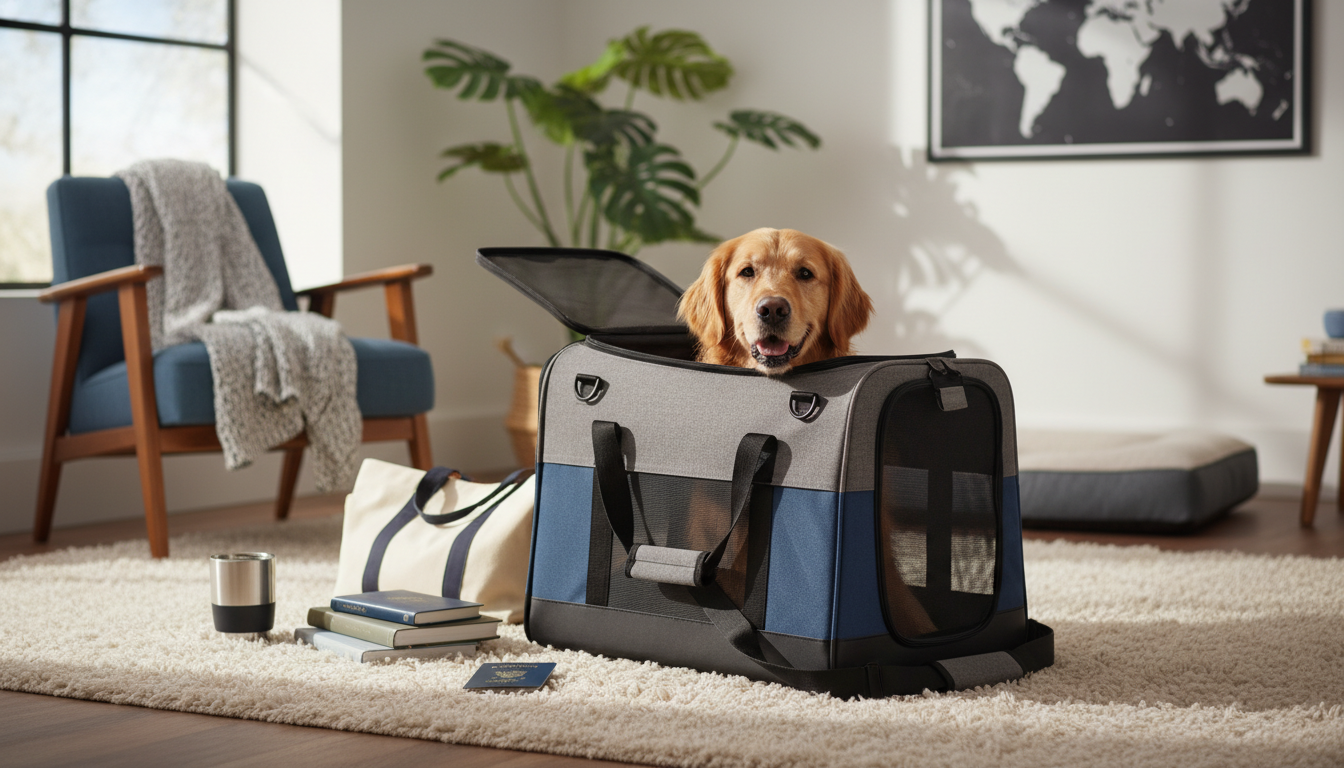
Traveling with a large dog can be cozy, safe, and stress-free with a little planning and the right gear. Start by choosing your transport: car travel offers the most flexibility for big pups, while air travel requires airline-specific prep. Always check size rules, health requirements, and booking options before you go.
Schedule a vet check to confirm fitness to travel and update vaccines and microchip info. Practice short rides or carrier time to build confidence. Feed a light meal 3–4 hours before departure and keep fresh water handy. Pack familiar comforts like a bed or blanket to help your dog settle.
Use a crash-tested harness clipped to a seatbelt or a secured crate to protect your dog and passengers. Plan rest stops every 2–3 hours for potty breaks, stretching, and water. Keep the cabin cool and avoid leaving your dog alone in the car.
For most airlines, large dogs fly as checked pets or cargo. Confirm breed restrictions, crate dimensions, seasonal embargoes, and paperwork (health certificate) well in advance. Choose a sturdy, IATA-compliant crate with room to stand and turn, add absorbent bedding, and label it clearly with your contact details.
Looking for a stylish, functional way to keep essentials organized on the go? Explore our full guide to the Tail Traveler Dog Carrier Bag and travel tips here: Read the main article.
Costs vary widely by airline and route, typically ranging from a few hundred to over a thousand dollars each way. Fees depend on your dog’s weight plus crate, destination, and whether the pet flies as checked or cargo.
Most airlines do not allow large dogs in-cabin internationally; in-cabin allowances are usually for small pets that fit under the seat. Check each airline’s policy, as service dogs have different rules.
Yes, but usually not in-cabin. A 100-pound dog typically flies as checked baggage or cargo in an airline-approved crate, subject to breed restrictions and temperature limits.