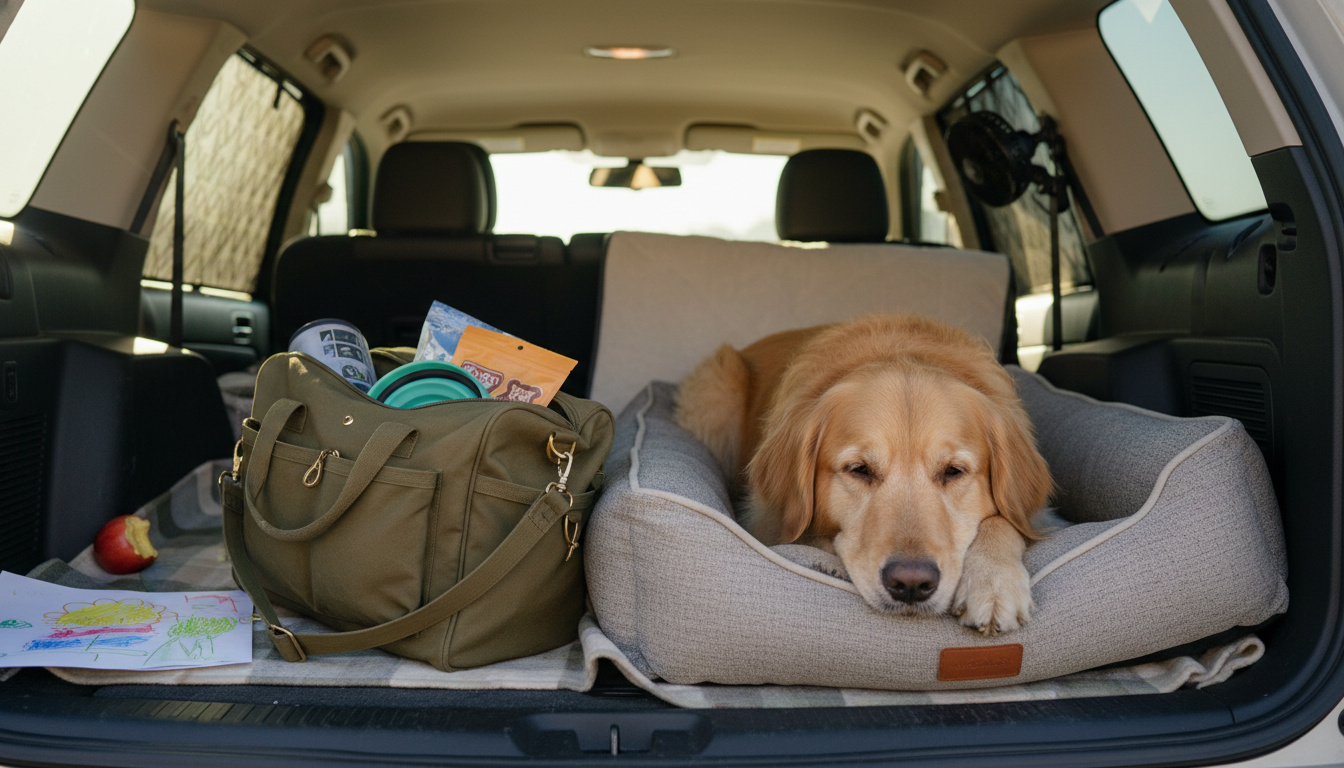
Dog panting in the car is usually a mix of excitement, stress, heat, or motion sickness. The goal is to make the ride feel cool, steady, and predictable—while keeping your pup safely secured.
Before you even pull out of the driveway, cool the car down and aim vents toward the back seat. Offer a small drink of water, and avoid heavy meals right before travel. If your dog is brachycephalic (like a Frenchie or Pug) or older, extra cooling and shorter trips matter even more.
Many dogs pant more when they’re sliding around or trying to balance. A stable setup—like a supportive car seat or carrier—can help them settle faster and feel protected. Add a familiar blanket or a favorite toy so the space smells like home.
For a cozy, travel-friendly setup, check out this guide on choosing the right dog car seat carrier bag: https://kingwuff.com/blog/guide-puff-puppy-dog-car-seat-carrier-bag-king-wuff/.
Practice “quiet rides” with short trips that don’t always end at something overly exciting (like the dog park). Start by sitting in the parked car for a minute, reward calm behavior, then progress to a quick loop around the block. Consistency helps your dog learn that the car isn’t a big event.
Signs of nausea include drooling, lip-licking, yawning, whining, or vomiting. If panting is intense, sudden, or paired with lethargy, coughing, pale gums, or trouble breathing, stop travel and contact a veterinarian right away.
Some dogs need extra time to “come down” from stress or excitement, especially after a long or bumpy trip. Offer water, a cool resting spot, and quiet time; if panting lasts more than an hour or comes with other symptoms, contact your vet.
Move them to a cooler area, speak softly, and encourage them to lie down in a familiar bed or blanket. Calm, steady routines and short practice rides can reduce stress-related panting over time.
Sudden panting can be triggered by a new stressor, warmer temperatures, pain, or motion sickness. If it’s a new pattern or seems severe, a vet check is the safest next step.