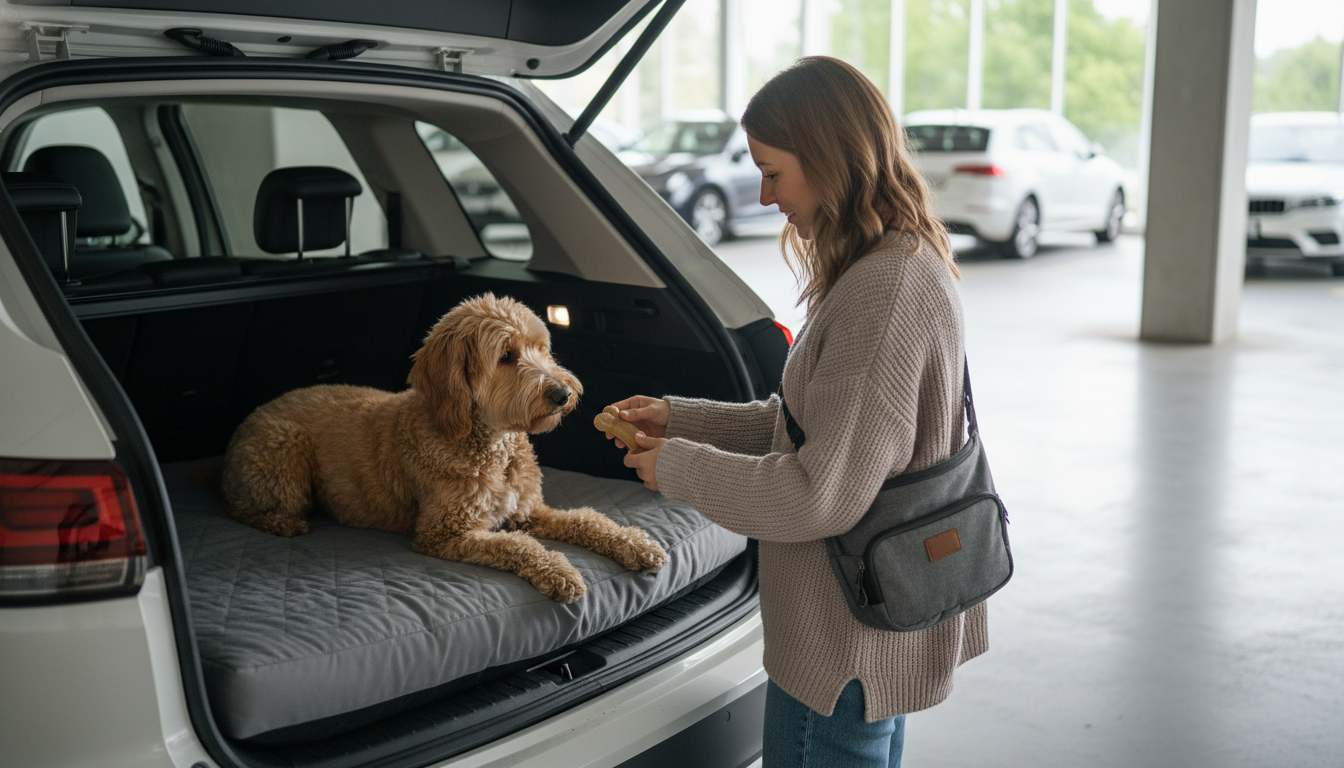
Shaking and panting in the car usually means a dog is stressed, nauseated, or overstimulated. The fastest path to calmer rides is combining safety (secure restraint), comfort (a stable, cozy spot), and gradual training so the car stops feeling scary.
If panting ramps up quickly, drooling appears, or your dog vomits, motion sickness may be the culprit. Keep the car cool, crack a window for fresh air, avoid heavy meals 2–3 hours before driving, and take breaks on longer rides. If symptoms are frequent, ask your vet about motion-sickness options.
A sliding seat or an unrestrained dog can make anxiety worse. Use a crash-aware setup: a well-fitted harness with a seat belt tether, or a structured car seat/carrier that keeps your dog supported and prevents bouncing around. A familiar blanket or a thin, washable pad can add comfort without overheating.
Start with short sessions: sit in the parked car, feed a few small treats, then leave. Next, turn the engine on briefly, reward calm behavior, and end the session. Build up to a one-minute drive around the block, gradually extending time only when your dog stays relaxed.
Some dogs panic when they can’t brace themselves or when outside visuals fly by. Position the carrier/seat so your dog feels stable, keep the cabin quiet, and offer a long-lasting chew or a lick mat (only if it doesn’t cause nausea). If your dog is crate-trained, a carrier can feel like a safe den.
Big excitement at the destination can teach your dog to escalate in the car. Aim for calm greetings, a short decompression walk, and praise for relaxed behavior before the fun starts.
For a comfort-first setup that supports safer, cozier travel, see this guide: https://kingwuff.com/blog/guide-puff-puppy-dog-car-seat-carrier-bag-king-wuff/.
This is most often anxiety, motion sickness, or overheating. If it’s sudden, severe, or paired with vomiting or collapse, contact your vet.
Start with non-medication options like a calming routine, a secure carrier/seat, and gradual training. For supplements or prescriptions, check with your vet to match the choice to your dog’s health and symptoms.
Keep the cabin cool, offer steady support with a secure travel setup, and build positive associations with short practice rides. If panting continues despite a calm environment, ask your vet about nausea or anxiety causes.