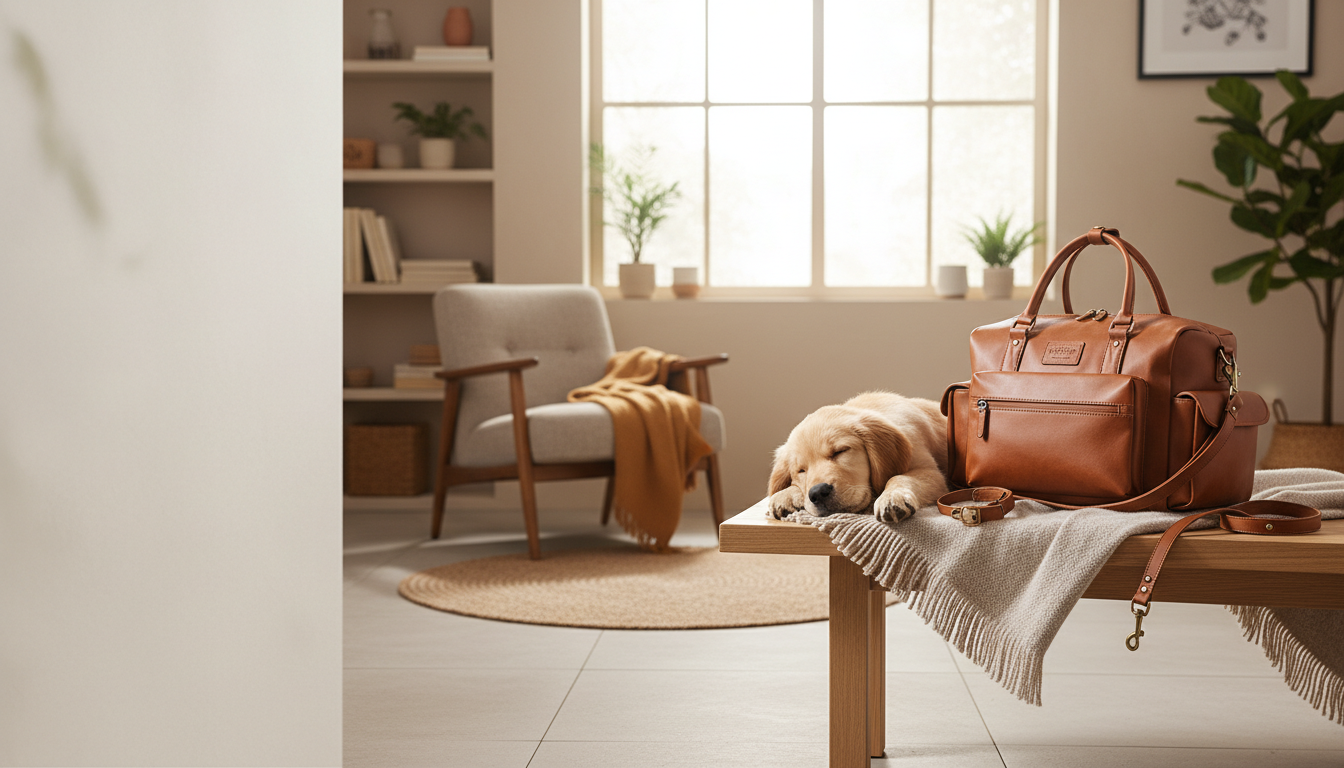
Choosing the right size dog carrier bag is all about comfort, safety, and support. Your pup should be able to stand up, turn around, and curl up without feeling cramped, while the bag remains structured and easy for you to carry. Here’s a quick sizing guide to get it right the first time.
Compare your dog’s length and height to the carrier’s interior dimensions—not just the exterior. A good everyday tote-style carrier typically suits small dogs up to about 15–20 lb, with interiors around 15–18 in (L) x 8–10 in (W) x 10–12 in (H). Broader-chested pups may need extra width for shoulder comfort.
For city use and errands, pick a compact, lightweight carrier that fits crowded spaces. For car rides, ensure the carrier can be secured. For air travel, always check your airline’s under-seat size rules; soft-sided carriers often work within 17–19 in (L) x 11–12 in (W) x 8–11 in (H), but requirements vary.
Want a deeper dive into sizing, materials, and real-world fit tips? Read the full guide here: How to Choose a Dog Carrier Bag (Tote’n’Go Black Canvas).
Choose a carrier that’s 2–4 inches longer than your dog’s body (nose to base of tail) and roughly 1–2 inches taller than shoulder height for soft-sided bags. Your dog should be able to stand, turn, and lie down comfortably without excess sliding.
Divide 22 lb by your dog’s daily intake in pounds. For example, a 20 lb dog eating 1 cup (about 4 oz) daily will take roughly 88 days to finish a 22 lb bag. Always check your specific food’s cup-to-pound conversion.
Sometimes. Airlines set size and carrier-fit rules, not just weight. If your dog fits comfortably in an airline-approved, under-seat soft carrier and meets the carrier size limits, cabin travel may be allowed. Always confirm with your airline before booking.