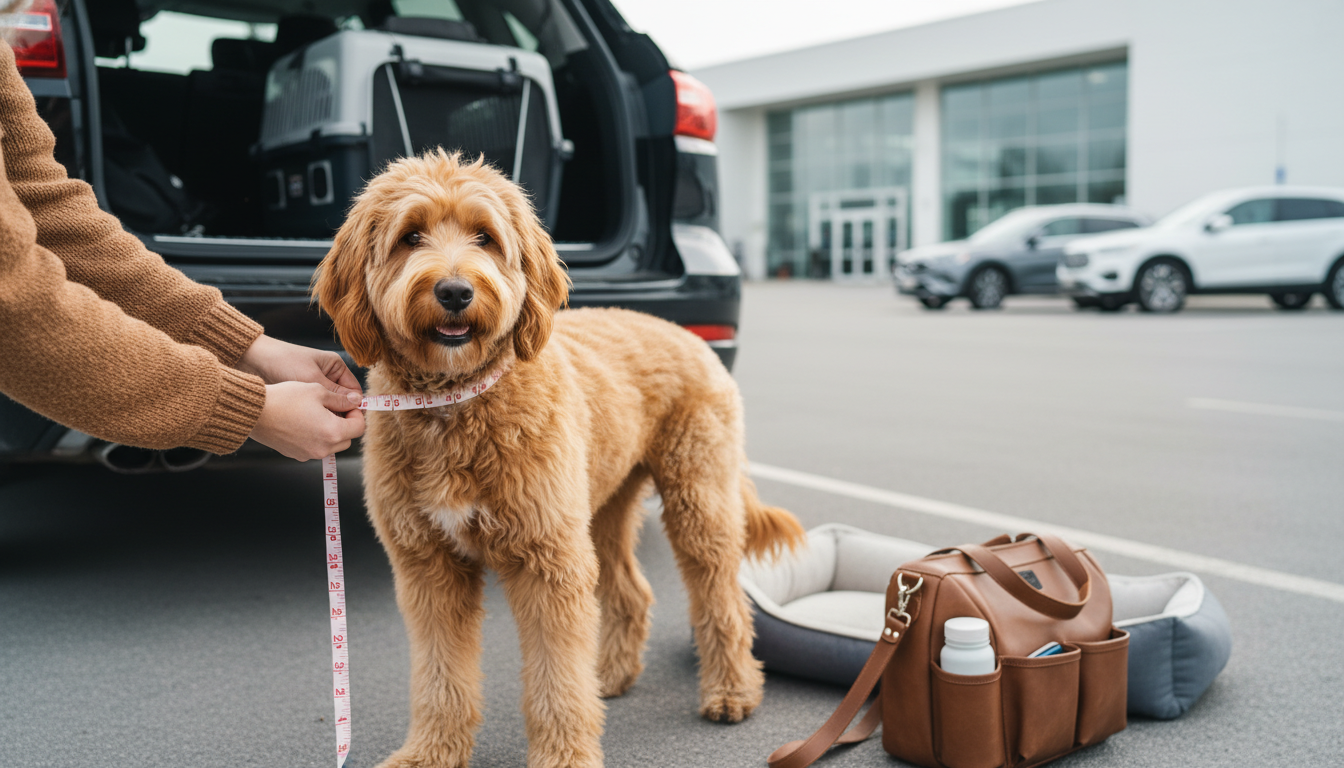
A 38-pound dog typically has a chest (girth) measurement of about 22 to 28 inches around the widest part of the ribcage, just behind the front legs. That said, “38 pounds” can look very different depending on body shape—an athletic, deep-chested dog may measure closer to the upper end, while a compact, stockier pup may land closer to the lower end.
Chest size is the most useful measurement for choosing comfort gear because it reflects the dog’s ribcage—where harnesses, travel bags, and many carrier openings need to fit without rubbing or squeezing. Weight is only a rough estimate; a dog can be 38 pounds and still have a very different frame than another dog at the same weight.
Use a soft measuring tape (or a string and ruler). Have your dog stand naturally, then wrap the tape around the widest part of the chest, right behind the front legs. Keep the tape snug but not tight—you should be able to slip two fingers under it for a comfortable fit.
If your dog’s chest falls between two sizes, the better choice is usually the size that matches the larger measurement—especially for travel items where a little extra room helps with breathing and relaxed movement. For adjustable harnesses, you can fine-tune the fit, but for carriers and walk bags, a cramped fit can quickly become uncomfortable.
Below are practical points for comfort and safety checks (quick but important).
For more cozy, practical tips on choosing travel-friendly gear that supports comfort and pet safety, visit our guide: pet travel comfort gear, dog carriers, and walk bags.
Measure your dog’s length (nose to base of tail) or their curled-up sleeping size, add about 4–6 inches, and choose a bed with a sleep surface that lets them stretch or curl comfortably.