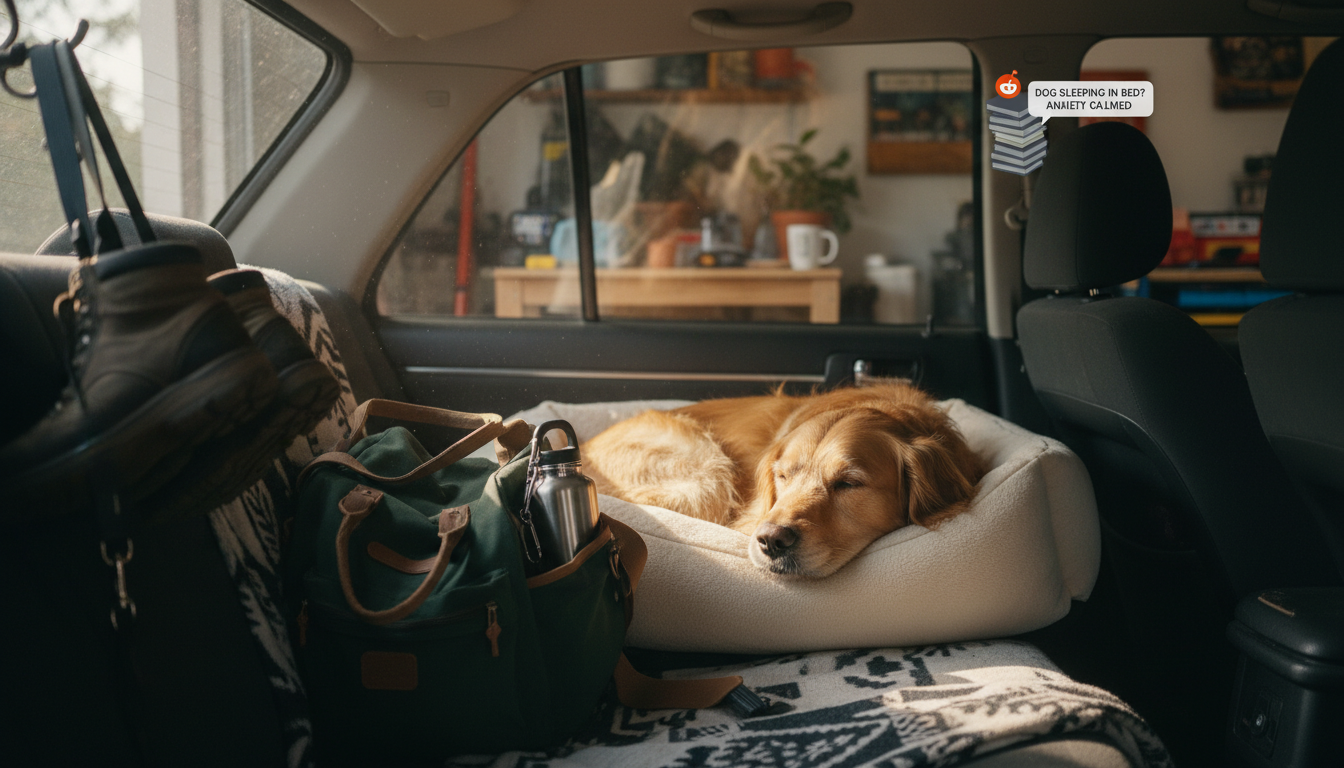
If scrolling Reddit has you feeling anxious about whether your dog “should” sleep in your bed, you’re not alone. The truth is: plenty of healthy, well-adjusted dogs sleep with their people, and plenty do better in their own space. The best choice is the one that supports everyone’s sleep, comfort, and safety—especially during stressful seasons or big life changes.
For many households, it’s perfectly fine. Sleeping together can be cozy and bonding, and some dogs settle faster when they’re near you. It can become a problem when anyone is losing sleep, a dog guards the bed, accidents happen, or allergies and asthma flare up. If you’re feeling anxious, focus less on “rules” and more on whether bedtime is calm, predictable, and restful.
Online advice tends to be intense and one-size-fits-all. But dogs vary by age, size, anxiety level, and health. If your dog is already clingy or worried, bed-sharing can sometimes reinforce constant closeness. On the other hand, forcing separation too suddenly can also increase stress. A gentle transition and a comfy alternative sleep spot usually works best.
If you want your dog out of the bed (even temporarily), create an equally inviting “yes” space. Place a supportive, washable bed next to your bed, add a familiar blanket, and reward your dog for choosing it. Keep the routine consistent: last potty break, lights down, a calm cue like “bed,” then quiet praise. If your dog jumps up at night, guide them back without scolding.
Night anxiety can show up as pacing, panting, whining, or insisting on contact. A safe, non-slip bed helps many dogs relax because it feels stable and secure, especially on hardwood or tile. For practical tips on choosing a durable, easy-to-clean option that stays put, see this guide to washable, non-slip dog bed mattresses and plush pads.
It can be a good choice for many dogs if it fits their size and sleep style and uses supportive, washable materials. Look for a non-slip base, durable stitching, and enough cushioning—especially for seniors or larger breeds.