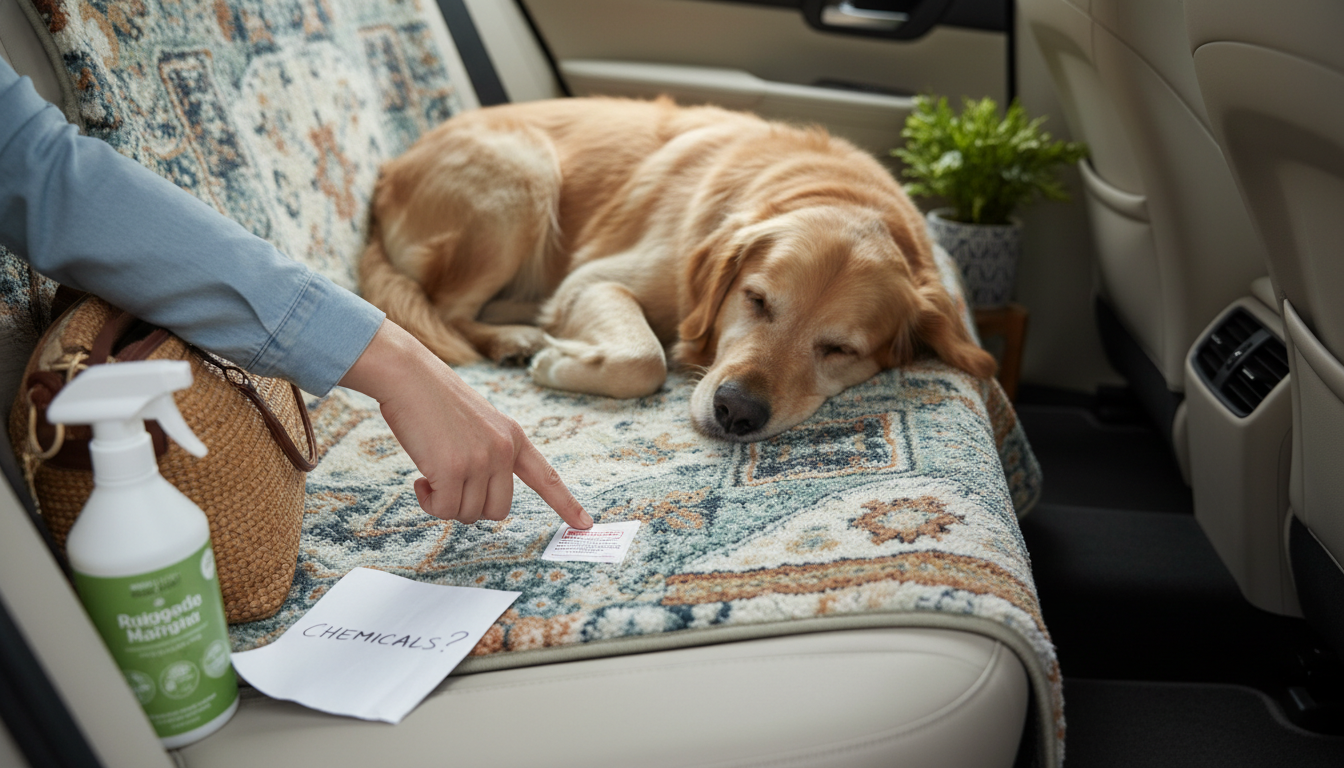
Ruggable rugs are generally marketed as low-VOC and made with safety in mind, but no rug brand can honestly claim “zero chemicals” from end to end. Like most household textiles, the materials and manufacturing process may involve dyes, backings, stain resistance, adhesives, and packaging that can introduce trace compounds and odors—especially noticeable right after unboxing.
If “toxic” means an immediate danger, most customers won’t experience issues when rugs are used as directed. If “toxic” means “as low-exposure as possible” for a sensitive home (kids, allergies, or pets that sprawl, sniff, and nap on the floor), it’s smart to look for third-party certifications, review the brand’s current material disclosures, and air out a new rug before heavy use.
Dogs spend a lot of time close to surfaces, so a few simple habits can make a big difference:
If your goal is a cleaner, more controlled lounging spot than the floor, a supportive bed can be a simple upgrade—especially for small dogs and puppies who curl up for long naps. For a helpful guide to choosing the right size and shape, visit this dog bed guide.
They’re typically designed to be low-VOC and safe for normal home use, but they’re not “chemical-free.” If anyone in the home is sensitive, airing out and washing can help reduce odors and residues.
Quality experiences vary by expectations and use. Many people like the washable design, while others prefer a thicker, more traditional rug feel.
Undyed or low-dye natural fibers like wool, organic cotton, jute, or sisal are often considered lower-tox options, especially when paired with low-emission backings and certifications.