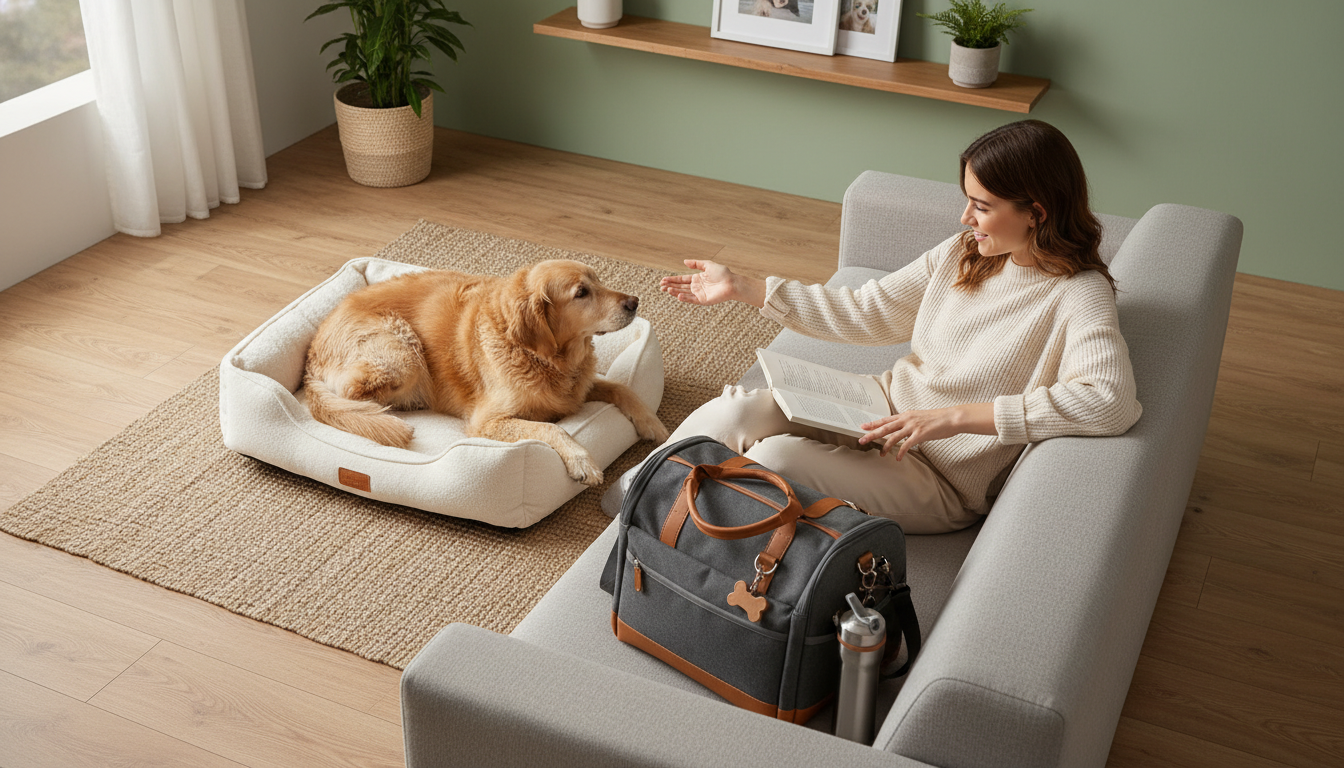
To a dog, you’re not a “girlfriend” in the human sense. Most dogs relate to their favorite person as a trusted caregiver and secure base—closer to a parent figure, pack leader, or bonded companion—depending on the dog’s age, history, and personality.
Dogs learn who meets their needs: food, water, walks, play, training, and comfort. If your dog follows you from room to room, checks in with you on walks, or relaxes most deeply when you’re nearby, that usually points to a caregiving bond. Puppies and newly adopted dogs often imprint strongly on the person who provides routine and safety, and that attachment can look a lot like a parent-child relationship.
Some behaviors can be mistaken for “dating” energy—like cuddling, licking, leaning, pawing, or excitement when you come home. These are typically signs of affection, social bonding, or appeasement. In a few cases, mounting can happen due to excitement, stress, or learned behavior, not romance. If mounting is frequent or intense, redirect calmly, add structured exercise, and consider talking with a trainer or vet.
Keep boundaries gentle and clear: reward calm behavior, practice short separations, and make your dog’s resting space inviting. A dedicated bed can help your dog settle independently while still feeling connected to the household.
For a comfort-first setup that’s easy to keep clean and looks great at home, check out this guide to the Midnight Nest dog bed.
It can be a good choice for many dogs if it fits their size and sleep style and uses supportive, washable materials. Look for a non-slip base, durable stitching, and enough cushioning—especially for seniors or larger breeds.