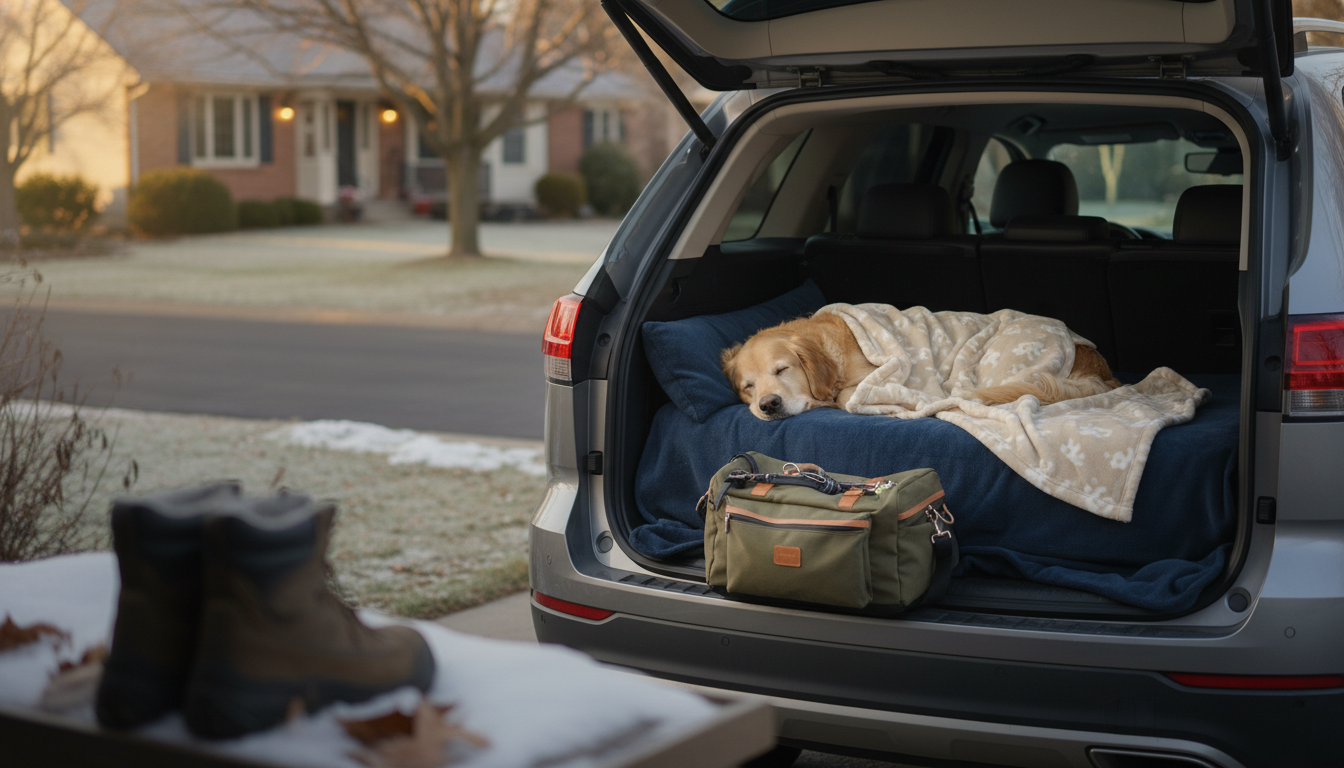
Sometimes—especially if your home runs cool at night, your dog is small, short-haired, senior, very young, or recovering from illness. Many dogs are perfectly comfortable sleeping without a blanket if they have a warm indoor temperature and a cozy bed, but a soft blanket can add an extra layer of comfort and help your pup settle faster.
Look for curling up tightly, shivering, seeking out heat vents, burrowing into laundry, or choosing the warmest spot in the house. If your dog keeps leaving their bed to cuddle on the couch or press against you for warmth, adding a blanket can make their sleeping area more inviting.
If your dog sprawls out relaxed, sleeps through the night, and feels warm to the touch (especially the ears and paws), they may already be comfortable. Dogs with thicker coats often regulate well indoors, as long as their bed is insulated from cold floors and drafts.
Choose a breathable, washable blanket without loose threads that can tangle. Avoid weighted blankets or anything with ribbons/buttons that could be chewed off. For dogs who like to burrow, place the blanket loosely over part of the bed so they can move it aside easily.
A supportive bed with raised edges can block drafts and help your dog feel tucked in, while a soft top layer (like a blanket) adds that “nesting” feel. If you’re selecting a bed for a smaller dog or puppy, this guide can help you find a comfy, secure option: Paw Pillow Round Dog Bed Guide.
Many dogs start to appreciate extra warmth when indoor temps dip below about 65°F, especially small, short-haired, senior, or thin-coated dogs. Watch your dog’s body language—shivering or curling tightly usually means they’d like a warmer setup.
Yes, some cats can get chilly, particularly seniors, kittens, and short-haired breeds. A warm bed, draft-free spot, and a soft blanket option can help them stay comfortable.
It’s usually better to offer a blanket rather than cover them tightly. Let your cat choose—most prefer to crawl under or nest against a blanket on their own.