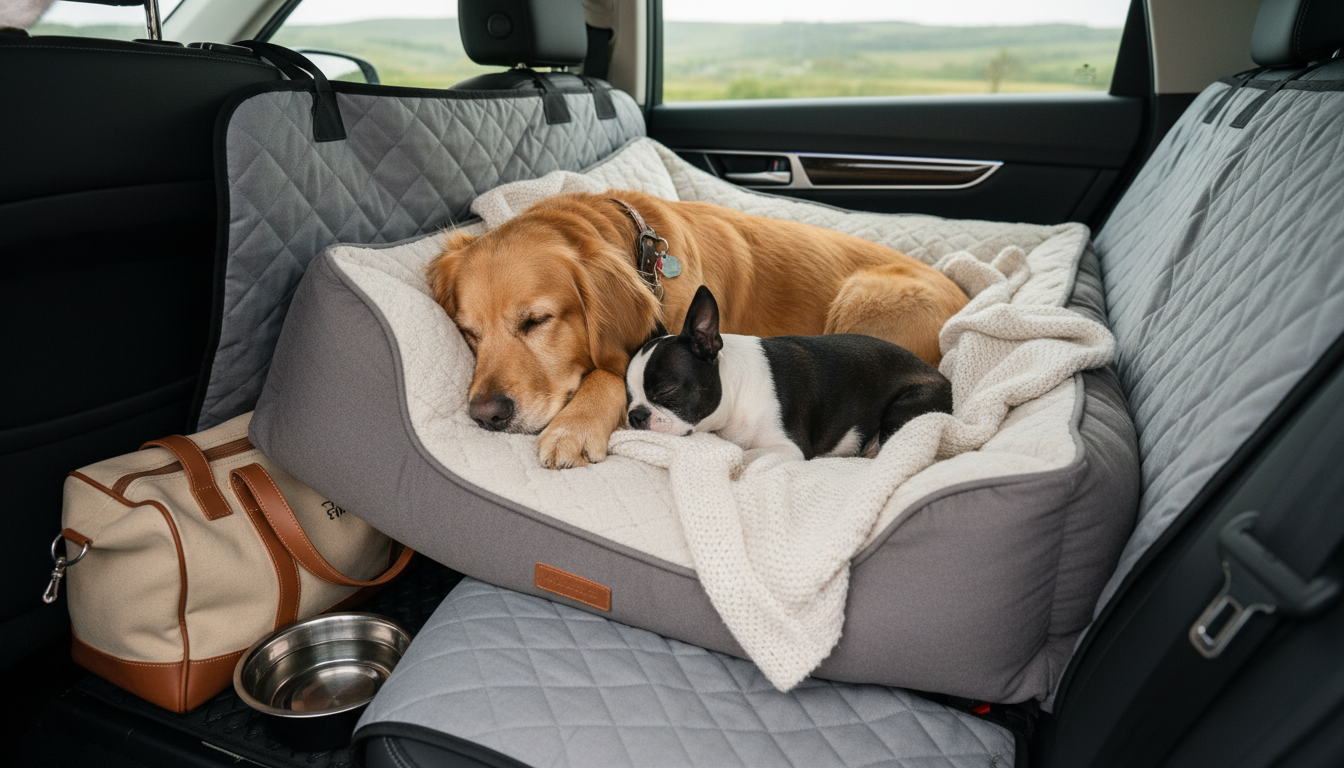
Often, yes. When a dog chooses to sleep in your bed, it’s usually a strong sign she feels safe with you, enjoys your company, and considers you part of her “pack.” Dogs are naturally social sleepers, and sharing a warm spot with a trusted person can be one of the clearest comfort signals they show.
Trust and security: Sleep is a vulnerable time. If your dog settles next to you, she’s showing she can fully relax in your presence.
Bonding and closeness: Many dogs seek physical proximity to the person they’re most attached to. Snuggling up or curling at your feet can be her way of staying connected.
Comfort (and convenience): Beds are soft, warm, and smell like their favorite human. Sometimes it’s less about preference and more about choosing the coziest, most familiar option.
Some dogs adore their people yet prefer their own space. Breed traits, coat type, age, and personality all matter. If your dog sleeps in her own bed but happily follows you around, greets you with wags, and checks in during the day, she can still be deeply attached.
If bed-sharing works for everyone, keep it peaceful: trim nails, manage shedding, and watch for signs of restlessness or guarding (like growling when moved). If you’d rather not share the bed, you can still support that closeness by offering a premium sleep spot right beside you—especially helpful for dogs who like “being near” more than “being on.”
For ideas on creating a cozy, clean sleep setup—whether it’s next to your bed or across the room—visit this guide to the Midnight Nest dog bed.
It can be a good choice for many dogs if it fits their size and sleep style and uses supportive, washable materials. Look for a non-slip base, durable stitching, and enough cushioning—especially for seniors or larger breeds.