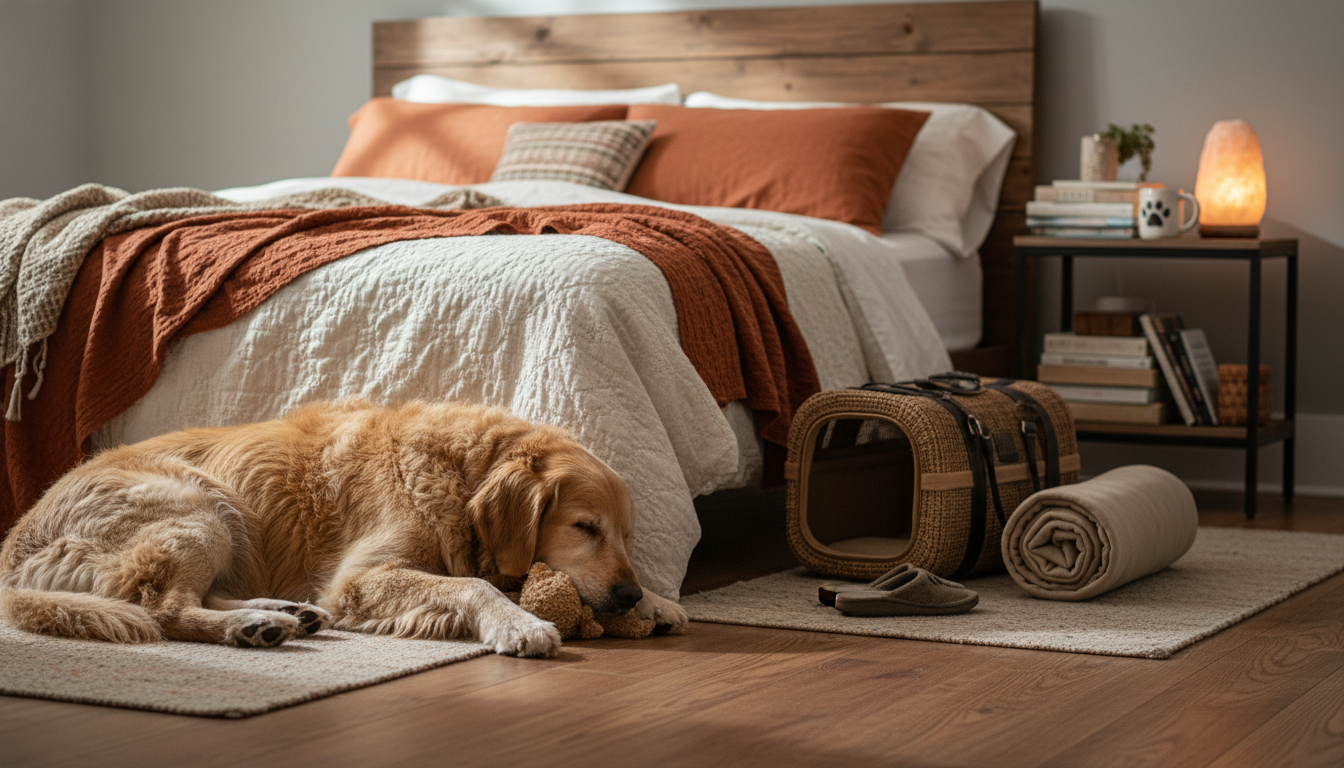
Letting your dog sleep in your bed doesn’t automatically cause behavioral issues. For many dogs, it simply becomes a comforting routine that strengthens your bond. Behavior problems are more likely to come from inconsistent boundaries, anxiety, or unmet needs during the day—not from sharing a sleeping space itself.
Sharing your bed may contribute to behavior issues if your dog starts guarding the bed, refuses to move when asked, growls at a partner, or becomes distressed when separated at night. In those cases, the bed isn’t the root cause; it’s just the place where stress, insecurity, or resource guarding shows up.
Another common issue is poor sleep for either of you. Restlessness, frequent waking, or a dog who needs constant contact can create a cycle where your dog depends on your presence to settle, making nighttime independence harder.
The simplest way to keep co-sleeping healthy is to make it a privilege with clear rules. Teach an “up” and “off” cue, practice calm settling, and reward relaxed behavior. If your dog can’t calmly share the space, it’s okay to reset the routine.
A dedicated sleep spot near your bed can also help your dog feel secure while building independence. Many dogs do best with a comfy, supportive dog bed that’s easy to keep clean—especially for shedding, muddy paws, or nightly wiggles. If you want a practical setup for a calm bedtime routine, see this guide to creating a cozy, clean sleep space: https://kingwuff.com/blog/guide-midnight-nest-dog-bed-cozy-clean-sleek-comfort/.
Consider having your dog sleep in their own bed (in your room or nearby) if there’s growling, snapping, guarding, house-training setbacks, or major sleep disruption. If separation anxiety is severe or aggression is involved, a trainer or veterinary behaviorist can help you create a plan that’s safe and comfortable for everyone.
It can be a good choice for many dogs if it fits their size and sleep style and uses supportive, washable materials. Look for a non-slip base, durable stitching, and enough cushioning—especially for seniors or larger breeds.