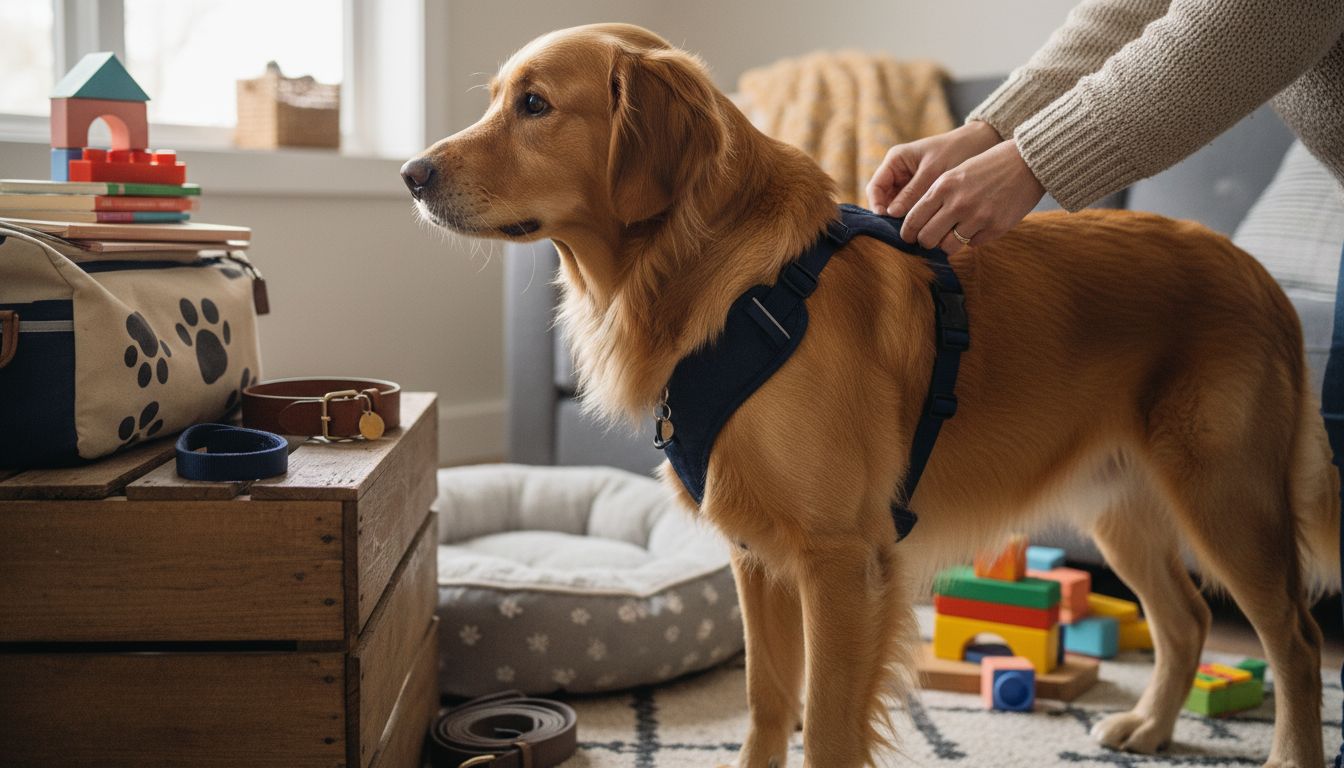
Many veterinarians lean toward harnesses for everyday walking because they spread pressure across the chest and shoulders instead of concentrating it on the neck. That can be especially helpful for dogs that pull, dogs with delicate airways, and breeds prone to breathing issues. A harness can also offer better control, which supports safer, calmer walks.
That said, collars still have an important role. Vets commonly recommend a collar for holding ID tags and a license, so your dog can be identified quickly if they slip out the door. For dogs that walk politely on leash and don’t have neck or airway concerns, a collar may be perfectly fine for short, relaxed outings—especially when fitted correctly.
A harness is often recommended if your dog pulls, coughs on leash, has a history of tracheal irritation, or is a small breed with a sensitive neck. It can also be a smart choice for puppies learning leash manners, since it reduces the risk of neck strain during those stop-and-start training moments. Look for a comfortable fit that doesn’t rub behind the legs and allows full shoulder movement.
Collars can be a good option for calm walkers and quick potty breaks, as long as the fit is secure (snug but not tight). The “two-finger rule” is a common guideline: you should be able to slip two fingers between the collar and your dog’s neck. If your dog backs out of collars or startles easily, a well-fitted harness can add peace of mind.
Whichever you choose, fit matters most. Check for rubbing, adjust as your dog’s weight or coat changes, and replace worn gear. And for travel days, prioritize secure, supportive gear—this guide to comfortable car rides can help: dog car seat and carrier guide.
It can be a good choice for many dogs if it fits their size and sleep style and uses supportive, washable materials. Look for a non-slip base, durable stitching, and enough cushioning—especially for seniors or larger breeds.