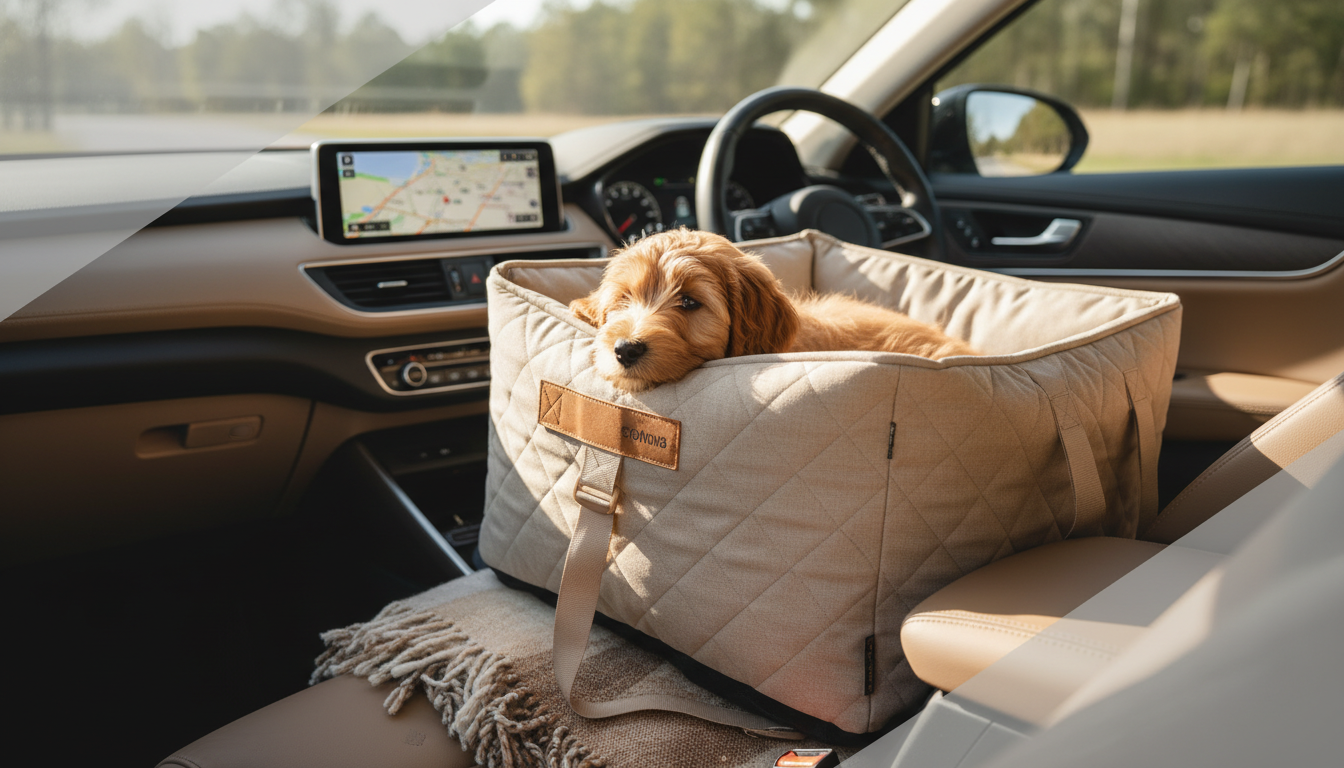
While not every state requires a dedicated “car seat” for dogs, small dogs do need to be safely restrained in the car. Unrestrained pets can distract drivers and risk serious injury in sudden stops or collisions. For small breeds, the safest and coziest solution is a secured, enclosed carrier or a crash-tested booster that attaches to the vehicle’s seat belt system.
A premium travel carrier keeps your pup contained, comfortable, and close by—helping reduce stress while protecting them from impacts and airbags. Look for features like sturdy structure, breathable panels, soft interiors, and secure seat belt pass-throughs. A thoughtfully designed carrier, such as a stylish, durable option you can seat-belt into place, offers the best blend of safety and comfort for everyday drives and road trips alike.
If your dog prefers more visibility, a booster-style seat can elevate them while keeping them clipped in with a harness tether. No matter the setup, avoid letting your small dog ride on your lap or roam freely. Keeping them safely restrained supports your focus on the road and helps protect your four-legged friend in unpredictable moments.
For a cozy, travel-ready option that pairs safety with style, explore our guide to a secure, seat belt–friendly carrier: Read the full carrier guide.
They need to be safely restrained, yes. A crash-tested booster or a secured, enclosed carrier that anchors with a seat belt is recommended to protect your dog and minimize driver distraction.
Use a well-ventilated, structured carrier or a crash-tested booster attached to the seat belt, and connect your dog with a harness (not a collar). Place them in the back seat, away from active airbags.
Laws vary by state and country. Some regions require pets to be restrained, while others enforce distracted driving rules that can apply if your dog is loose. Check your local regulations to stay compliant.