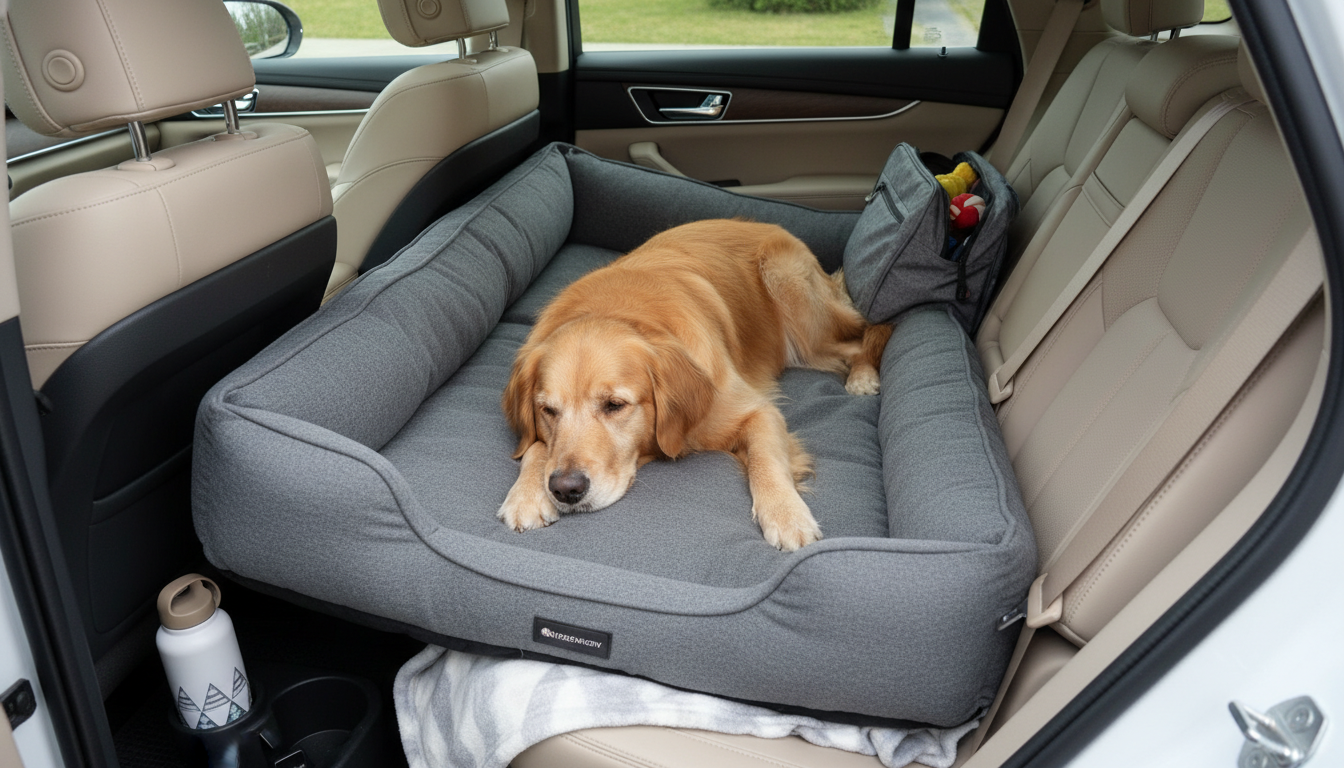
Yes—orthopedic dog beds can genuinely help many dogs feel more comfortable, especially seniors, larger breeds, and pups dealing with stiff joints or recovering from surgery. The main benefit comes from supportive foam (often memory foam) that cushions pressure points at the shoulders, hips, and spine. Instead of “bottoming out” onto the floor, your dog’s weight is spread more evenly, which can make getting up and settling down noticeably easier.
That said, not every dog needs an orthopedic bed. A young, healthy dog that happily naps anywhere may do fine on a standard cushion. But if your dog is slowing down, limping after rest, repositioning frequently at night, or avoiding hard surfaces, an orthopedic bed can be a simple upgrade that supports better rest.
Orthopedic beds are built to hold their shape and provide consistent support. Look for high-density foam, a stable base, and a surface that’s cozy without trapping too much heat. Practical details matter, too: a washable cover for everyday messes, durable stitching for long-term use, and a non-slip bottom so the bed stays put when your dog steps in or out.
Orthopedic beds tend to help most for arthritis, hip dysplasia, spinal sensitivity, post-op recovery, and heavier dogs whose joints carry more load. They may help less if the bed is too thin, too soft, or placed on a slick floor where it slides—comfort and safety go hand in hand. Pairing supportive foam with a non-slip base and an easy-to-clean cover often makes the difference between “nice” and “night-and-day.”
Match the size to your dog’s sleeping style—curlers often love bolsters, while stretchers prefer a roomy, flat surface. If you travel or move the bed from room to room, prioritize lightweight durability and a cover that can handle frequent washes.
For more tips on picking a cozy, practical option, read our guide: washable, non-slip dog bed mattress & plush pad guide.
A supportive orthopedic foam bed that cushions pressure points and keeps joints aligned is usually best. Choose one that’s easy to step onto and has a non-slip bottom to prevent slips.
Thickness depends on your dog’s size and weight, but it should be thick enough that your dog doesn’t sink to the floor. Larger or heavier dogs typically need a thicker, higher-density foam for proper support.
They’re often worth it for senior dogs, large breeds, and dogs with joint stiffness because better support can improve rest and ease getting up. The value is highest when the foam is high-density and the cover is durable and washable.