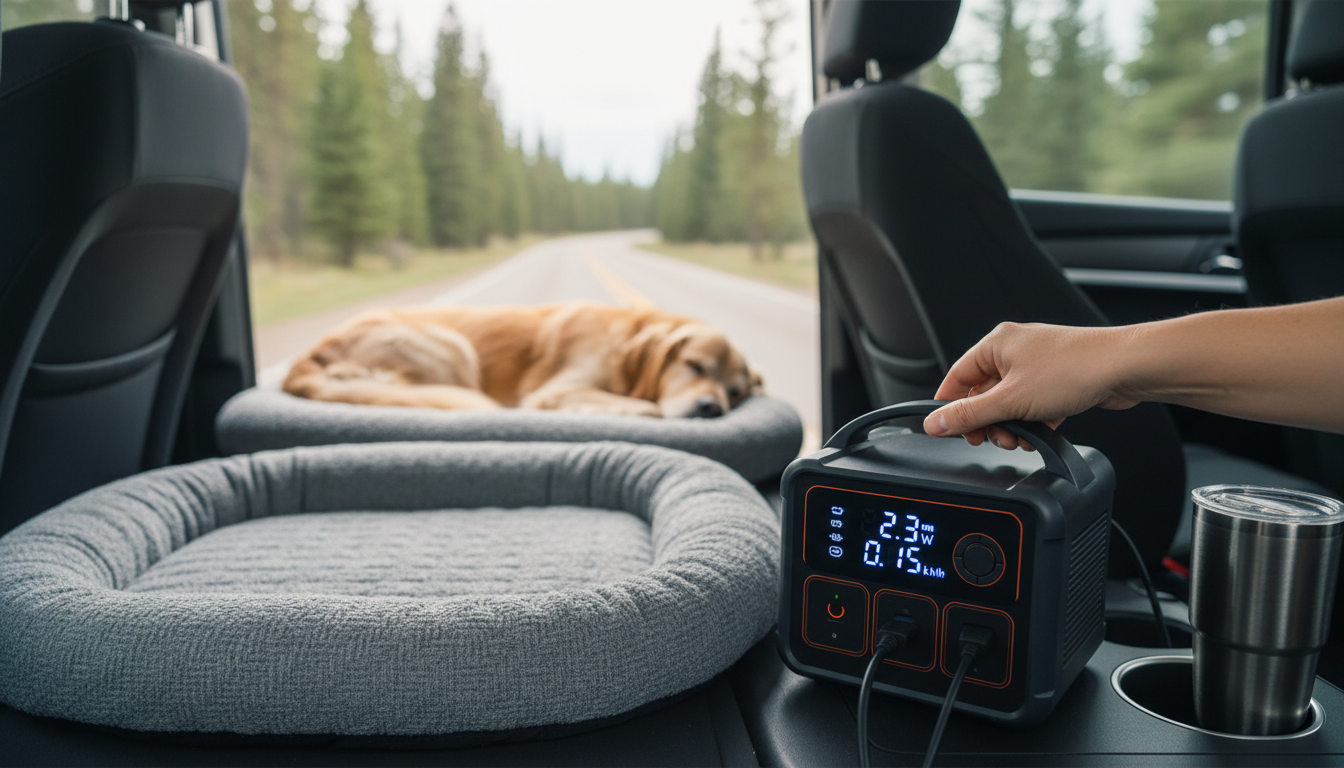
Most heated dog beds don’t use a lot of electricity. The majority are designed for low, steady warmth—more like a gentle heating pad than a space heater—so they typically sip power instead of guzzling it.
Exact energy use depends on the bed’s wattage and how long it runs. Many pet-safe heated beds fall in the range of about 15–60 watts. For perspective, a 20-watt heated bed running for 8 hours uses 0.16 kWh; at $0.15 per kWh, that’s about 2–3 cents per night. Even a 50-watt option for 8 hours is 0.4 kWh—around 6 cents. Costs will vary by local electric rates and runtime, but for most homes, it’s a small add-on compared to heating an entire room.
Wattage and schedule are the big factors. A thermostatic, pet-designed heated bed may cycle on and off once it reaches a set temperature, which can reduce overall usage. A non-thermostatic heater left on continuously can cost more.
Insulation matters, too. A well-cushioned, cozy bed helps hold warmth so the heater doesn’t need to work as hard. If your dog already loves a plush, nest-like shape, pairing that comfort with a low-watt warmer can be efficient.
Choose a product made specifically for pets, with chew-resistant cords and built-in temperature control. Place the bed in a draft-free spot, and make sure your dog can move off the heated area if they want. If your pup prefers a non-heated, snuggly option (especially for small dogs and puppies), take a look at this cozy guide to a round dog bed: https://kingwuff.com/blog/guide-paw-pillow-round-dog-bed-small-dogs-puppies/.
Most heating pads are moderate to low wattage, so they’re usually not hard on electricity when used for short periods. Costs rise mainly when they run for many hours every day.
Typically, no. Many heating pads draw roughly 30–100 watts, and many models cycle or have auto-off features that can help limit energy use.
In many cases, an electric blanket is cheaper because it warms you (or your pet) directly instead of heating the whole room. Turning up central heat often uses significantly more energy.