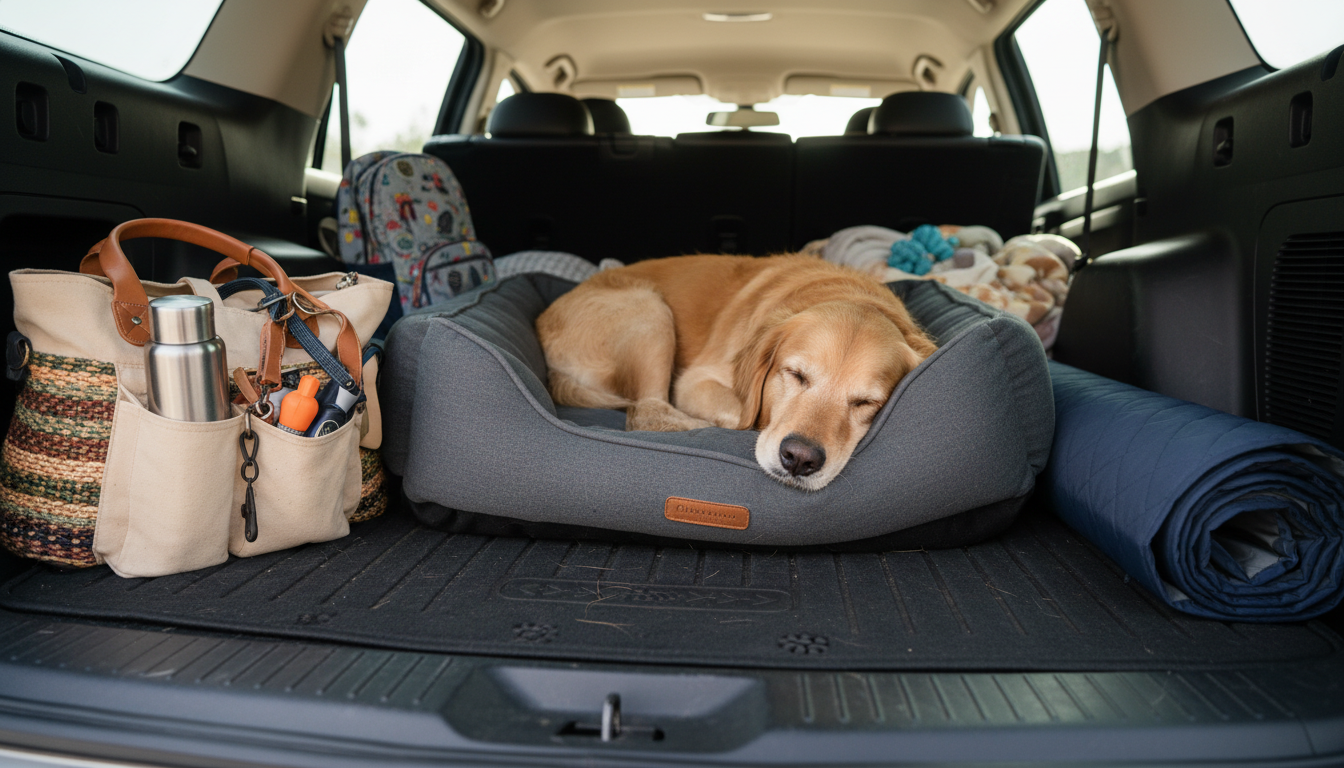
Not always. Some dogs do great on a medium or thin bed, while others genuinely benefit from a thicker, more supportive option. The best choice depends on your dog’s body, sleep habits, and where the bed will be used—at home, in a crate, or on the go.
A thick bed can add comfort and help protect joints by creating a softer buffer between your dog and hard floors. It’s often a smart pick if your dog:
Thicker beds can also help with insulation during colder months, especially if the bed sits on a chilly floor.
Some dogs prefer a lower-profile bed that feels stable and easy to step onto. A thinner bed can be a better match if your dog:
For dogs that love nesting, a plush top layer can matter more than overall thickness.
Thickness only helps when the bed keeps its shape. Look for supportive fill that won’t flatten quickly, a cozy surface your dog actually wants to lie on, and practical features that keep the bed safer and cleaner—like a non-slip bottom and a washable cover. If your dog slides around when standing up or turning circles, stability is just as important as softness.
Watch how your dog sleeps for a few nights. If they avoid the bed, shift positions often, or end up on the floor, they may need either more support or a cooler, flatter option. For a deeper dive into washable, non-slip comfort options and what to look for, visit this guide to washable non-slip dog bed mattresses and plush pads.
It can be a good choice for many dogs if it fits their size and sleep style and uses supportive, washable materials. Look for a non-slip base, durable stitching, and enough cushioning—especially for seniors or larger breeds.