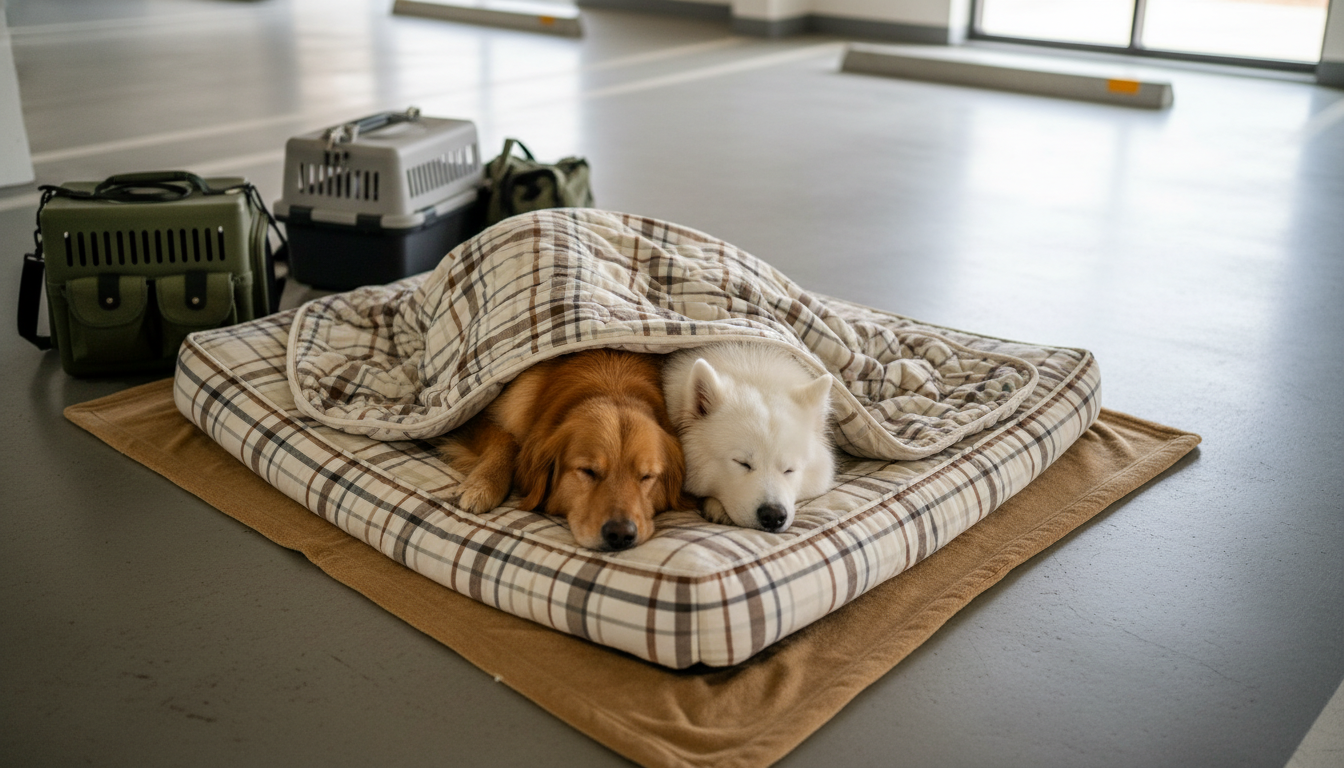
Some dogs sleep perfectly fine without a blanket, but many appreciate the extra warmth and security—especially in cooler homes, drafty rooms, or during winter. A blanket can also help a dog settle faster by adding a familiar scent and a soft layer to nest into. The key is matching the bedding to your dog’s coat type, age, health, and sleep setup.
Blankets tend to be most helpful for puppies, senior dogs, small breeds, short-haired dogs, and pups with low body fat. Dogs recovering from illness or surgery may also benefit from gentle warmth. If your dog sleeps in a crate, on tile floors, near an exterior wall, or in an air-conditioned space, a blanket can reduce heat loss and make the area feel more inviting.
Thick-coated breeds and dogs that already run warm may prefer cooler sleeping conditions. If your dog sprawls out on cool surfaces, pants indoors at night, or moves away from bedding, adding a blanket could make them uncomfortable. Some dogs simply prefer a supportive bed over extra layers.
Choose breathable, washable fabrics and avoid loose threads or heavy quilts that can trap heat. For chewers, skip blankets that shred easily and opt for a durable sleep surface instead. A cozy, supportive bed often does the heavy lifting for nighttime comfort, while a light blanket becomes an optional “topper” your dog can burrow under or push aside.
Start with a bed that fits your dog’s size and sleep style—curled-up sleepers often like a round, bolstered shape that feels nest-like. Then add a blanket only if your dog seems to seek warmth or likes to burrow. For a helpful guide to choosing a snug, supportive option for small dogs and puppies, visit this round dog bed guide.
Look for relaxed, steady breathing and a comfortable sleeping posture. If your dog curls tightly, shivers, or seeks extra heat sources, adding a light blanket or warmer bed can help.
Yes—especially small, short-haired, young, senior, or sick dogs. Cold signs include shivering, tucked posture, and reluctance to settle in their usual spot.
It can, since it reduces light and creates a den-like feel. Keep airflow in mind and leave part of the crate uncovered so your dog doesn’t overheat.