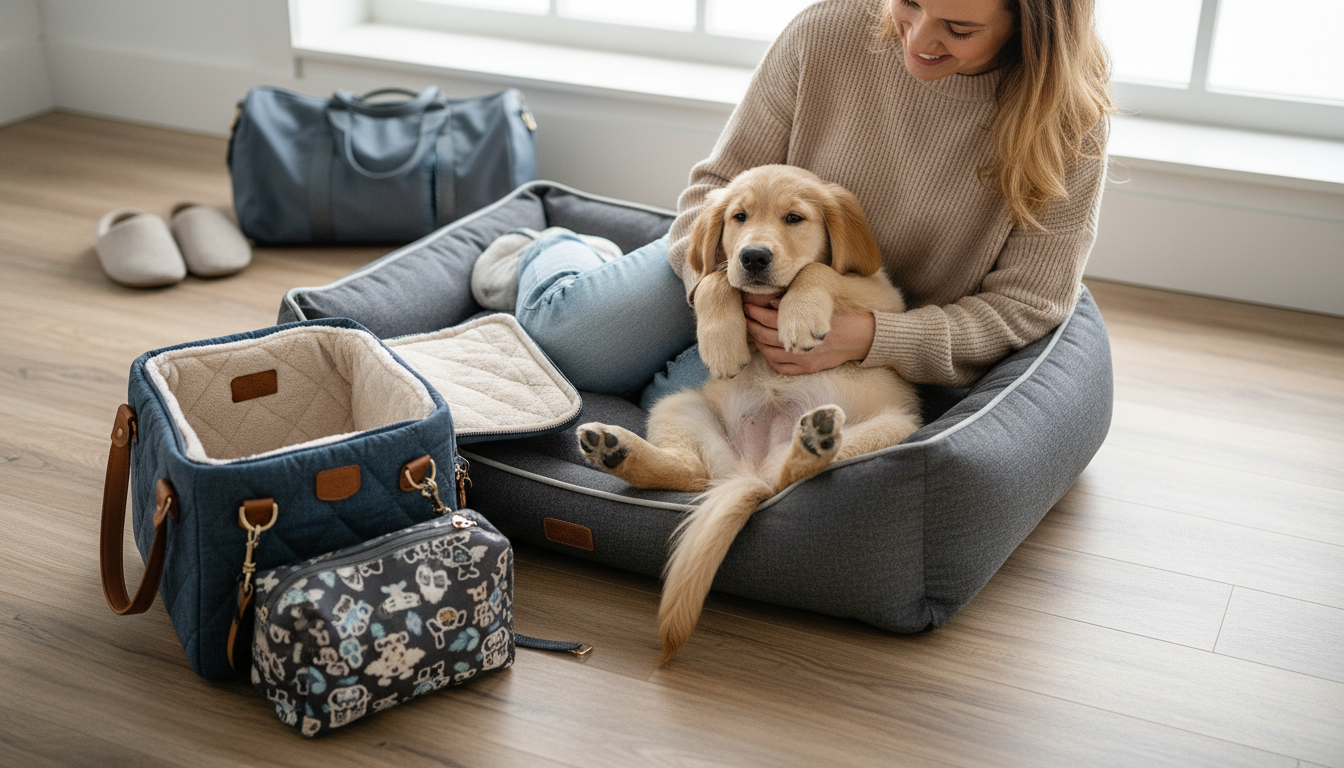
Some dogs enjoy being held like a baby, but plenty don’t—and both reactions are completely normal. A “baby hold” (cradled on their back or tilted belly-up in your arms) can feel cozy and secure to a calm, people-oriented dog. For others, it can feel restrictive, off-balance, or even a little scary because it limits their ability to move away.
Look for relaxed, loose body language: soft eyes, a neutral face, a gently wagging tail, and a body that feels “melted” rather than tense. Some dogs will lean into you, settle quickly, or sigh and relax. If your dog tries to climb out, stiffens, pants when it’s not warm, yawns repeatedly, shows the whites of their eyes, or tucks their tail, they’re asking for space.
If your dog likes being close, try a supportive hold instead of a full cradle. Keep your dog upright or slightly angled, with one arm under the chest and the other supporting the hips. Hold them close to your body so they feel stable. Avoid squeezing, sudden lifts, or letting legs dangle—especially for long-backed or small breeds that can be prone to back strain.
Skip it if your dog is elderly, has arthritis or back issues, is recovering from an injury, or tends to guard their personal space. Also avoid it with unfamiliar dogs or if kids are handling the dog—start with gentle petting and let the dog choose closeness.
If your pup loves being near you but gets wiggly in arms, a supportive dog carrier can provide the same snuggly vibe while keeping them secure and your hands free. For practical tips on comfort-first travel and carrying, visit this guide to pet travel comfort gear, dog carriers, and walk bags.
You can, but only if the dog is clearly comfortable and fully supported. Many dogs dislike being on their back because it feels vulnerable or unsteady, so stop if you see tension or struggling.
Some do—especially calm, social dogs that enjoy close contact. Others prefer to sit beside you or be held upright, so follow their body language and keep holds short.
Experiences vary widely, but the consistent theme is consent and comfort: some dogs love it, many tolerate it, and others hate it. Watching for stress signals is more reliable than any one opinion.