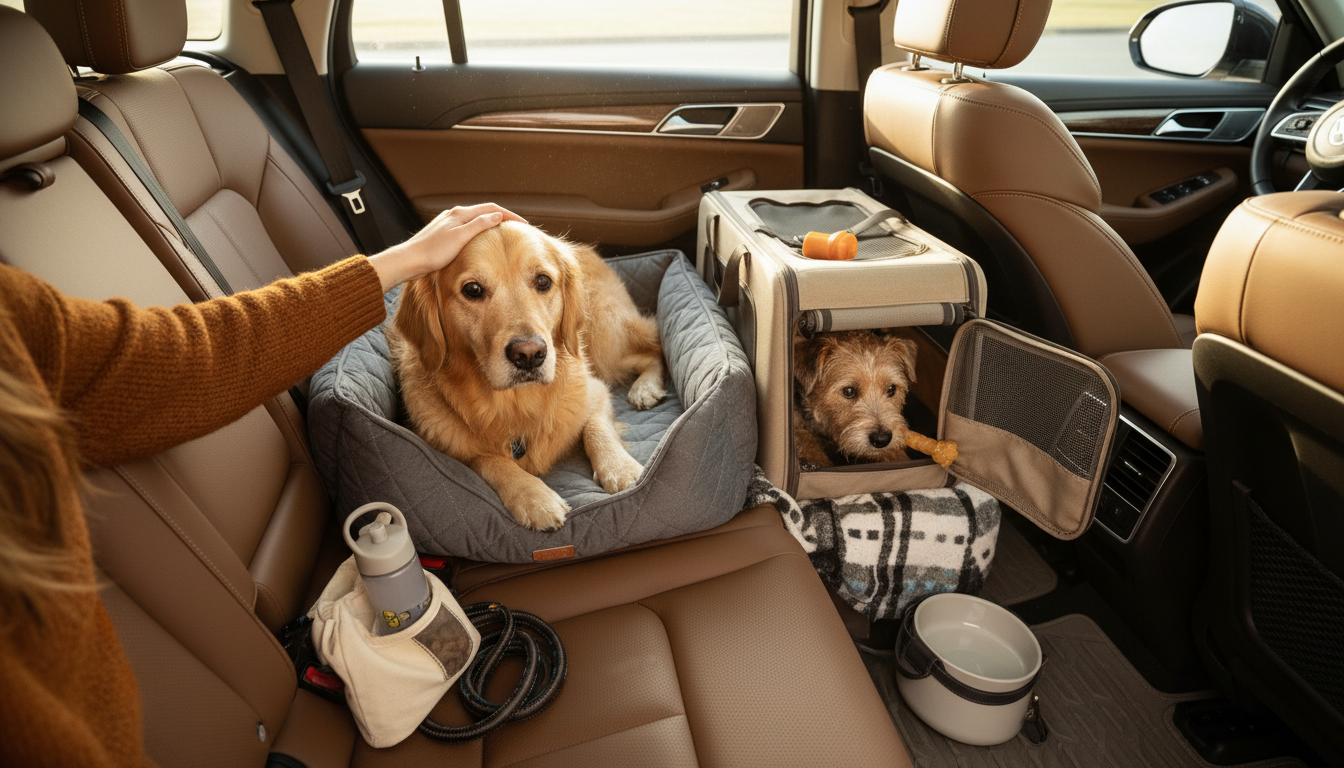
Some dogs do grow out of car anxiety, but many don’t—at least not without gentle training and a more comfortable setup. Puppies may improve as they mature and get positive, low-pressure exposure to riding, while other dogs keep feeling stressed because the car still predicts something unpleasant (like the vet) or their body feels unsteady and insecure during motion.
The good news: car anxiety is often very changeable. With consistent practice and the right travel routine, plenty of dogs become calm riders—even if they never “love” the car.
Car anxiety isn’t only about age. It can be driven by motion sickness, sensitivity to noise and vibration, fear of confinement, or past experiences. If a dog spends every ride bracing, sliding, or struggling to find footing, the stress can stick around and even intensify over time.
Start by making the car feel predictable and safe. Do short sessions with the engine off, then quick trips that end somewhere enjoyable. Keep your dog secured so they feel stable—many dogs relax when they’re supported in a snug, well-fitted travel seat or carrier rather than trying to balance on a slippery seat.
Calm cues (soft praise, a favorite chew, or a familiar blanket) can also lower tension. If you notice drooling, vomiting, or repeated nausea, ask your vet about motion sickness support—treating the physical side can dramatically reduce anxiety.
Comfort and stability go hand-in-hand with safety. A supportive dog car seat or carrier that limits sliding, provides padding, and keeps your pup contained can help them settle faster and ride more securely. For a deeper look at choosing a travel-friendly option, visit this guide to a puff puppy dog car seat carrier bag.
Many dogs improve with gradual exposure and a comfortable, secure setup, but some need ongoing support. The key is consistent practice and reducing physical discomfort like motion sickness.
It can appear after a stressful trip, a painful event, motion sickness, or a change in routine. Sometimes a single bad experience is enough to make the car feel unsafe again.
Shorten trips, build up slowly, and secure your dog so they feel stable. If symptoms are intense or sudden, check with your vet to rule out motion sickness or medical issues.