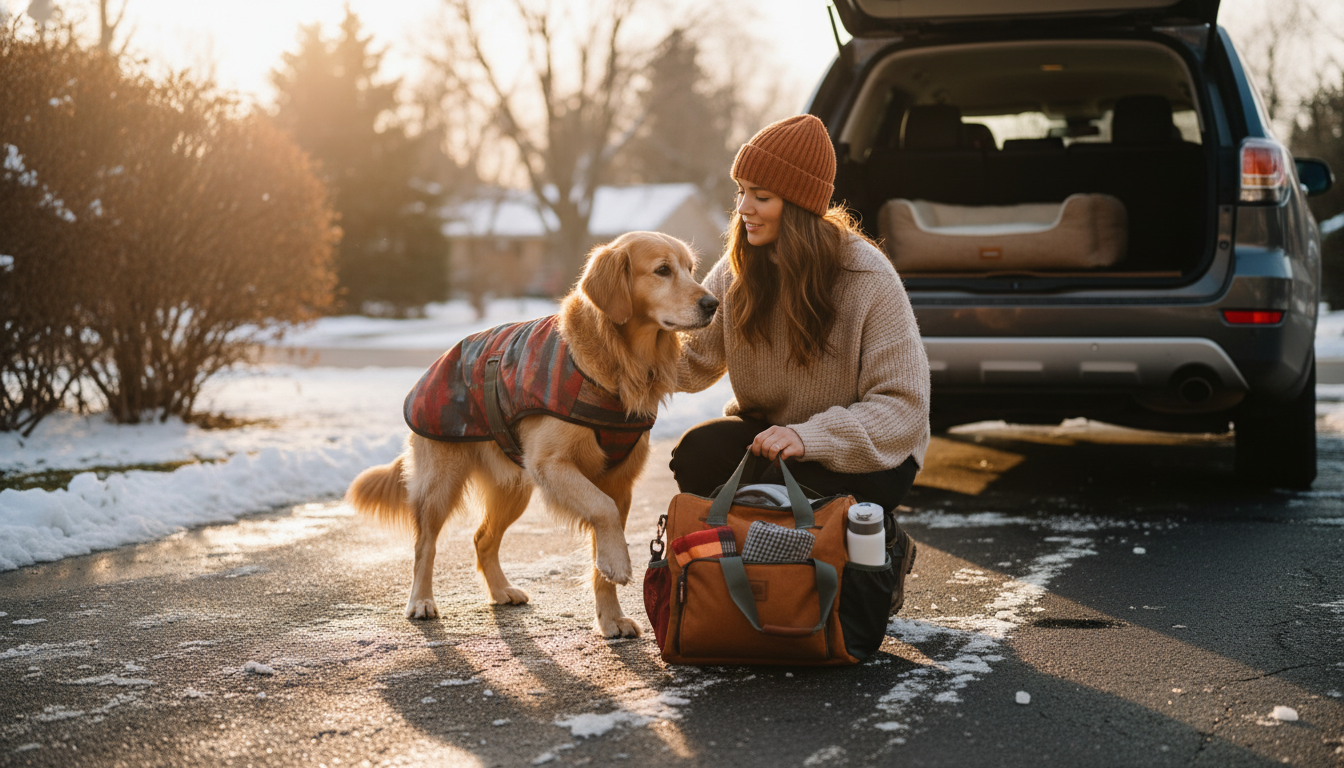
Yes—dogs’ feet can absolutely get cold on winter walks. While paw pads are tougher than human skin, they’re still exposed to icy sidewalks, frozen ground, windchill, and snow packed between the toes. Cold can make paws feel stiff and uncomfortable, and in harsh conditions it can lead to cracked pads or even frostbite (especially on ears, tail tips, and paws).
Some dogs handle winter better than others. Thick-coated breeds may stay cozy longer, but small dogs, seniors, puppies, short-haired breeds, and dogs with medical conditions often chill faster. City walks can be tricky, too: de-icing salt and chemical ice melt can sting, dry out pads, or cause upset stomach if licked off later.
A few simple habits make winter walks more comfortable and safer:
Staying organized helps on winter outings—especially when you’re juggling gloves, leash, and cleanup supplies. For a simple way to carry walk necessities hands-free, see this guide to a hands-free dog walking waist pack.
If your dog starts lifting paws, slowing down, shivering, or refusing to walk on certain surfaces, their feet may be too cold (or irritated by salt). It’s okay to cut the walk short—comfort and safety come first.
If the ground is icy to the touch, heavily salted, or your dog starts lifting paws or limping, it’s too cold or too irritating for comfort. Smaller dogs and short-haired breeds may need paw protection and shorter walks even at moderately cold temps.
Use well-fitted booties or a protective paw wax, keep walks shorter, and avoid deep snow and ice melt when possible. Always dry paws after walks and remove snow packed between toes.
Common signs include shivering, a tucked tail, slowing down, whining, lifting paws, or trying to turn back. If you notice these, head home and warm them up right away.