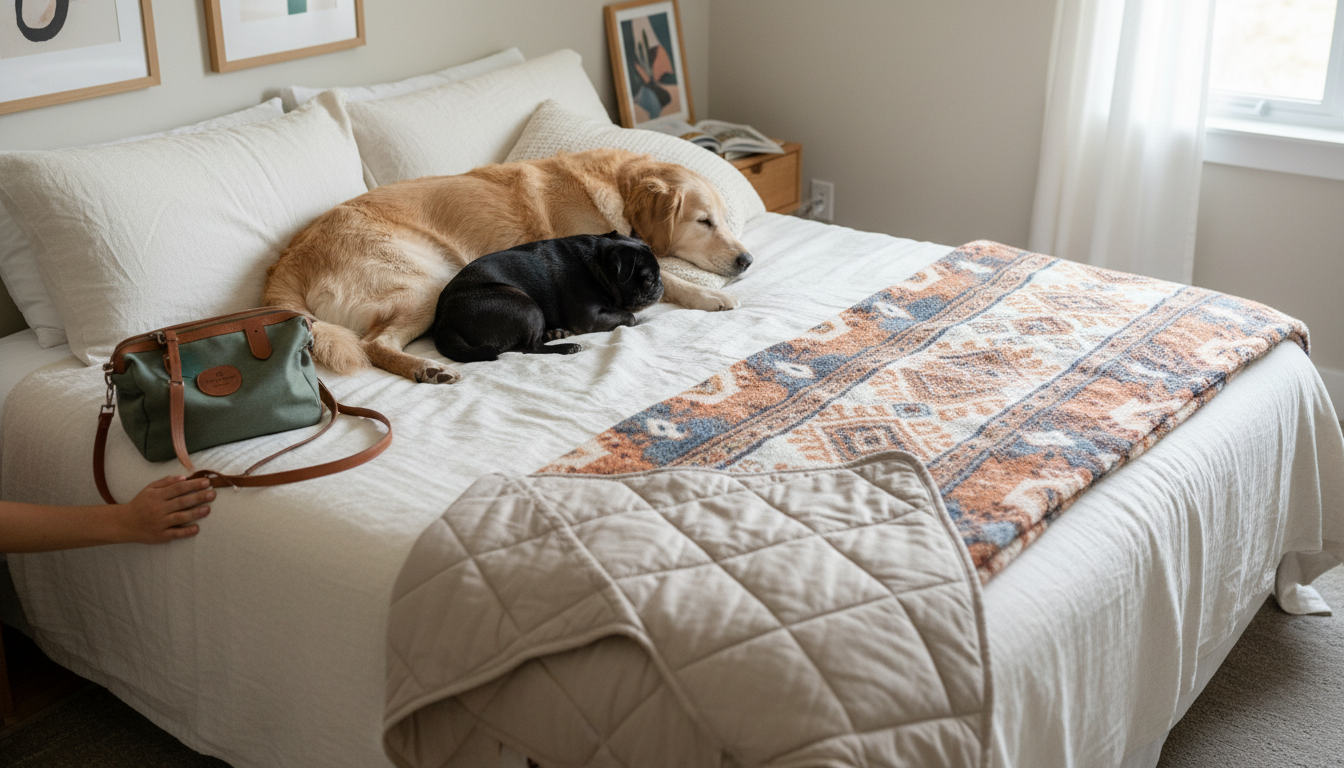
Not automatically. Most dogs can share a bed without becoming aggressive, especially when they already feel secure and have clear, consistent house rules. Aggression is more likely to show up when a dog is anxious, guarding space, startled awake, in pain, or confused about boundaries—not simply because they’re on the mattress.
Bed-sharing can sometimes amplify existing issues because the bed is warm, tight, and high-value. If a dog has a history of resource guarding (growling when moved, snapping when approached, stiffening when you shift), the close quarters can make those behaviors more noticeable. Puppies and newly adopted dogs may also test limits as they settle in.
Watch for: guarding the “good spot,” growling when touched at night, refusing to move, snapping when you try to get under the blankets, or reacting strongly if a partner enters the room. These are signals to pause bed privileges and reset routines.
A simple way to reduce tension is to give your dog an equally inviting sleep option right beside the bed. A supportive dog bed creates a clear “yes” space that still feels close and comforting. Pair it with a predictable bedtime routine, gentle handling, and a cue like “off” or “bed” that’s rewarded consistently.
If aggression appears suddenly—especially in an older dog—rule out pain or illness with a veterinarian. For ongoing guarding or bites, work with a qualified trainer who uses humane, reward-based methods.
For a more comfortable, cleaner setup that supports great sleep at home, see this guide: Midnight Nest Dog Bed: Cozy, Clean, Sleek Comfort.
Common causes include resource guarding a favorite spot, being startled awake, anxiety, or pain that makes touch uncomfortable. If it’s new or escalating, a vet check and a positive trainer can help pinpoint the trigger.
It’s not inherently bad if everyone sleeps well and your dog has good manners and no guarding behavior. If sleep is disrupted, allergies flare, or growling starts, switching to a nearby dog bed is often a better fit.
It’s a guideline for adjustment: about 3 days to decompress, 3 weeks to learn routines, and 3 months to feel fully at home. While it’s not specific to separation anxiety, it helps set expectations for settling in calmly.