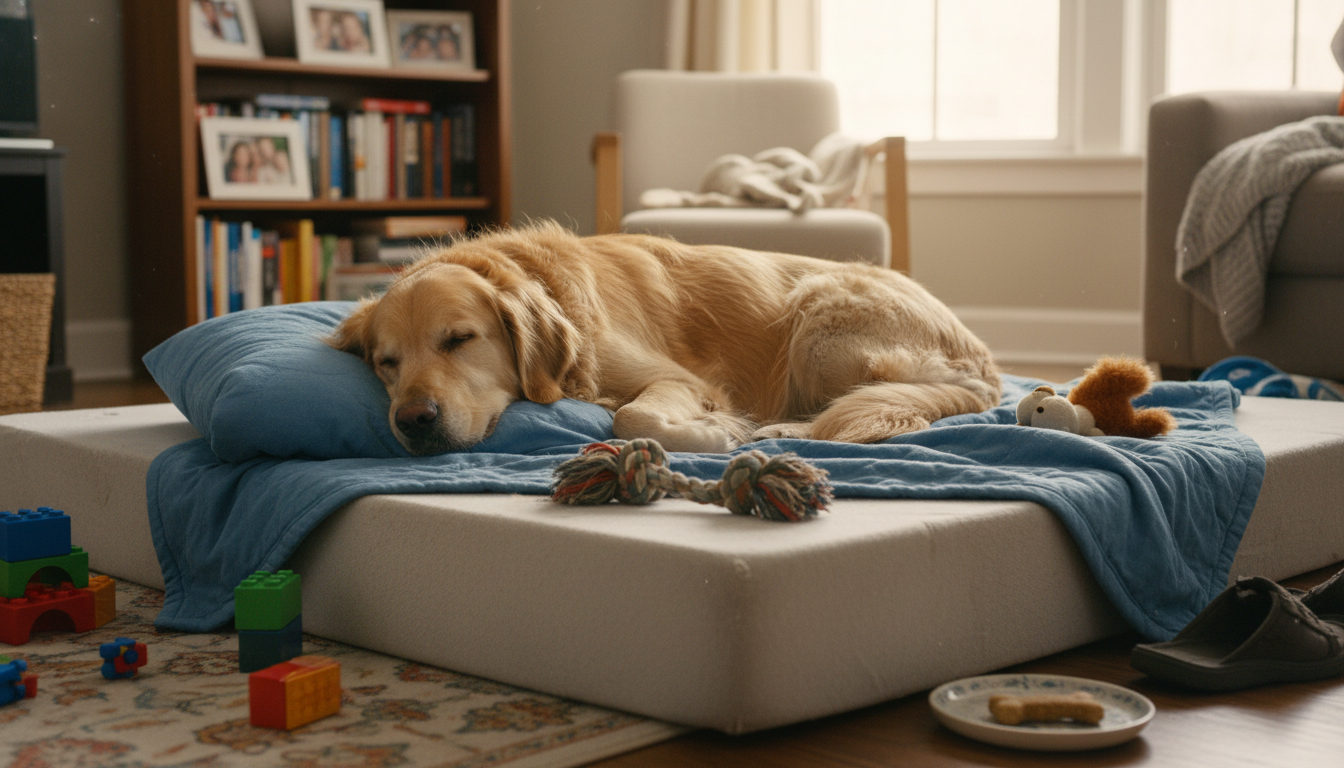
Yes, a mattress can work as a dog bed in certain situations—especially for larger dogs, senior pups, or dogs who love a wide, supportive surface. The key is choosing a safe, practical setup that’s easy to keep clean and won’t slide around your floors.
If you’re repurposing a crib or twin mattress, look closely at the materials. Many human mattresses trap heat, hold odors, and aren’t designed to handle muddy paws, shedding, drool, or accidents. Foam can also break down faster when it’s constantly jumped on, scratched, or exposed to moisture.
For comfort, a firmer foam mattress often provides better support than something overly plush that lets your dog sink too deeply. Dogs that are older, heavier, or dealing with joint stiffness typically do best with a supportive base plus a cozy top layer. Adding a washable cover and a soft pad can give that “nesting” feel while still keeping the surface stable.
For safety, focus on three things: traction, washability, and durability. A mattress placed directly on slick flooring can shift when your dog steps on it, which is risky for puppies, seniors, and dogs recovering from injury. A non-slip layer underneath (or a bed design made to stay put) helps keep the sleep spot secure. Also, make sure there are no loose threads, exposed foam, or crumbling edges that could be chewed.
If you want the same roomy comfort with fewer hassles, a purpose-built dog bed mattress is usually the better long-term choice—especially one with a washable cover and a non-slip bottom for everyday home comfort. For tips on choosing an easy-care option that stays in place, see this guide: washable, non-slip dog bed mattress and plush pad.
Remove any loose hardware, lower the mattress to a safe height, and add a snug, washable cover. Make sure the crib is stable and the side rails won’t trap collars or paws.
No. Two twin mattresses placed side by side are wider than a king but shorter, so the fit and bedding won’t match standard king sizes.
They can be helpful because supportive foam reduces pressure points and encourages more stable rest. For IVDD, follow your vet’s guidance and prioritize a firm, easy-to-enter bed surface.