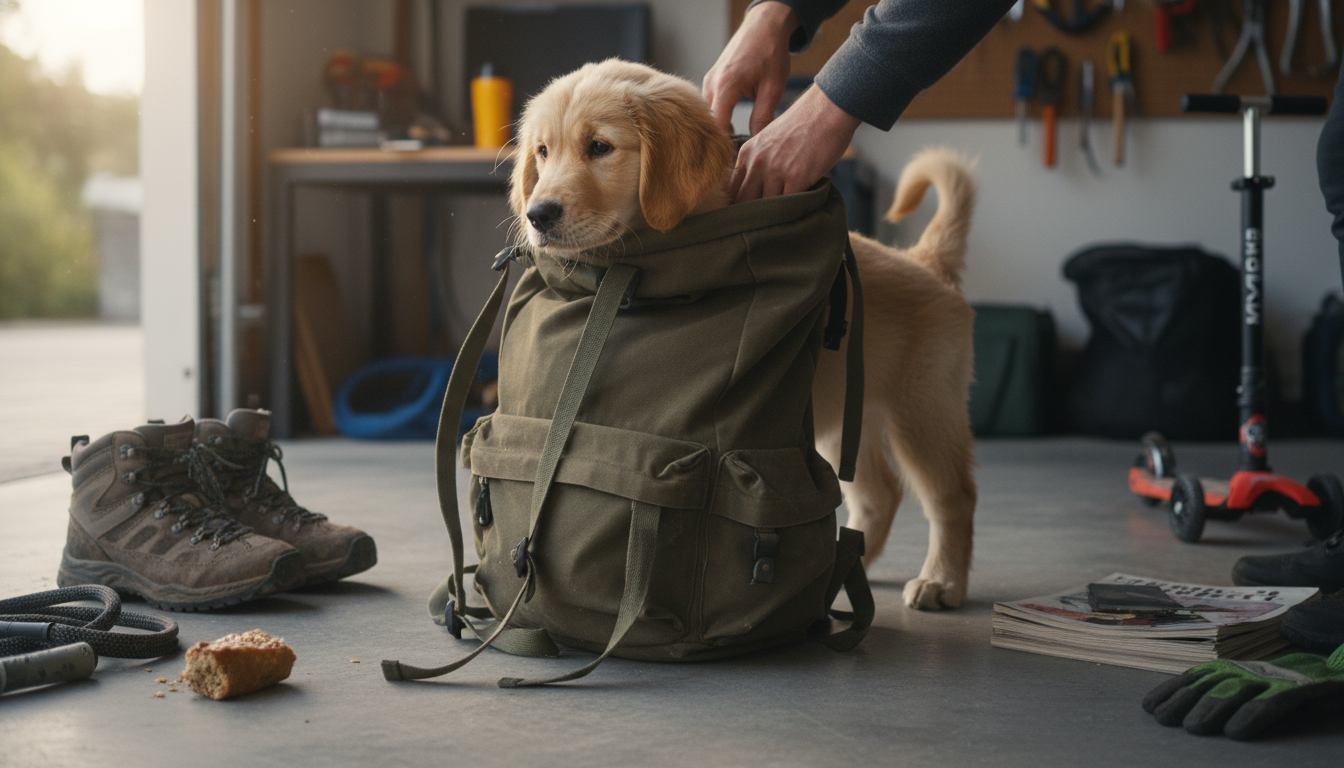
A regular backpack can work in a pinch for very short moments, but it’s usually not the safest or most comfortable choice for your dog—or your back. Standard backpacks weren’t designed for airflow, weight distribution, or keeping a pet secure, so small issues (like poor ventilation or a slipping zipper) can turn into a stressful ride fast.
If your dog is extremely small, calm, and you’re only moving them briefly (like from the car to a hotel room), a backpack may be usable if it’s roomy enough for them to sit/turn, has a firm bottom, and can be kept partially open for airflow. Your dog should never be fully zipped into a bag with no ventilation, and their neck and spine should stay in a natural position.
Dog backpack carriers and walking bags are built around pet safety: structured support, breathable panels, secure closures, and more stable carrying straps. They also help keep your essentials organized so you’re not cramming leashes, treats, and poop bags next to your pup. If hands-free walks and tidy storage sound appealing, this guide to a dog walking bag breaks down what to look for: hands-free, organized dog walking bag tips.
Skip a regular backpack if your dog is heavy for your comfort, anxious in tight spaces, or tends to paw/chew at zippers. Choose a bag with breathable material, a stable base, and straps that don’t dig into your shoulders. Keep sessions short, watch for overheating (panting, drooling, restlessness), and never leave your dog unattended in any bag.
Most dogs do best in short stretches with breaks to cool down, drink water, and move around. Duration depends on your dog’s size, temperature, ventilation, and stress level.
They can be safe when they’re well-ventilated, properly sized, and have secure closures and supportive structure. Always monitor your dog for heat, discomfort, or anxiety and take frequent breaks.
It’s commonly used as a feeding guideline: about 90% of a dog’s daily calories come from a complete, balanced diet, and up to 10% from treats. It helps prevent overfeeding while still allowing rewards.