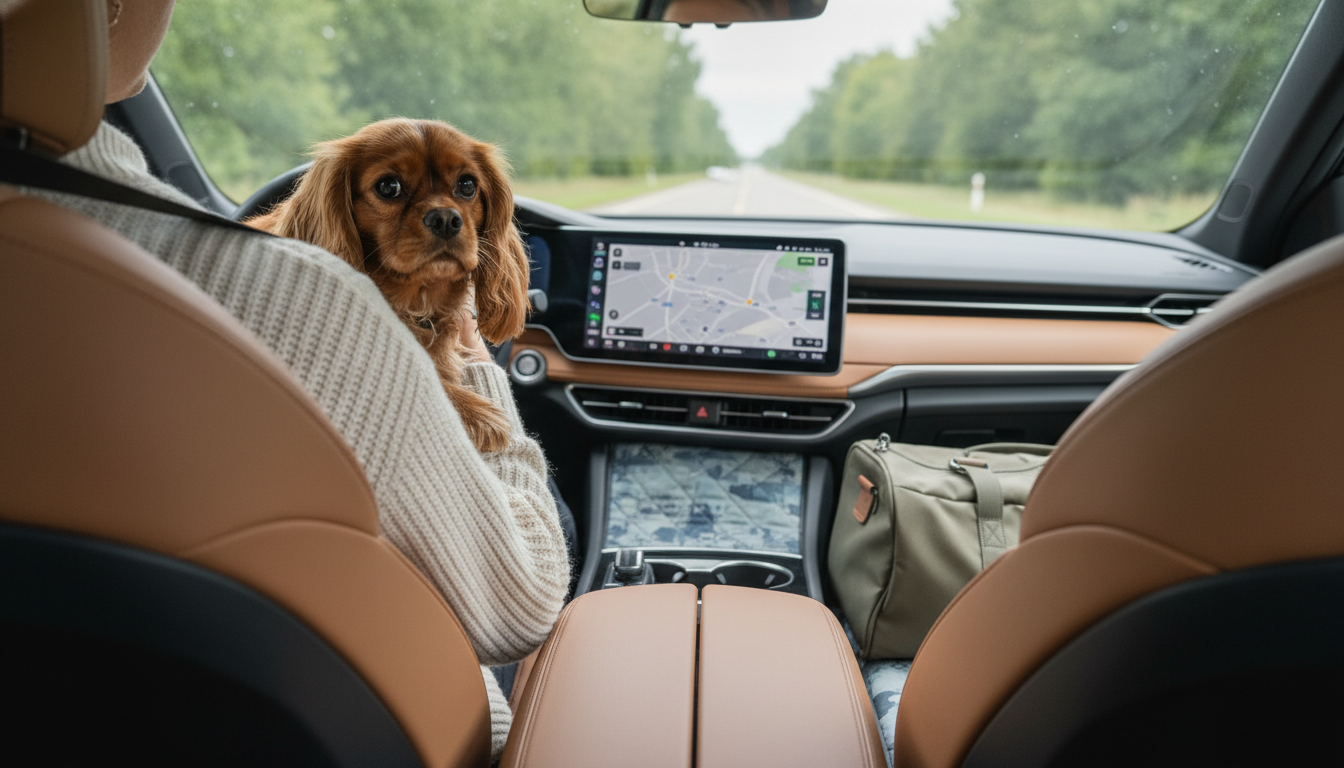
You can physically hold your dog in the passenger seat, but it’s not a safe way to travel. In a sudden stop or minor collision, a dog in your arms can become a projectile, and you may not be able to brace or control the steering wheel properly. Even gentle dogs can panic when startled by traffic noise, a horn, or a quick lane change.
The safest choice is to keep your dog secured with a crash-tested harness and seat belt, or inside a well-fitted car seat/carrier that’s anchored to the vehicle. This helps prevent distracting movement, reduces the chance of injury, and keeps your dog from jumping into your lap at the worst possible moment.
Beyond distraction, the front seat comes with added hazards: airbags can seriously injure small dogs, and dogs can slip under the dashboard during braking. If your dog is anxious, the close proximity to the windshield and passing motion can also increase stress, leading to pacing, whining, or attempts to climb.
If your dog rides better up front, focus on “secured and supported.” Use a structured dog car seat or carrier sized to your pup, with attachments that limit roaming while still allowing a comfortable sit/lie-down position. Keep the seat positioned so your dog isn’t directly in front of an airbag, and consider disabling the passenger airbag if your vehicle and local regulations allow it.
For tips on choosing the right fit and getting your dog settled for travel, visit this guide: https://kingwuff.com/blog/guide-puff-puppy-dog-car-seat-carrier-bag-king-wuff/.
Do a short “comfort check” before you pull out: straps snug but not tight, chest supported, leash clipped out of the way, and a familiar blanket or soft liner to reduce sliding. A calm, contained dog is not only safer—everyone’s ride feels more relaxed and cozy.
It depends on your state and local rules. Many places allow it, but some require restraint or consider an unrestrained pet a driver-distraction issue.
Often yes, but the dog may need to be properly secured to avoid distraction and safety violations. Check your local traffic laws and always prioritize restraint for safer travel.