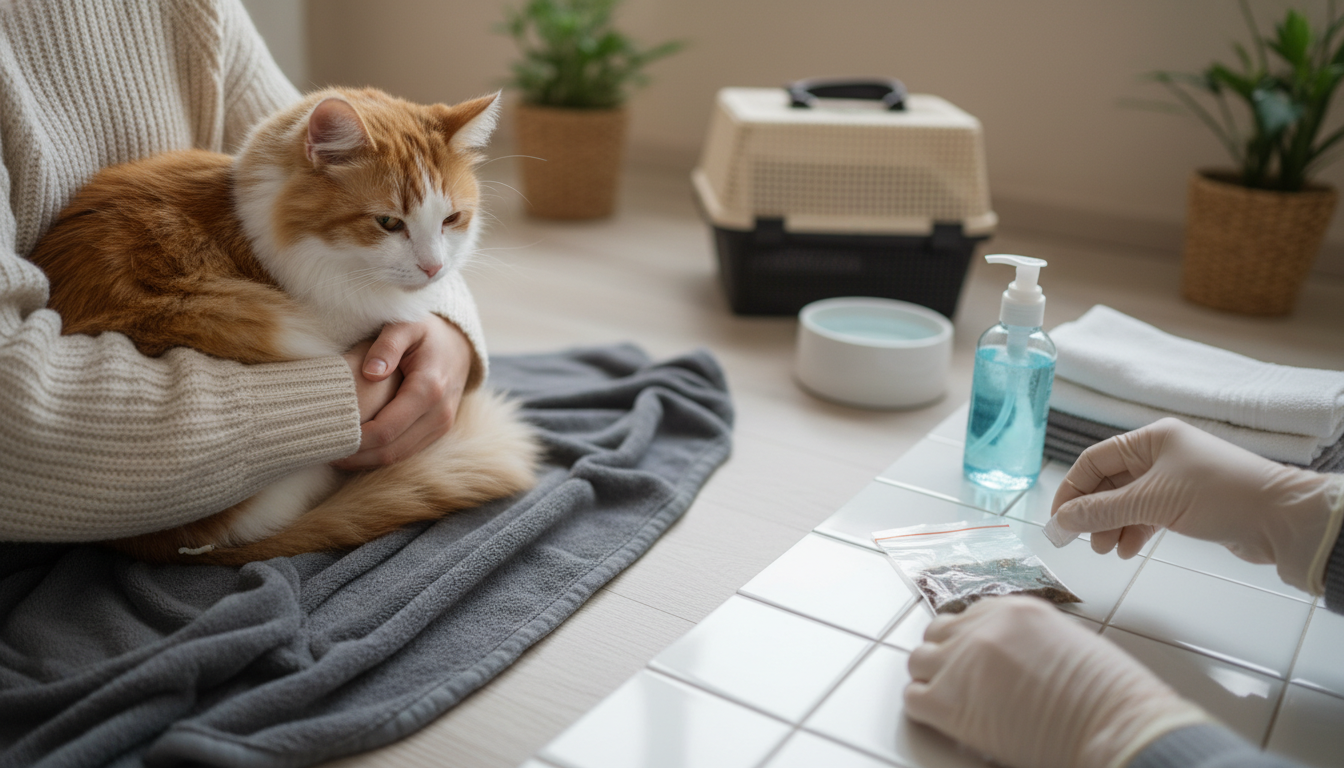
Yes—often you can still cuddle your cat, but it’s smart to be extra careful until treatment is complete. Some intestinal worms (like roundworms and hookworms) can spread through microscopic eggs that may be on fur, paws, bedding, or around the rear end, even if your cat looks clean and acts normal.
If your cat has been diagnosed (or you strongly suspect worms), focus on two things: starting the right dewormer from your vet and tightening up hygiene during the contagious window. Keep cuddles gentle and comforting, but avoid face-to-face contact, kissing, or letting your cat lick your mouth. Wash your hands with soap and warm water after petting, cleaning the litter box, or handling bedding.
It’s also wise to limit close contact for higher-risk household members—young kids, pregnant people, seniors, or anyone immunocompromised—until your vet confirms the parasite is cleared. If your cat has diarrhea, visible worms, or a “scooting” rear, consider shorter snuggle sessions and keep her resting on easy-to-clean surfaces.
To keep your home feeling cozy (and to help stop reinfection), wash your cat’s blankets and any favorite lounging spots frequently on hot water when possible, vacuum floors and soft furniture, and scoop the litter box daily. A washable, non-slip pet bed can make cleanup much simpler; for tips on choosing easy-care comfort for pets, visit this guide to washable, non-slip pet bed comfort.
If you’re unsure what type of worms are involved, or symptoms aren’t improving within a few days of treatment, contact your vet—some parasites require multiple doses and follow-up fecal testing.
Yes, but practice careful hygiene: avoid face contact, wash hands after cuddling, and keep bedding clean until treatment is finished.
Usually, yes. Start deworming as directed by your vet and be cautious about exposure to saliva, litter, and soiled fur.
A full “deep clean” isn’t always necessary, but frequent vacuuming, hot-washing bedding, and diligent litter box scooping help reduce eggs and prevent reinfection.