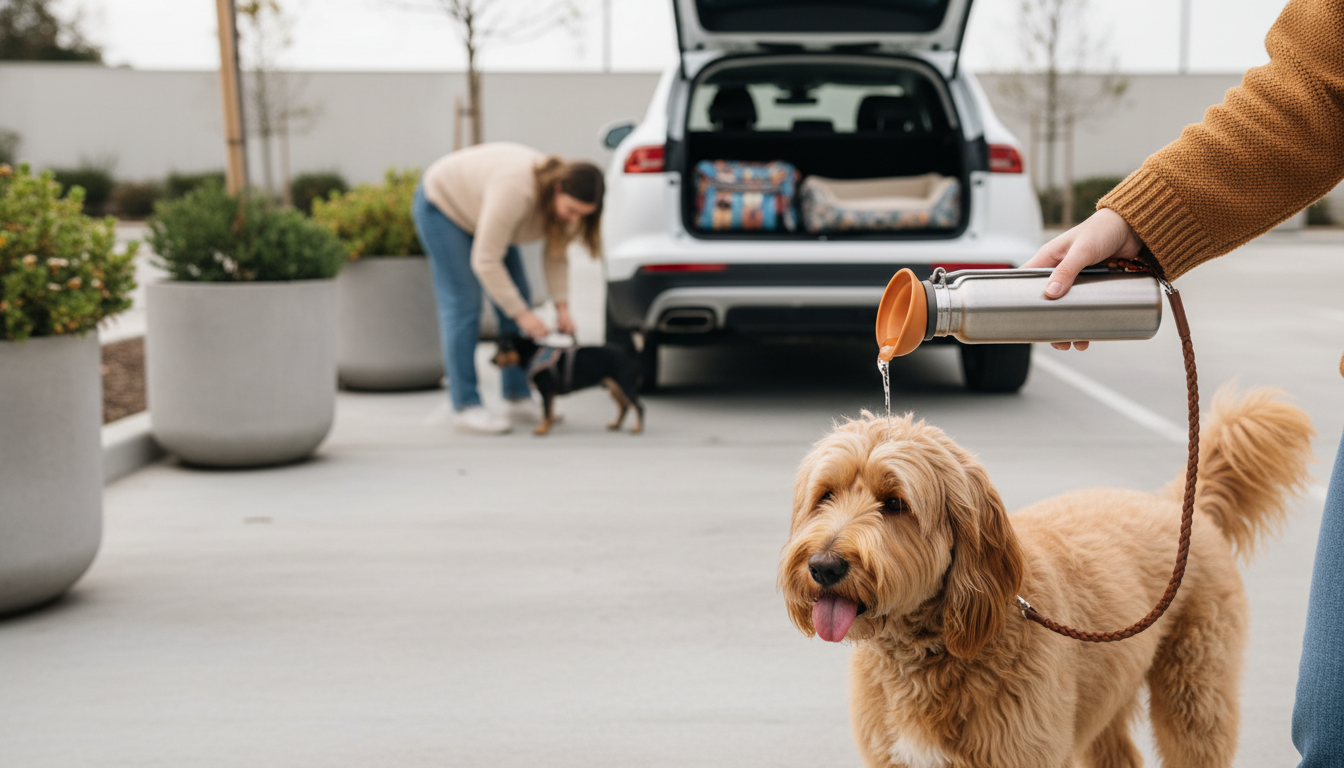
Yes—dogs can use a water bottle, but most can’t drink straight from a typical “human” bottle opening without help. The easiest options are dog-specific water bottles with an attached bowl or flip-out trough, or a squeeze bottle that releases water into a small reservoir. With the right setup, many dogs learn quickly and stay better hydrated on walks, hikes, and car rides.
Dogs lap water with their tongues, so they need a shallow pool to sip from. A standard bottle mouth usually doesn’t provide enough surface area, which can lead to frustration, wasted water, or a wet chin. Dog travel bottles solve this by creating a small drinking area the dog can access comfortably.
A portable water bottle is especially handy during warm-weather walks, long outings, travel days, or anytime you won’t have reliable access to a clean bowl. It’s also a tidy choice for city walks where public fountains may be busy or questionable. For dogs that get excited and splash, a bottle with a controlled flow can help keep things cleaner.
Prioritize a leak-resistant design, one-handed operation, and materials that hold up to daily use. A wide drinking trough works well for most dogs, while smaller troughs can suit compact pups. If you’re carrying it in a walking bag, look for a shape that fits securely and won’t rattle around.
Offer water in short breaks, especially after sniff-heavy or fast-paced stretches. Let your dog investigate the bottle at home first, then practice a few sips outdoors. If your dog is a gulper, give smaller amounts more often to reduce sloshing and discomfort.
For a hands-free way to carry water, treats, and walking essentials in one organized place, visit this guide to the Beige Rover dog walking bag.
Food puzzles, long-lasting chews, and rotating toy options can keep many dogs busy longer than standard toys. Short training games and sniff-based activities also help burn mental energy.
A no-spill or splash-resistant bowl with a floating disk or raised lip can reduce dripping and puddles. Pairing it with an absorbent mat helps protect floors and keeps the area tidy.
It’s safest to use insulation (like a thermal bowl) or refresh water frequently rather than adding substances. If freezing is a concern, offer slightly warm water and keep the container out of direct wind when possible.