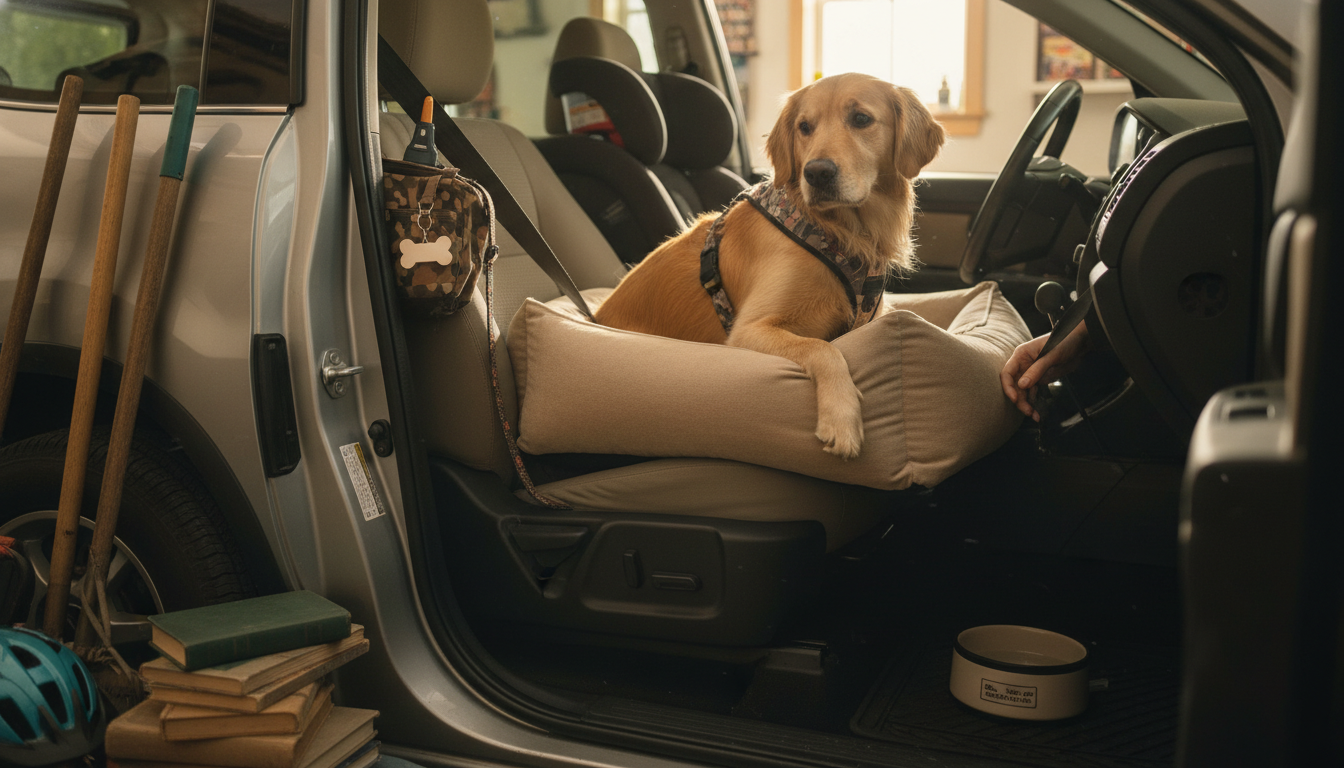
Yes, a dog can ride in the front passenger seat, but it’s only a good idea when safety comes first. The biggest risks up front are distractions for the driver and the passenger-side airbag, which can seriously injure a small dog during deployment. A secure setup helps your pup stay comfortable without turning the ride into a hazard.
Start with restraint and placement. The safest “front-seat” option is typically a crash-tested harness attached to the seat belt, or a well-secured car seat/carrier designed to keep your dog contained and elevated. The goal is to prevent roaming, sudden lunging, or becoming a projectile in a quick stop.
If your dog is small, a structured car seat carrier can help them stay settled while keeping them from slipping off the seat. If your dog is larger, a properly fitted harness and seat belt tether is usually more appropriate than a loose bed or blanket.
If your dog must ride in the front, move the passenger seat as far back as possible and keep your dog restrained so they don’t lean into the dashboard. For many dogs—especially small breeds—the back seat is often the safer choice because it puts more distance between your pup and the airbag zone.
A calm dog is a safer dog. A supportive carrier or travel seat that feels cozy can reduce pacing, whining, and attempts to climb into your lap. Bring a familiar blanket, keep the cabin at a comfortable temperature, and plan for breaks on longer drives.
For a deeper look at choosing the right dog car seat carrier and setting it up for secure, comfy trips, visit this guide on dog car seat carrier bags.
It can be okay if your dog is properly restrained and kept away from the airbag area. For many pets, the back seat remains the safer option.
Yes, as long as your dog is secured with a harness or a well-anchored carrier. Avoid letting your dog move freely or ride unrestrained.
No—holding your dog is unsafe and increases injury risk for both of you in a sudden stop. Use a restraint system or carrier instead.