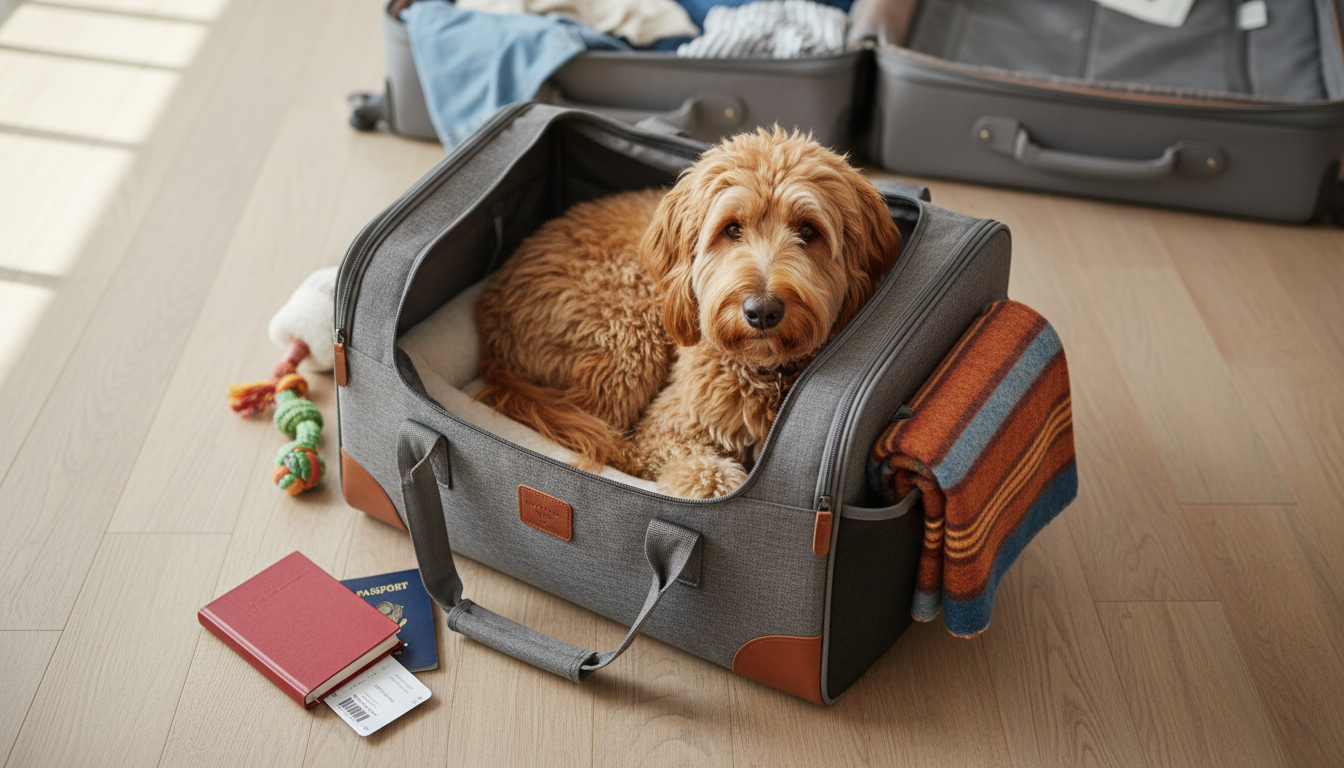
Usually, no. Most airlines only allow dogs in the cabin if they fit in an airline-approved carrier that can slide under the seat in front of you—and that size limit typically works for small dogs (often closer to 15–20 pounds, depending on build and carrier dimensions). A 30-pound dog is more likely to be required to fly as checked pet baggage (where available) or as cargo, or to travel by car instead.
That said, rules vary by airline, aircraft type, and even the specific route. A few carriers may allow a slightly larger “in-cabin” pet if the dog can comfortably stand, turn around, and lie down inside the carrier without pushing against the sides. If your dog is 30 pounds, it’s worth measuring your pup (length and shoulder height) and comparing those measurements to the carrier dimensions the airline lists—then calling the airline to confirm before booking.
Airlines generally focus on carrier size, not your dog’s weight alone. Expect to confirm:
If in-cabin isn’t an option, focus on making travel as calm and secure as possible: choose a well-ventilated, sturdy carrier, practice short “carrier hangs” at home, and build in extra time at the airport. For comfort-focused travel tips and gear ideas—especially for carriers and other pet travel accessories—visit this pet travel comfort guide.
Start by checking the airline’s under-seat carrier dimensions and confirming whether your dog can comfortably fit and move inside a compliant carrier. If your dog can’t fit, plan for an approved alternative such as cargo (if offered) or ground travel.
It’s uncommon, since most under-seat carrier limits don’t comfortably accommodate a 30-pound dog. Policies vary, so verify directly with the airline and aircraft type before purchasing tickets.
Costs vary widely by airline and whether your dog can travel in-cabin (rare at 30 pounds) or must travel as cargo/checked pet. Expect fees that can range from around $100 each way to several hundred dollars or more depending on the travel method and route.