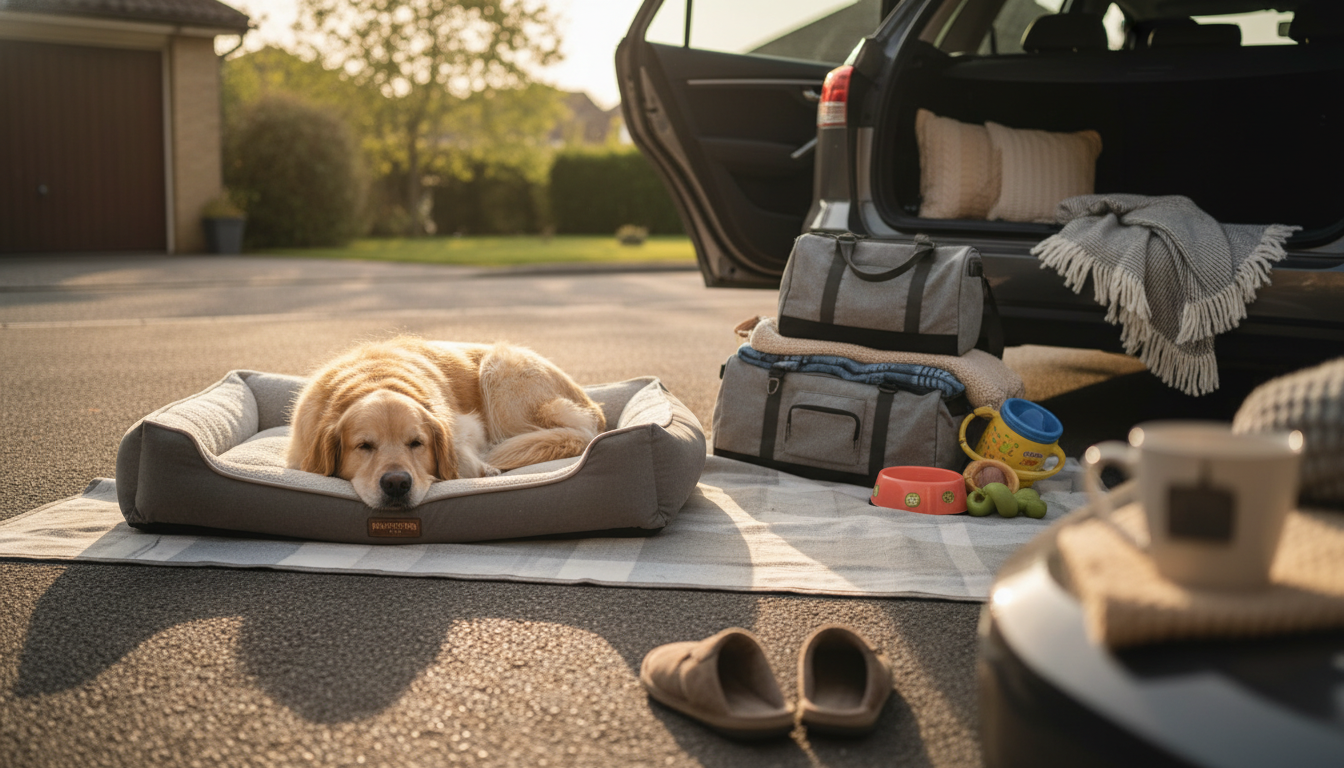
There isn’t a single “supposed to” when it comes to sharing your bed with your dog. For many households, it’s a sweet, cozy routine that helps everyone feel secure. For others, it can interrupt sleep, worsen allergies, or create confusing boundaries. The best choice is the one that keeps your dog safe and your home restful.
Letting your dog sleep in your bed can work well if your dog is calm at night, doesn’t guard space, and everyone in the home sleeps comfortably. It can be especially comforting for dogs that thrive on closeness—just make sure the arrangement doesn’t cause overheating, crowding, or restless repositioning.
If you’re bringing a new dog home, consider starting with a consistent bedtime routine first. Many dogs do best with a dedicated “place” of their own, even if they’re welcome on the bed sometimes.
Choose a separate sleep spot if your dog shows signs of resource guarding (growling when moved), has accidents, has trouble settling, or if anyone has asthma or allergies. It’s also worth reconsidering if your dog is recovering from surgery, has mobility issues that make jumping unsafe, or is a very small dog at risk of being rolled onto.
A premium dog bed placed next to your bed can offer the closeness dogs crave while keeping everyone more comfortable. Look for supportive cushioning, washable materials, and a size that lets your dog fully stretch—especially for nightly use. For tips on building a clean, comfortable sleep setup, visit this guide: https://kingwuff.com/blog/guide-midnight-nest-dog-bed-cozy-clean-sleek-comfort/.
It can be a good choice for many dogs if it fits their size and sleep style and uses supportive, washable materials. Look for a non-slip base, durable stitching, and enough cushioning—especially for seniors or larger breeds.