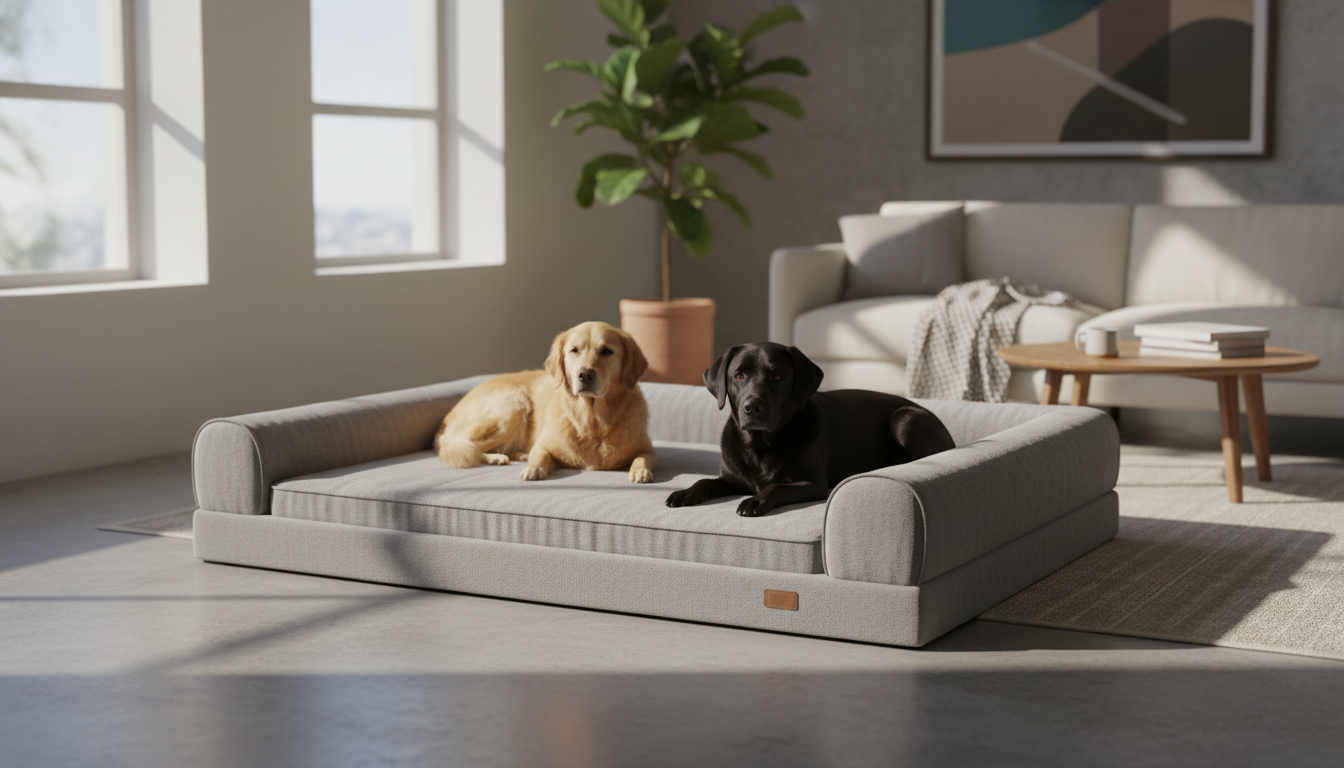
For big pups with big hearts (and big joints), an orthopedic XXL dog bed is more than a cozy place to snooze—it’s a daily boost to comfort, mobility, and long-term wellness. Large and giant breeds put extra pressure on their elbows, hips, and spine. An orthopedic bed helps redistribute weight evenly, reduces pressure points, and supports neutral alignment so your dog wakes up rested instead of stiff.
What makes the investment worth it comes down to materials and build. True orthopedic beds use high-density support foam as the base, topped with pressure-relieving memory foam that cushions joints without bottoming out. In XXL sizes, look for at least 4–6 inches of combined foam, structured bolsters for head and neck support, and a roomy sleep surface so your dog can stretch or curl comfortably.
Comfort is only part of the story. Quality orthopedic beds also improve daily life for you and your dog. A removable, machine-washable cover keeps things fresh; a tough, chew-resistant outer fabric stands up to claws; and a non-slip base helps prevent slips when your dog settles in. Features like breathable fabrics or cooling foam can help large breeds regulate temperature year-round.
If your dog is a senior, recovering from surgery, or shows signs of stiffness after naps, an orthopedic XXL bed is a smart, preventative upgrade. Even younger, active large breeds benefit from consistent joint support during growth and high-activity phases. When you choose durable materials, you’ll typically buy once, not often—making it a better value over time than replacing flattened, non-supportive beds.
Bottom line: Yes—when it’s genuinely orthopedic and built for big-dog needs, an XXL bed delivers daily comfort, joint care, and durability that’s absolutely worth it. For tips on sizing, foam types, and care, see our full guide: How to choose the right orthopedic dog bed.
Memory foam is a material; orthopedic describes a support design. The best beds combine a supportive base foam with a memory-foam top layer to relieve pressure points without sagging.
A low-profile bed with a supportive foam base, plush but responsive top foam, and gentle bolsters works well. Look for easy entry, washable covers, and non-slip bottoms for safe, pain-free use.
Orthopedic beds use structured, high-density foam support to maintain spinal alignment and reduce pressure points. They often include memory foam, firm edges or bolsters, and durable, washable covers.