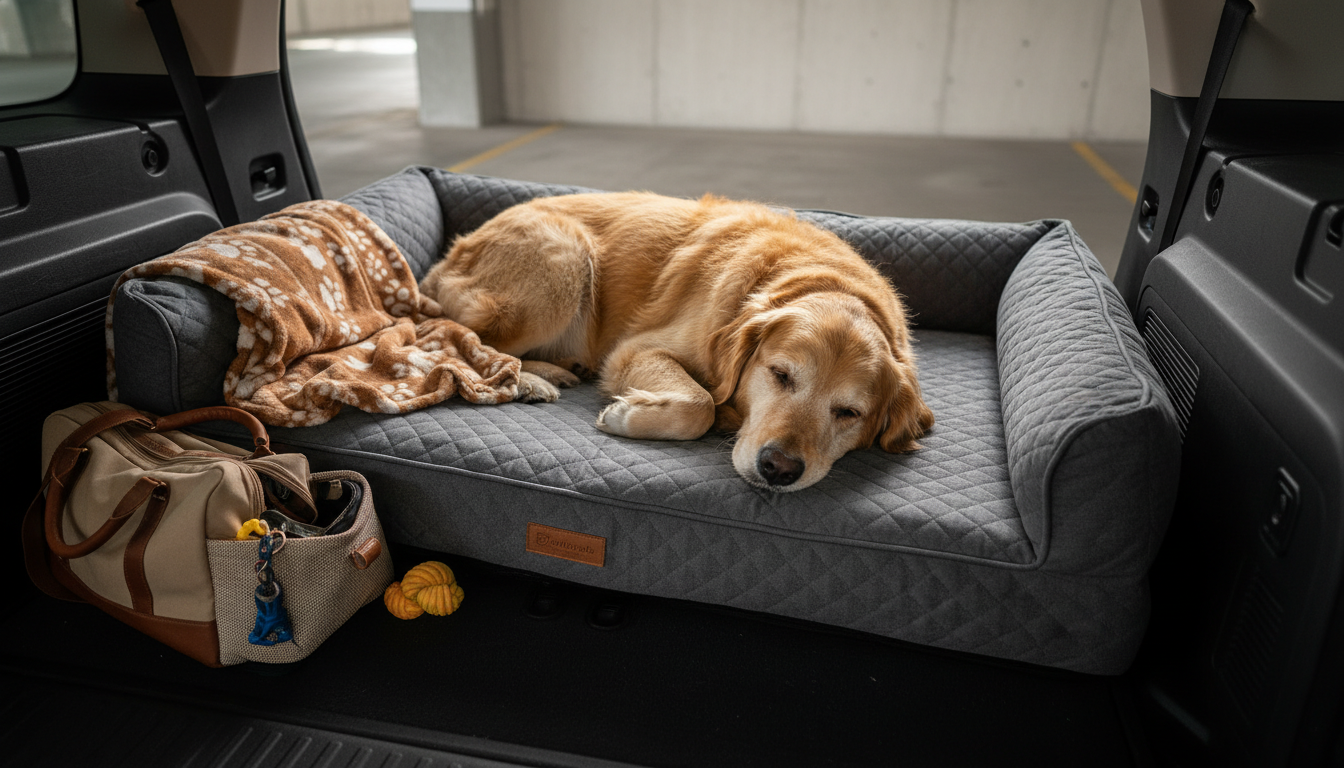
Orthopedic beds can be a helpful choice for dogs living with IVDD (intervertebral disc disease), mainly because they provide steadier support and more even pressure relief than thin, overstuffed, or lumpy beds. A supportive surface can make resting feel more comfortable for a dog whose back is sensitive, especially during recovery periods when your pup is spending more time lying down.
An orthopedic bed won’t treat IVDD or replace your vet’s plan, but it can improve daily comfort by helping the spine stay in a more neutral, supported position. Look for a mattress that doesn’t “bottom out” when your dog settles—consistent support helps reduce awkward twisting when shifting positions.
For IVDD-prone dogs, prioritize a firm, resilient foam core (often high-density or memory foam), a low-profile design that’s easy to step onto, and a stable base. Non-slip bottoms are especially useful if your dog is unsteady or if the bed sits on hardwood or tile—less sliding means fewer sudden movements. A washable cover is also practical, since accidents can happen during pain flare-ups or restricted activity.
IVDD management often includes minimizing jumping and preventing slips. A supportive bed placed in a calm, easy-access spot can encourage restful downtime. If your dog uses a crate or recovery pen, make sure the mattress fits flat without bunching, so your dog isn’t forced into an uneven posture.
For a deeper look at choosing a washable, non-slip dog bed mattress that’s designed for comfort and everyday practicality, visit this guide to washable non-slip dog bed mattresses.
Follow your veterinarian’s treatment plan closely, which may include strict rest, pain control, and physical rehabilitation. At home, focus on preventing slips and jumps, and provide a supportive resting surface.
Yes, some dogs may hesitate to lie down, shift positions frequently, or seem uncomfortable when settling. Supportive bedding and a calm, low-movement environment can make resting easier.
IVDD isn’t automatically a reason for euthanasia, and many dogs improve with appropriate care. This decision should be made with a veterinarian based on pain control, function, and overall quality of life.